Watering
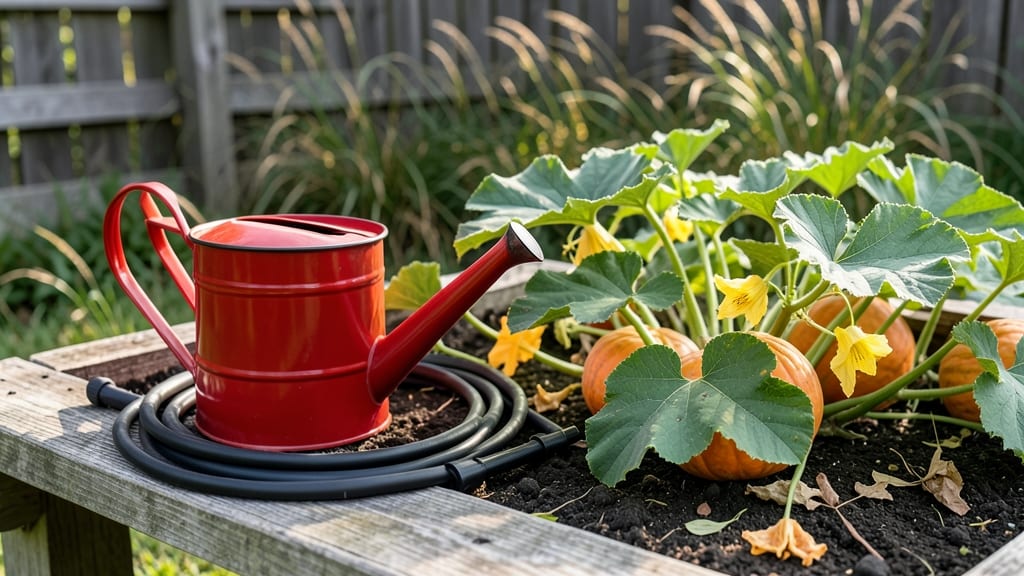
Watering pumpkin plants 🎃 keeps your vines lush and your fruit plump—but get it wrong, and you’ll end up with sad, shriveled gourds before harvest.
Pumpkins thrive on consistency, but even the hardiest vines wilt or develop blossom end rot when soil moisture swings between soggy and bone-dry. The key isn’t just how much you water, but when and how you do it.
Here’s what you need to know: from the delicate seedlings in spring to the thirsty vines under summer sun, and how to spot the signs of over- or underwatering before it’s too late.
I’ll walk you through the perfect watering schedule, the best tools to keep moisture steady, and the simple tricks that turn average pumpkins into giant harvests.


How much water do pumpkin plants need (and when to give it)
Pumpkins demand consistent moisture to grow those massive, prize-winning fruits—but too much or too little water can spell disaster. Unlike drought-tolerant squash, pumpkins hate dry spells during critical growth stages, especially when vines sprawl and fruit swells. The key? Deep, infrequent watering that keeps roots hydrated without drowning them.
Your watering schedule should shift as your pumpkin plants mature, from gentle moisture for seedlings to heavy hydration during fruit development. Heatwaves and sandy soil? Adjust accordingly. Below, I’ll break down exactly how much water pumpkins need at each stage—and when to deliver it for maximum growth.
🌱 Pro Tip: Always water at the base of the plant, not overhead. This prevents fungal diseases like powdery mildew, which thrives in damp leaves. Aim for morning sessions to let foliage dry before evening.
Use your finger to check soil moisture: Stick it 2 inches deep near the vine. If it feels dry, it’s time to water. For heavy clay soil, you may need to water every 2-3 days in summer, while sandy soil might require daily checks.
Now, let’s dive into the stage-by-stage watering guide—because a seedling’s needs differ wildly from a fruit-loaded vine. Get this right, and you’ll avoid shriveling pumpkins and floppy vines.
During seedling stage, focus on light, frequent watering to encourage root growth. Overhead misting is fine here, but switch to drip irrigation or soaker hoses once vines start sprawling. This prevents foliar diseases and ensures water reaches the roots where it’s needed most.
When vines begin flowering (6-8 weeks in), increase water volume to 1.5 inches per session. This is when pumpkins need the most hydration—underwatering now leads to blossom end rot or stunted fruit.
If your area hits 90°F+ temperatures, check soil moisture daily and water every 1-2 days.
For fruit development (8-12 weeks), deep-watering becomes critical. Aim for 2 inches of water every 2 days in hot climates.
Use a moisture meter or your finger to gauge depth—roots can extend 12+ inches deep by this stage. Never let soil dry out completely, or your pumpkins will crack or fail to swell.
As harvest approaches, reduce watering slightly to toughen the rind. Cut back to 1 inch every 3-5 days about 2 weeks before picking. This helps prevent rotting during storage. Always harvest on a dry morning so pumpkins cure properly.
Rainy seasons? Adjust your schedule. If you’ve had 1 inch of rain, skip watering that day. Use a rain gauge to track accumulation and avoid overwatering. Mulch with straw or wood chips to retain moisture and regulate soil temperature—this cuts watering needs by 30-50% in summer.
💧 Final Rule: Always water deeply—aim for 6-8 inches of penetration. Shallow watering encourages weak roots and attracts pests. Pair this with morning watering to maximize absorption and minimize evaporation.
Signs of overwatering vs. underwatering pumpkin plants (with fixes)
Pumpkin plants are surprisingly sensitive to watering extremes—too much or too little can send them into a downward spiral. The key is spotting early visual symptoms before your vines yellow or your fruit develops blossom end rot.
I’ve seen firsthand how overwatered pumpkins develop mushy stems while underwatered plants drop flowers before they even pollinate. Let’s break down the red flags and how to fix them.
Start by checking the soil moisture with your finger—pumpkins prefer soil that’s damp 1-2 inches deep but never soggy. If your fingers come away clean, you’re likely overdoing it.
For underwatering, the soil will feel bone-dry even an inch down. These subtle differences can mean the difference between a 20-pound pumpkin and a sad, shriveled specimen.
📌 PROS-CONS BOX: Watering Pumpkin Plants
Starts at lower leaves, spreads upward
Leaves curl and wilt by midday
Press stem—squishy root rot smell
Flowers fall before pollination
Fruit develops black, sunken spots
Vines split open from thirst
If your pumpkin leaves are yellowing but the veins stay green, that’s a classic overwatering sign. The roots are drowning, cutting off oxygen. I’ve fixed this by switching to drip irrigation on a timer—no more guesswork.
For underwatering, look for leaves that feel papery and dry to the touch. The plant is essentially wilting from the inside out, and without quick action, it’ll drop its flowers before they can pollinate.
Don’t ignore blossom end rot—those black, sunken spots on your pumpkins scream calcium deficiency, often triggered by inconsistent watering. To fix it, water deeply and consistently, and add a handful of crushed eggshells to the soil for extra calcium.
For cracked stems, your plant is thirsty but can’t drink enough fast enough. This happens when soil moisture swings wildly from dry to soaked.
Here’s my foolproof troubleshooting checklist: First, check the soil drainage. If water pools after rain, amend with compost or perlite. Second, water only in the morning—evening watering invites fungal diseases.
Third, use a moisture meter to track soil conditions. I swear by them after my first pumpkin crop turned into a sad, wilted mess from overenthusiastic watering.
Remember, pumpkins are heavy drinkers during fruit development. If your vines are sprawling but the soil stays dry, you’re underwatering. The fix? Soaker hoses or drip lines placed right at the base of the plant.
And if your pumpkins are growing but the vines look limp, it’s time to water deeply—not just a quick sprinkle.
Your pumpkin plants will thank you with vibrant vines and plump fruit if you master this balance. Start with soil checks, adjust your watering schedule, and watch those giant pumpkins grow! 🎃