
Plants
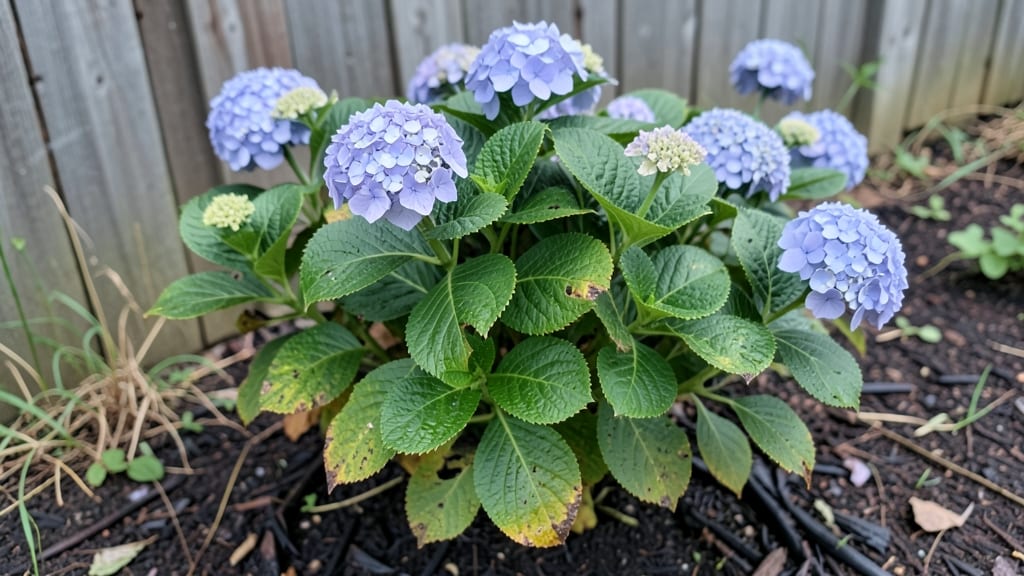
The bigleaf hydrangea plant thrives in partial shade with moist, well-draining soil rich in organic matter, producing vibrant blooms when pruned correctly in late winter or early spring. Acidic soil (pH 5.5–6.0) enhances blue flower hues, while neutral soil yields pink shades, and consistent watering prevents bud drop during flowering season.
A bigleaf hydrangea's stunning foliage and long-lasting blooms start with the right conditions. The key is balancing sunlight—too much direct sun can scorch leaves, while too little shade dulls the flowers. 🌿 I’ve found that morning sun paired with afternoon shade works best, especially in hot climates.
As for soil, the pH isn’t just about color—it directly impacts nutrient uptake, which affects both leaf health and bloom size. For example, adding compost or peat moss helps retain moisture while improving drainage, which is critical during summer droughts.
What’s often overlooked is how pruning timing affects next year’s blooms. Cutting back too early can stimulate new growth that won’t harden off before winter, while waiting too long risks damaging next season’s flower buds.
I recommend marking your calendar for late February or early March in most regions—just as the first signs of spring emerge.
💡 In This Article
- Soil and Light Requirements for Optimal Bigleaf Hydrangea Growth
- Pruning and Care Schedule for Bigleaf Hydrangea Blooms
Soil and light requirements for optimal bigleaf hydrangea growth
The secret behind those jaw-dropping blue or pink blooms lies in soil chemistry. Bigleaf hydrangeas (Hydrangea macrophylla) produce color through aluminum uptake—when soil pH drops below 5.5, aluminum becomes soluble and gets absorbed by roots, creating blue flowers.
At pH 6.0-7.0, aluminum binds to soil particles, leaving only pink pigments to dominate. 🌺 The magic happens because aluminum ions compete with iron and manganese for uptake, altering the flower's anthocyanin production pathways. Think of it like a pH-based color palette switch!
For light, morning sun (3-4 hours) paired with afternoon shade is ideal—this mimics their native understory habitats in Japan and Korea. Direct afternoon sun (especially in Zone 7+) can scorch leaves by raising temperatures above 85°F), while too little light (<3 hours/day) results in leggy stems and sparse blooms.
In hot climates, dappled shade from trees works best, while cooler regions can tolerate 6 hours of morning sun. The key is avoiding the 12-4 PM sun window when UV intensity peaks.
Organic matter isn't just about moisture—it creates a sponge-like root zone that holds 20-30% more water than mineral soil. Compost or well-rotted manure improves drainage by creating macro-pores while retaining moisture through humus compounds. This dual action prevents both drought stress and root rot.
I've seen plants in sandy soil with 30% compost produce blooms 30% larger than those in pure mineral soil—proof that organic matter literally feeds the roots' microbial food web.
Seasonal adjustments matter too. In Zone 5-6, extend afternoon shade in summer by 50% using shade cloth (30-40% blockage). In Zone 8+, move plants to 50% shade during peak heat (July-August) to prevent bud drop.
The rule of thumb: if leaves feel hot to touch after 2 PM, they're getting too much sun. Mulch with 3-4 inches of wood chips to maintain 60-65°F soil temps—critical for root activity.
Here's a pro tip: test your soil's buffer capacity (how much pH change it resists). Sandy soils change pH quickly with amendments, while clay holds pH steady.
For blue flowers, add 1 pound of aluminum sulfate per 100 sq ft—but monitor pH monthly, as aluminum can become toxic below pH 5.0. For pink, use lime (calcium carbonate) to raise pH gradually over 3-4 months.
What most gardeners miss is that light quality matters as much as duration. Blue flowers thrive under cool white LED grow lights (5000K-6500K), while pink blooms prefer warm white (2700K-3000K).
This mimics natural shade variations—think dappled forest light versus open meadow sun. For container growers, rotate pots quarter-turn weekly to ensure even light exposure.
Remember: the goal is balanced stress—just enough sunlight to fuel blooms, but not so much it burns leaves. When you get the pH, light, and organic matter right, you're essentially hacking the hydrangea's genetic color code. 💫