
Pruning
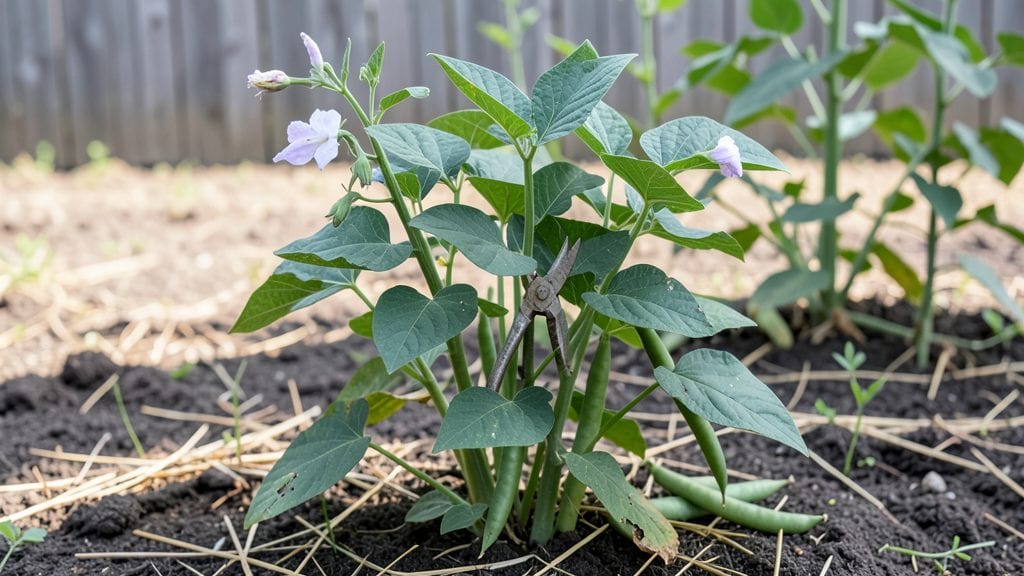
Pruning green bean plants isn't just about trimming—it's the secret to turning a single harvest into a steady supply of fresh beans all season long. 🌱 I learned this the hard way after watching my plants put all their energy into a single burst of beans before fading fast.
The right cuts redirect growth where you want it: more pods, stronger vines, and plants that keep producing until frost.
You only need three basic tools: sharp pruning shears, a small pair of scissors for delicate work, and gloves to protect your hands from thorny stems.
For bush beans, focus on removing yellowed leaves and spent pods at the base, while pole beans benefit from trimming back leggy growth to encourage bushier, more productive vines. The key is working in the morning when plants are dry and pests are least active.
After just two weeks of regular pruning, you'll notice new side shoots forming where you made cuts—each one a potential new harvest site. Air circulation improves, so plants dry faster after rain, reducing fungal diseases like rust.
Pests like bean beetles also struggle to hide in dense foliage, giving your plants a fighting chance. By late summer, you'll be harvesting beans from multiple spots on each plant instead of just one or two.
This method works for both bush and pole varieties, though pole beans respond even more dramatically. Even if you've never pruned before, the technique is simple enough that you'll see results faster than you expect.
The only real mistake is skipping it—once you try it, you'll wonder how you ever grew beans any other way.
📚 In This Guide
- What you need
- Instructions
- Tips and common mistakes
- Wrapping up and next steps
What you need
- ● Clean, sharp pruning shears – Bypass pruners (4–6-inch blades) work best for precision cuts without crushing stems.
- ● Gloves – A pair of durable gardening gloves (nitrile-coated for grip and protection).
- ● Disinfectant solution – 1 part bleach to 9 parts water (or 70% isopropyl alcohol) to sterilize tools between cuts.
- ● Garden twine or stakes – 3–4 feet long (for bush varieties) or 5–6 feet (for pole beans) to support pruned plants.
- ● Compost bin or mulch – To dispose of pruned foliage and enrich your soil.
- ● Hand pruners – For smaller stems or tight spaces (3–4-inch blades).
- ● Plant markers – To label varieties if growing multiple types.
- ● Knee pads or a small stool – For comfort during long pruning sessions.
- ○ Organic fungicide – Copper-based spray (optional) to prevent disease if humidity is high.
How to prune green bean plants for maximum yield
Here's my foolproof method for keeping green beans productive all season—just three simple cuts will transform your harvest.
🌱 Step 1: Remove Suckers for Stronger Growth
Start by pinching off any suckers—those small, leafy shoots growing between the main stem and branches. These energy vampires drain your plant instead of letting it focus on pods. Use your thumb and forefinger to gently twist them off at the base, being careful not to damage the main stem.
I do this every 2-3 weeks during the growing season. You'll know you're doing it right when you see the plant's energy shift to producing more flowers and beans instead of wild shoots. If you miss a sucker, don't stress—just remove it as soon as you spot it.
✂️ Step 2: Trim Leggy Vines for Bushier Plants
When you notice vines getting too long and sparse (more than 12 inches between leaves), it's time to trim. Cut back the leggiest stems by about one-third using clean pruning shears. This encourages the plant to branch out and produce more side shoots where beans form.
Here's the thing—trim in the morning so wounds have all day to heal. You'll see new growth sprout from the trimmed points within 5-7 days. Avoid cutting into the main stem unless absolutely necessary, as this can set back production.
🌿 Step 3: Harvest and Prune Old Pods
When you harvest beans, don't just pull the pods—look for any that are turning yellow or staying on the vine too long. These old pods signal the plant to stop producing. Snip them off at the stem with shears to redirect the plant's energy to fresh growth.
I make it a habit to do this after every harvest. You'll notice within a week that new flowers appear where the old pods were. This keeps your plant in continuous production mode instead of taking a mid-season break.
⏰ Step 4: Clean Up After Harvest Season
Once your plants finish producing (usually by late summer), give them a final trim. Cut back all remaining vines to 6 inches above ground level. This removes potential disease sites and makes next year's growth stronger.
Don't compost these trimmings if they show signs of disease—toss them instead. The clean cut you make now means fewer problems when you plant new seeds next spring. I always mark the spot with a stake so I remember where to plant again.
Tips & tricks for pruning green bean plants
These simple strategies will help you get the most out of your green bean plants all season long.
Timing is Everything: I always prune in the morning because that's when plants are most active. The fresh cut has the whole day to heal, and you'll see new growth within 5-7 days like magic. Avoid pruning in the evening—wounds take longer to heal overnight, and you might end up with more stress on your plants.
Tool Matters: Don't use your fingernails or scissors that aren't clean! Grab a pair of sharp pruning shears and sanitize them with rubbing alcohol between plants to prevent spreading disease. I keep a small bottle of alcohol in my gardening toolbox for quick cleanups. For suckers, your fingers work fine—just twist gently to avoid damaging the main stem.
Visual Cues for Pruning: Look for these telltale signs when deciding what to trim: suckers appear between the main stem and branches, leggy vines have more than 12 inches between leaves, and old pods turn yellow or stay on the vine too long. These visual cues help me know exactly where to make my cuts for maximum productivity.
Seasonal Strategy: The 2-3 week schedule for removing suckers keeps your plants focused on production rather than wild growth. In late summer when harvest winds down, that final trim to 6 inches above ground level clears the way for next year's stronger growth. I mark these spots with stakes so I don't forget where to plant again!
Pro Tips for Prune Green Bean Plants
- These simple strategies will help you get the most out of your green bean plants all season long.
- Timing is Everything: I always prune in the morning because that's when plants are most active.
- Tool Matters: Don't use your fingernails or scissors that aren't clean!
Frequently asked questions
Got questions about pruning your green bean plants? You’re not alone—this step can feel tricky at first! Below, we’ve rounded up the most common queries to help you grow like a pro.
When is the best time to prune green bean plants?
Prune bush beans lightly after planting (when vines reach 6–8 inches) to encourage branching. For pole beans, trim suckers and side shoots every 2–4 weeks during the growing season (spring to fall). Avoid pruning when plants are flowering or producing pods—focus on maintenance cuts instead!
How much can I cut back without harming the plant?
Never remove more than one-third of the plant’s foliage at once. For pole beans, trim only leggy or crowded vines—never the main stem. Bush beans need minimal pruning; just snip off yellowing leaves or damaged stems. Think of it like a haircut: small, strategic cuts keep things healthy!
Can I prune green beans in hot or cold weather?
Avoid pruning during heatwaves (above 90°F) or freezing temps (below 50°F). Ideal conditions are mild mornings (60–75°F) with partial shade. If you must prune in extreme heat, do it early morning or evening to reduce stress on the plant.
What should I do if my green beans stop producing after pruning?
If pods dwindle post-prune, you may have over-pruned or stressed the plant. Solution: Reduce future cuts, ensure consistent watering (1–1.5 inches/week), and fertilize with a balanced 10-10-10 mix. Bush beans often rebound faster than pole beans—patience is key!
Are there alternatives to pruning for bushier growth?
Yes! For bush beans, try pinching off the top set of leaves when vines hit 6 inches to encourage side shoots. For pole beans, thin crowded vines instead of pruning—let 3–4 main stems grow and remove weaker competitors. Mulching (straw or grass clippings) also improves airflow and reduces disease.
Wrapping up and next steps
Pruning your green bean plants is a simple yet powerful way to boost productivity and enjoy a bountiful, year-round harvest! 🌱 By mastering just three strategic cuts—removing suckers, trimming leggy growth, and pruning after harvest—you’ll encourage healthier plants, better airflow, and more delicious pods.
Whether you’re a seasoned gardener or just starting, these techniques make a world of difference.
Ready to elevate your garden game? Grab your pruners, roll up your sleeves, and give these methods a try—your taste buds (and plants!) will thank you. Happy pruning! 🌿