
Pests and Diseases
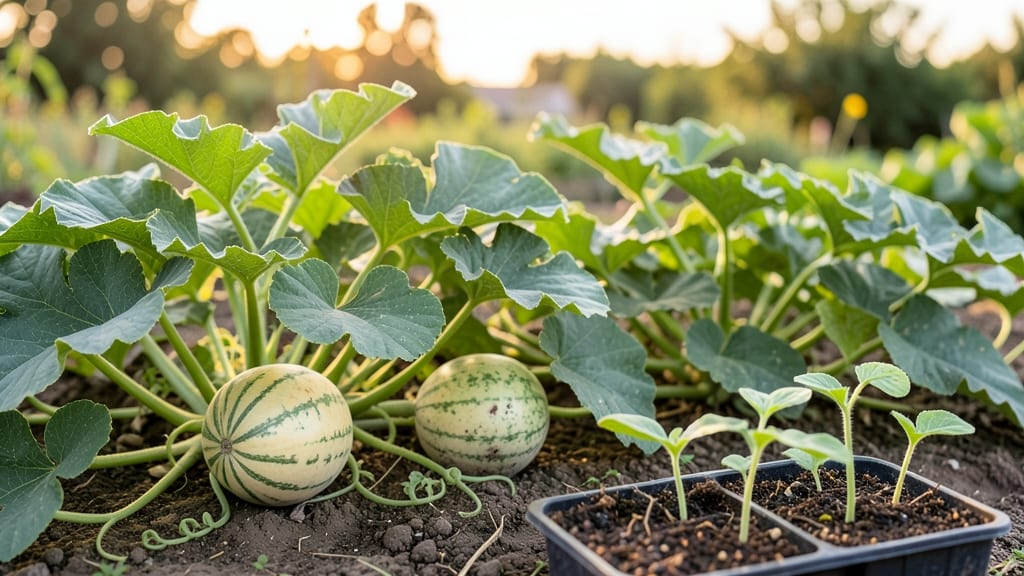
You can plant watermelon and cantaloupe together, but they need precise spacing and companion planning to thrive. Their similar sunlight and soil needs contrast with different root depths and nutrient demands.
These melons share a love for well-draining soil with a pH of 6.0–7.0 and bask in 6–8 hours of full sun daily. However, their growth habits differ dramatically—watermelons sprawl with roots diving 12–18 inches deep, while cantaloupes stay shallower at 6–12 inches.
The key? Planting them 18–24 inches apart for cantaloupe and 36–48 inches for watermelon prevents competition for nutrients like nitrogen and potassium. 🔥
Pro tip: Use trellises for cantaloupe to save space, and interplant with marigolds to deter pests naturally. I’ve found that staggering their planting dates by 2 weeks also reduces stress on shared resources.
💡 In This Article
- Soil, Sunlight, and Growth Habits for Watermelon and Cantaloupe
- Spacing, Trellising, and Companion Planting Tips for Melons
Soil, sunlight, and growth habits for watermelon and cantaloupe
Both watermelon and cantaloupe thrive in the same sunny conditions and soil types, but their underground growth patterns create a fascinating contrast. Here's what's actually happening: these melons prefer loose, well-draining soil with a pH between 6.0–7.0, where their roots can spread freely without waterlogging.
The key factor is their root depth—watermelons develop extensive root systems that dive 12–18 inches deep to access moisture, while cantaloupes stay shallower at 6–12 inches. This difference means they won't directly compete for water at the same soil levels.
Their sunlight needs are identical, requiring 6–8 hours of direct sunlight daily to produce those signature sweet melons. What most people don't realize is how their vine habits affect spacing needs: watermelons spread aggressively with vines reaching 10–15 feet, while cantaloupe vines typically stay under 6 feet.
The science behind this involves their growth hormones—watermelons produce more gibberellins, which stimulate rapid vine elongation, while cantaloupes focus energy on fruit development. 🌱
Nutrient competition becomes the real challenge when planting them together. Watermelons demand higher nitrogen levels during early growth (for leaf development) but shift to potassium later (for fruit maturation), while cantaloupes need balanced nitrogen and potassium throughout.
This is why soil testing before planting is crucial—you might need to adjust fertilizer ratios or use organic compost to prevent one plant from starving the other. A 10-10-10 fertilizer ratio works well as a starting point.
Consider these key factors when planning your garden layout:
- Root zone separation: Plant cantaloupe closer to garden edges where soil may be shallower, reserving deeper soil areas for watermelons
- Microclimate effects: Watermelons tolerate slightly cooler soils better, making them ideal for early spring planting in cooler climates
- Soil texture preference: Both prefer sandy loam but watermelons tolerate slightly more clay than cantaloupes
Their similar growth habits extend to pest vulnerabilities—both attract cucumber beetles and squash vine borers—but their different maturation times create a natural pest-deterrent effect. Planting cantaloupe 2–3 weeks after watermelon seeds gives you staggered harvest windows that confuse pests about which plants are most vulnerable.
The aromatic leaves of both plants also release compounds that repel some common garden pests naturally. 🌿
What most gardeners discover is that the real secret to success lies in the soil's organic matter content. Aim for at least 3–5% organic matter in your planting area—this supports both root systems differently.
Watermelon roots benefit from deeper organic layers, while cantaloupe roots thrive with surface mulch to retain moisture. The combination creates a perfect micro-environment where both can flourish without direct competition.