
Propagation
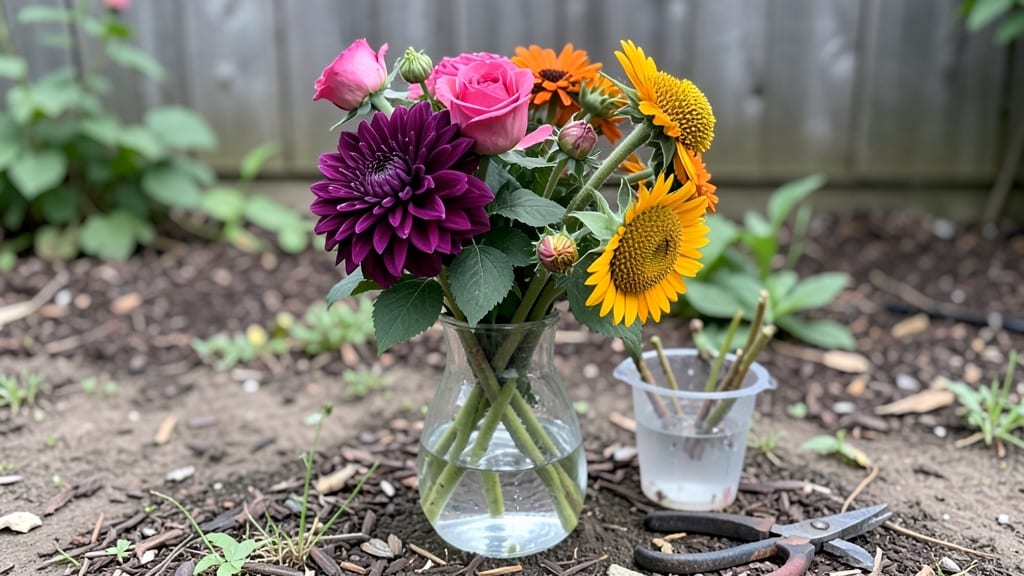
Planting cut flowers can work if done correctly, as many types—like zinnias, hydrangeas, or coleus—regrow roots when placed in water or soil with proper humidity and indirect light. Success depends on healthy stems, minimal decay, and patience through regrowth stages.
The secret lies in how these flowers naturally adapt when submerged in water or soil—think of it like a survival mechanism. Many blooms, especially zinnias or hydrangeas, trigger root growth through a process called adventitious rooting, where new roots sprout directly from stem tissues.
What I’ve noticed is that flowers with thicker stems and fewer leaves tend to thrive, as they resist rot better while developing roots. The key is creating a mini greenhouse effect with high humidity and indirect sunlight to mimic their natural growing conditions.
Timing matters too—flowers in their prime (not wilted or overly mature) have the best success rates. I’ve had luck with coleus and geraniums because their stems stay fresh longer in water. Just be patient: some take 2-4 weeks to show roots, and even then, not every stem will make it.
The magic happens when you balance moisture, light, and air circulation—like giving them a second chance at life. ✨
💡 In This Article
- How Cut Flowers Regrow Roots: Science and Stages
- Best Cut Flowers for Regrowth and Planting Tips
How cut flowers regrow roots: science and stages
When you place a cut flower stem in water, the first biological response is callus formation—a protective layer of cells that forms at the stem's base. This happens within 3-7 days and is triggered by ethylene gas released from damaged tissues.
The callus acts like a biological bandage, sealing the wound and preparing the stem for root growth. Think of it as nature's way of saying, "Let's try to heal and grow again." 🌱
The next stage involves adventitious rooting, where new roots sprout directly from the stem rather than the root zone. This process requires specific hormones, particularly auxins, which naturally increase in stems when submerged.
Flowers like hydrangeas and coleus excel here because their stems contain higher auxin levels. Temperature plays a critical role too—ideal conditions range from 65-75°F, mimicking spring planting seasons when root growth is most active.
Humidity is equally vital. A 70-80% humidity environment prevents stems from drying out while allowing gas exchange. Without this, stems can develop rot before roots form. I've found that placing a plastic bag (with small air holes) over the container creates this microclimate.
The right balance of moisture and airflow is like Goldilocks—too much drowns the stem, too little dehydrates it.
Not all flowers succeed because some lack the biological machinery for root regrowth. For example, roses often fail because their stems contain high levels of phenolic compounds, which inhibit root formation.
In contrast, zinnias thrive due to their fibrous stems and natural auxin production. The stem's health at planting is crucial—any decay or wilting disrupts the hormonal signals needed for root development.
Light matters too, but indirectly. Bright, direct sunlight can overheat the water or soil, while complete darkness slows metabolism. 12-16 hours of indirect light daily keeps the process active without stressing the stem. You'll often see tiny white root hairs appear first, followed by thicker roots in 2-4 weeks.
This gradual process is why patience is key—some stems may take 6-8 weeks to establish a strong root system.
What most people don't realize is that the original flower's energy stores are limited. Once roots form, the plant relies on photosynthesis from new leaves to sustain growth.
That's why you'll often see the original blooms wilt—they're "feeding" the new roots until the plant can support itself. It's a fascinating biological trade-off! 💫