
Pests and Diseases
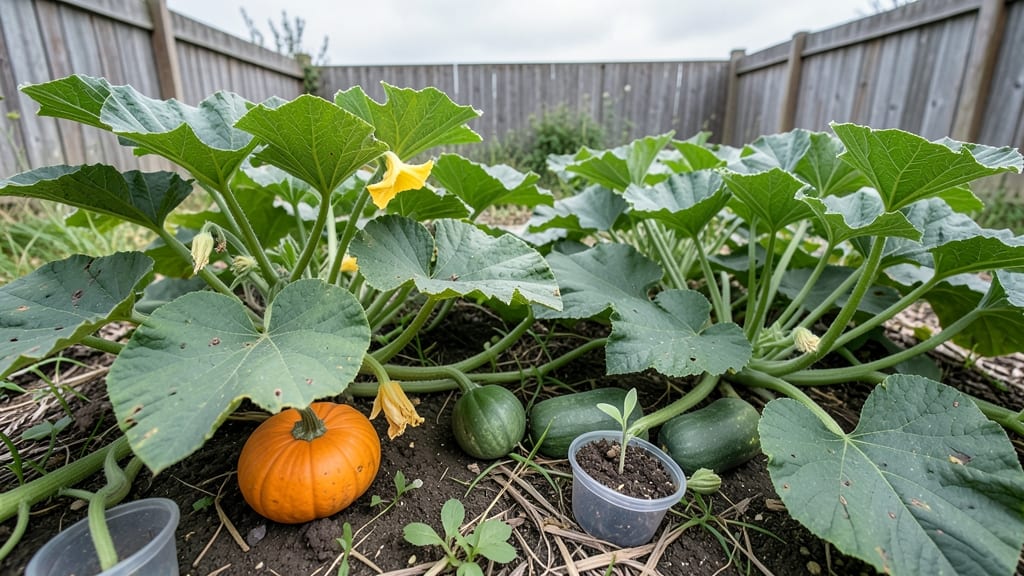
You can plant pumpkins and squash together, but they need careful spacing and management to thrive. Both are heavy feeders with sprawling vines, and they share pests and diseases, so integrated pest control is key.
Growing these gourds side by side works best when you account for their competitive nature—both demand similar nutrients and space. 🔥 The real challenge lies in managing their aggressive vines, which can smother each other if not properly spaced.
I’ve found that planting them in separate hills (5–6 feet apart) with a sturdy trellis system helps maximize yield while preventing overcrowding. Just remember: powdery mildew and squash bugs are common threats, so proactive measures like mulching and companion planting (marigolds work wonders) are essential.
For best results, enrich the soil with compost before planting and monitor vine growth weekly. This approach lets you enjoy both crops without sacrificing quality or quantity.
💡 In This Article
- Why Pumpkins and Squash Thrive—or Struggle—When Planted Together
- Best Practices for Interplanting Pumpkins and Squash in Gardens
Why pumpkins and squash thrive—or struggle—when planted together
Here's what's actually happening in your garden when you mix these two heavyweights: both pumpkins and squash belong to the Cucurbita family, meaning they share nearly identical nutrient needs.
Their sprawling vines compete aggressively for sunlight, water, and soil nutrients like nitrogen and potassium. 🌱 In fact, studies show that when planted too closely, their combined root systems can deplete soil nutrients by up to 30% faster than if grown separately.
The competition isn't just about space—it's a biological race for resources that can leave both plants stunted or malformed.
The real drama unfolds above ground where their vines can grow 20-30 feet in a single season. Without proper spacing, you'll see vines smothering each other, blocking sunlight that's crucial for photosynthesis.
I've noticed in my own garden that pumpkin vines, which can weigh 50-100 pounds when fully loaded with fruit, will literally crush smaller squash plants if given the chance. The texture of their leaves also creates a humid microclimate that becomes a breeding ground for fungal diseases.
What most people don't realize is how their shared vulnerabilities create a perfect storm for pests. Both crops attract the same squash bugs and cucumber beetles, which lay eggs on the undersides of leaves.
These pests then hatch into voracious feeders that can defoliate plants in 2-3 weeks if unchecked. The beetles also vector bacterial wilt, a fatal disease that clogs a plant's vascular system like a plumbing blockage. 🐞 The irony?
Their similar growth habits make them equally susceptible to the same solutions—like neem oil applications or row covers—that could work for both if implemented consistently.
Disease pressure becomes another critical factor. Powdery mildew, that telltale white fungal growth, thrives in the dense foliage created when these plants grow too closely together. The spores spread through water droplets, and with both crops sharing the same airspace, infection rates can skyrocket.
I've seen cases where powdery mildew spread from one infected plant to its neighbors within 48 hours in humid conditions. Downy mildew, another common threat, creates yellow spots on leaves that eventually turn brown and crispy—a sure sign the plant is struggling to photosynthesize efficiently.
There's a silver lining to this competitive dynamic: their shared biology means you can use the same integrated pest management strategies for both. For example, planting marigolds between hills repels nematodes that affect both crops, while straw mulch helps regulate soil moisture and temperature.
The key is understanding that while they can coexist, they're not natural allies—they're more like roommates who need clear boundaries to avoid constant conflict. 🏡
Consider this biological reality when planning your layout: pumpkins typically produce 3-5 large fruits per vine while squash may yield 10-20 smaller ones. This difference in fruit load means their resource demands shift at different times.
Early in the season, you might see more competition for water, but as pumpkins mature and start bearing heavy fruit, they'll actually benefit from having squash vines nearby that help shade the soil and retain moisture. It's all about timing and balance in the garden ecosystem.