Planting
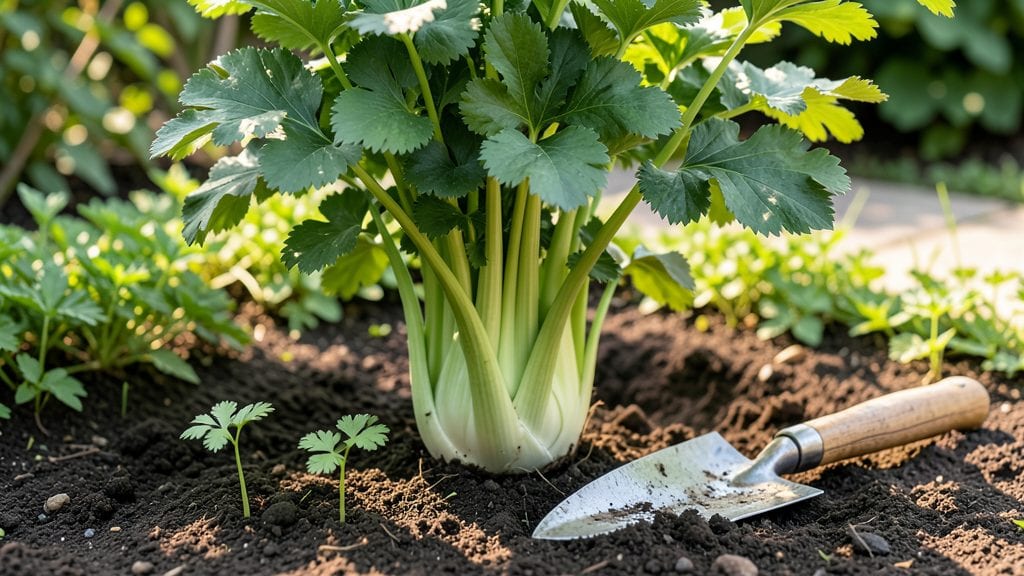
Here are the best celery planting tips—because turning those finicky seeds into crisp, sweet stalks isn’t luck, it’s strategy. ✨ I’ve grown it for years, and the difference between floppy, bitter stalks and perfect harvests comes down to just a few key moves in the early stages. stages.
Start with moist, nutrient-rich soil and keep seeds consistently damp until sprouts appear—most beginners either drown them or let them dry out. Celery thrives in full sun but needs 12-14 hours of light daily, so supplement with grow lights if indoors.
Once seedlings hit 3-4 inches, thin them to 6-8 inches apart to prevent competition.
📚 In This Guide
- What you need
- Instructions
- Tips and common mistakes
- Wrapping up and next steps
What you need
- ● Celery Seeds or Seedlings: Seeds: 1 packet (~500 seeds) for direct sowing.
- ● Seedlings: 6–12 plants (for transplanting). Tip: Choose disease-resistant varieties like 'Tall Utah' or 'Golden Self-Blanching'.
- ● Growing Containers or Garden Bed: Containers: 12–18" deep pots (with drainage holes) for each plant.
- ● Garden bed: Full sun (6+ hours/day) or partial shade; enrich soil with compost.
- ● Soil: Well-draining, loamy soil (pH 6.0–7.0). Mix in 2–3 inches of compost or aged manure.
- ○ Optional: Peat moss or coconut coir (for container growing).
- ● Fertilizer: Balanced 10-10-10 fertilizer (1 tbsp per plant) at planting.
- ● High-nitrogen fertilizer (e.g., fish emulsion) every 3–4 weeks.
- ● Row covers or shade cloth (to protect young plants from pests/scorching).
- ● Mulch (straw or grass clippings) to retain moisture and suppress weeds.
- ● Blanching sleeves or cardboard tubes (to encourage tender stalks).
- ● pH test kit (to monitor soil acidity).
- ● Hand trowel, watering can with rose nozzle, and pruning shears.
Step-by-Step guide to planting celery for year-round harvests
Celery thrives with patience and precision—here’s how to grow it like a pro, whether you’re starting from seed or transplanting.
🌱 Step 1: Prepare the Soil for Optimal Growth
Celery demands rich, moisture-retentive soil with excellent drainage. Amend your garden bed with 2-3 inches of compost mixed into the top 12 inches of soil. Work in 1 cup of 10-10-10 fertilizer per 4-square-foot area to provide balanced nutrition. The ideal pH range is 6.0-7.0—test your soil and adjust with lime if needed.
I like to till in a handful of sand or perlite if my native soil is heavy clay, as celery roots rot easily in compacted conditions. Loosen the soil to a depth of 12 inches—this encourages deep root development, which is critical for sturdy stalks. Avoid fresh manure, as it can cause bolting (premature flowering).
💧 Step 2: Plant Seedlings at the Right Depth and Spacing
Transplant celery seedlings after the last frost date when soil temperatures reach at least 60°F. Space plants 12-18 inches apart in rows 18 inches apart to allow for proper air circulation and stalk development. Dig holes twice as deep as the root ball and gently tease the roots to encourage spreading.
Press the soil firmly around the base to eliminate air pockets but avoid compacting it. Water deeply immediately after planting to settle the soil and remove any gaps. Mulch with 2-3 inches of straw or shredded leaves to retain moisture and suppress weeds—celery hates competition. Keep the mulch 2 inches away from stems to prevent rot.
☀️ Step 3: Provide Consistent Moisture and Light
Celery is a moisture-loving crop—water 1-2 inches per week, ensuring the soil never dries out completely. I use a drip irrigation system to deliver water directly to the base without wetting the leaves, which reduces fungal diseases like early blight. Water in the early morning to allow foliage to dry before evening.
Place celery in full sun (6-8 hours daily) for the sweetest, crispest stalks. If growing in hot climates, provide afternoon shade to prevent bolting. You’ll know your plants are thriving when they develop lush, dark green leaves and thick, pale-green stalks. If leaves yellow, it’s a sign of either overwatering or nutrient deficiency—adjust accordingly.
✂️ Step 4: Thin and Harvest for Continuous Yields
Thin seedlings to 12 inches apart when they reach 4-6 inches tall, using clean scissors to snip excess plants at soil level. Harvest outer stalks first when they reach 12-14 inches tall, cutting them 1 inch above the base with a sharp knife. This encourages the center stalks to thicken and prevents the plant from bolting.
For year-round success, succession plant every 2-3 weeks in spring and early summer. In fall, plant 4-6 weeks before the first frost for a harvest before winter sets in. Store harvested celery in the fridge for up to 2 weeks, or blanch and freeze stalks for long-term use. Watch for pest pressure—cover plants with floating row fabric if aphids or cabbage worms appear.
⏰ Step 5: Extend the Season with Protective Strategies
To grow celery in cool seasons, plant under cold frames or low tunnels in early spring or late summer. Remove protective coverings during the day to allow ventilation and prevent overheating. In warm climates, grow celery in partial shade during summer months to maintain crispness.
Fertilize lightly every 4-6 weeks with a balanced liquid fertilizer (e.g., fish emulsion) to sustain growth. Avoid high-nitrogen feeds, which promote leafy growth at the expense of stalk development. If your celery bolts (sends up a flower stalk), harvest the stalks immediately—they’ll be less tender but still usable. Prevent bolting by keeping soil consistently moist and providing even light exposure.
Tips & tricks for perfect celery planting
Celery rewards patience, and these pro tips will help you avoid common pitfalls while maximizing your year-round harvest. The difference between garden-center celery and homegrown perfection often comes down to these key details.
Soil Preparation Secret: When amending your soil with 2-3 inches of compost in Step 1, don't stop at surface-level mixing. Use a broadfork to loosen the soil to a full 12 inches—this creates the ideal environment for celery's deep taproots. I've found that adding a handful of perlite to clay-heavy soils prevents the dreaded root rot that plagues so many gardeners. The goal is a soil texture that holds moisture like a sponge but drains freely, which is non-negotiable for celery's success.
Timing is Everything: The 60°F soil temperature threshold in Step 2 isn't just arbitrary—it's when celery's metabolic processes kick into high gear. Use a soil thermometer to verify this before transplanting, especially in cooler climates. I've learned the hard way that rushing seedlings into cold soil causes stunted growth. Also, plant your seedlings in the late afternoon when temperatures are cooler—this reduces transplant shock by minimizing moisture loss through the leaves.
Watering Wisdom: Those 1-2 inches of weekly water in Step 3 should be your minimum, not maximum. Celery is a moisture-loving plant that actually tastes sweeter when consistently hydrated. I recommend using a rain gauge to track accumulation—if you're getting less than 1 inch from rainfall, supplement with drip irrigation. The key is keeping the soil evenly moist at all times; never let it dry out completely, but avoid waterlogging which can cause rot. Early morning watering prevents fungal diseases by allowing foliage to dry before evening.
Harvesting Hack: When harvesting outer stalks at 12-14 inches in Step 4, cut them at a 45-degree angle just above a leaf node. This angled cut prevents water from pooling on the stalk, reducing rot risk. I've found that harvesting in the morning gives the cleanest cuts and preserves crispness. Leave the center stalks to continue growing—they'll thicken in response to the removal of their neighbors, giving you even more harvestable celery over time.
Pro Tips for Celery Planting Tips
- Celery rewards patience, and these pro tips will help you avoid common pitfalls while maximizing your year-round harvest.
- Soil Preparation Secret: When amending your soil with 2-3 inches of compost in Step 1, don't stop at surface-level mixing.
- Timing is Everything: The 60°F soil temperature threshold in Step 2 isn't just arbitrary—it's when celery's metabolic processes kick into high gear.
Frequently asked questions
Got questions about growing celery? You’re not alone! Here are answers to the most common queries to help you cultivate a thriving crop with confidence.
When is the best time to plant celery?
Celery thrives in cool weather, so plant seeds indoors 10–12 weeks before the last frost (around late winter to early spring). For a fall harvest, direct-sow seeds outdoors in early summer (60–80 days before the first frost). Avoid planting in scorching heat—celery hates temperatures above 80°F!
Can I grow celery in cold climates?
Celery is cold-hardy and can tolerate light frosts (down to 25°F). Use row covers or cold frames to extend the growing season. In Zone 5 or colder, start seeds early indoors and transplant outdoors once soil warms to 40°F. Mulch heavily to protect roots from freezing.
Why isn’t my celery growing straight or tall?
Celery may lean or grow leggy due to poor light, overcrowding, or weak stems. Ensure plants get 6+ hours of sunlight daily and thin seedlings to 6 inches apart. If grown for leaves (rather than stalks), harvest outer stalks first to encourage bushier growth. For crisp stalks, blanch by tying leaves together to block sunlight.
Are there celery alternatives if I can’t grow it?
If celery proves tricky, try celery root (celeriac), fennel, or rhubarb for a similar crunch. For flavor, swap in leeks, bok choy, or Swiss chard in soups and salads. Celeriac, in particular, stores well and has a nutty, earthy taste—perfect for mashed potatoes or roasting!
How do I keep pests like aphids or slugs away?
Celery attracts aphids, slugs, and cabbage worms. Prevent pests by:
- Using row covers early in the season.
- Planting marigolds or dill nearby to repel insects.
- Hand-picking slugs at night or using beer traps.
- Spraying neem oil (a natural insecticide) if needed.
Wrapping up and next steps
Growing celery doesn’t have to be a challenge—with the right celery planting tips, you can enjoy a bountiful harvest year-round! 🌱 Whether you’re a beginner or a seasoned gardener, remember to choose the right variety, prepare your soil, and provide consistent care.
Patience and attention to detail will reward you with crisp, flavorful stalks straight from your garden.
Now that you’re armed with these pro tips, it’s time to get your hands dirty! Start small—try planting a few celery starts or seeds this season and watch your green thumb grow. Happy gardening! 🌟