Diseases
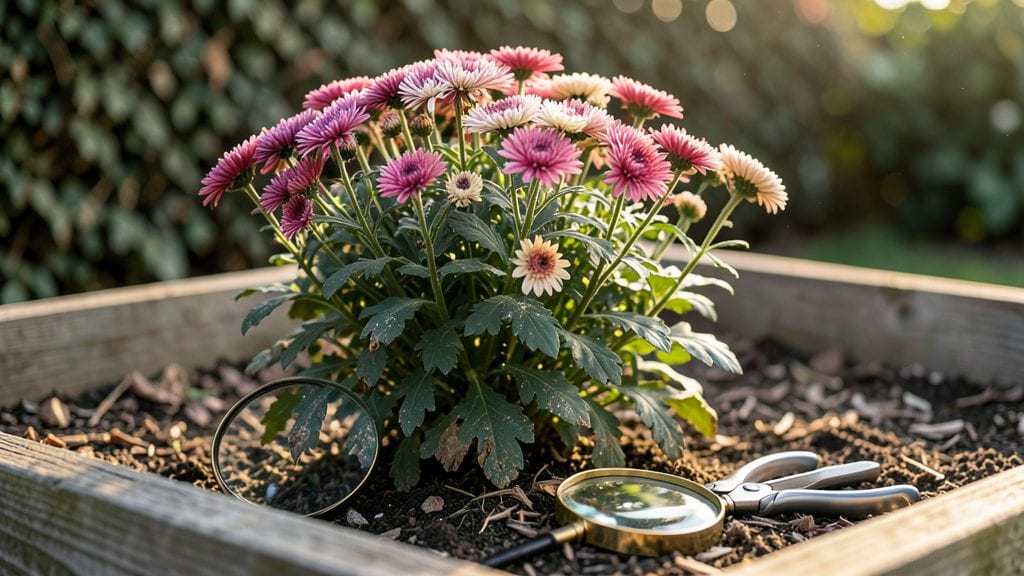
Chrysanthemum plant diseases can turn your fall garden from showstopper to sad in days—until you know the fast fixes. 🌿 I’ve lost count of the times I’ve watched my prized mums develop brown spots or fuzzy white patches, only to realize I was treating symptoms, not the root cause.
The key isn’t just sprays; it’s spotting the problem early and acting before the fungus spreads.
Most issues start with moisture—whether from overhead watering or humid mornings. Powdery mildew looks like dust on leaves, while leaf spots start as yellow specks before turning brown and crunchy. Rust fungus? Tiny orange pustules on the undersides of leaves.
The good news? All three respond to the same three-step cure: prune infected parts, adjust watering habits, and apply a baking soda spray (yes, the kitchen kind) or neem oil for organic control.
You’ll see improvement within 7-10 days if you catch it early—cleaner leaves, firmer stems, and blooms that stay vibrant instead of wilting. The secret weapon? Prevention: space plants for airflow, water at the base, and deadhead regularly to keep energy flowing to new growth.
No more guessing what’s wrong—just action.
Works for both patio pots and garden beds, and the methods scale from a single plant to an entire border. Let’s get those mums back to their best before the first frost hits.
Root Causes Behind Chrysanthemum Struggles
Chrysanthemums may seem hardy, but they’re not immune to stress and pathogens. Understanding why these diseases strike helps you prevent them before they wreak havoc. Let’s break down the science behind the most common triggers.
Fungi like Botrytis cinerea (gray mold) and Pythium thrive in humid, stagnant environments. Here’s why:
- Moisture buildup: Overhead watering or poor drainage keeps leaves wet for long periods, creating a fungal buffet. Botrytis spores germinate in 70–90% humidity and temperatures between 60–75°F (15–24°C).
- Slow air circulation: Dense foliage or crowded plants trap moisture, while poor airflow prevents evaporation. Pythium, a root rot culprit, spreads faster in waterlogged soil (oxygen levels drop below 10%).
- Organic debris: Dead leaves or mulch act as fungal nurseries, harboring spores that infect healthy plants.
Pro tip: 🌡️ Aim for 12–16 hours of airflow daily around plants and water in the morning to allow foliage to dry.
Stressed chrysanthemums are like open doors for diseases. Common stressors include:
| Stressor | How It Helps Diseases Spread |
|---|---|
| Nutrient deficiencies (e.g., nitrogen, potassium) | Weak stems and thin leaves make plants more susceptible to fungal invasion. Phytophthora (another root rot) exploits low potassium, which weakens cell walls. |
| Over- or underwatering | Drought stress reduces chlorophyll, while soggy roots drown root hairs, both making plants vulnerable to Fusarium wilt. |
| Physical damage (pruning cuts, hail, pests) | Open wounds let Alternaria (a leaf spot fungus) sneak in. 70% of fungal infections enter through injuries. |
Pro tip: 💪 Hardening off young plants (gradually exposing them to outdoor conditions) and using balanced fertilizer (10-10-10) builds resilience.
Some "pests" aren’t the real villains—they’re just delivery services for diseases. For example:
- Aphids and thrips excrete honeydew, a sugary film that feeds sooty mold fungi. Their feeding also weakens plant tissues, making them prime targets for powdery mildew.
- Slugs and snails create ragged leaf edges, which Pythium exploits to infect stems.
- Whiteflies spread viruses (like Chrysanthemum stunt virus), which indirectly stress plants, making them more susceptible to secondary fungal infections.
Pro tip: ✨ Neem oil (applied weekly) doubles as a fungicide and insect repellent—kill two birds with one spray!
Chrysanthemums need well-draining, slightly acidic soil (pH 6.0–7.0). When soil conditions go wrong:
- Compacted or clay-heavy soil prevents roots from breathing, leading to root rot (e.g., Phytophthora).
- High organic matter without compost can create anaerobic pockets, where Pythium thrives.
- Improper pH (too acidic < <6.0 or alkaline >7.5) disrupts beneficial microbes, letting pathogens dominate.
Pro tip: 🌡️ Test soil annually—amend with sand or perlite for drainage and lime/sulfur to adjust pH.
Quick Fixes for Chrysanthemum Ailments
When your chrysanthemums show signs of distress, acting fast can save your plants from permanent damage. Below are practical, step-by-step solutions tailored to the most common diseases, along with prevention tips to keep your garden thriving. 🌿💪
Symptoms: White, powdery coating on leaves, stunted growth.
How to Fix It:
- 🍳 Prune the Problem Remove severely infected leaves with clean, sharp scissors. Dispose of them in the trash (not compost) to prevent spreading spores.
- 🧼 Soap Up the Solution Mix 1 tablespoon of baking soda + 1 teaspoon of mild dish soap + 1 gallon of water. Spray this solution on both sides of leaves every 7–10 days until the mildew disappears.
- 🌡️ Boost Airflow Space plants 12–18 inches apart and prune nearby foliage to improve air circulation. Avoid overhead watering—use a soaker hose or water at the base.
- ✨ Prevent Relapse Apply a fungicide with neem oil (like Garden Safe Fungicide) as a preventive spray every 2 weeks during humid seasons.
Symptoms: Brown or black spots with yellow halos, leaf drop.
How to Fix It:
- 🔪 Trim and Toss Cut off infected leaves below the spot (not through it) to prevent spread. Sterilize your pruners with rubbing alcohol between cuts.
- 💦 Water Wisely Water early in the morning so leaves dry by evening. Avoid splashing foliage—direct water to the soil instead.
- 🧴 Copper Fungicide Spray Use a copper-based fungicide (like Bonide Copper Fungicide) every 10–14 days until new growth appears. Follow label instructions carefully.
- 🏡 Quarantine New Plants Keep newly purchased chrysanthemums separate for 2–3 weeks to monitor for diseases before introducing them to your garden.
Symptoms: Wilting, yellowing leaves, mushy stems, foul smell at the base.
How to Fix It:
- 🚿 Drain the Soil Gently remove the plant and trim away blackened, mushy roots with sterilized shears. Replant in fresh, well-draining soil mixed with perlite or sand (50/50 ratio).
- 🌱 Repot with Care Choose a pot with drainage holes and avoid overwatering. Let the top 1–2 inches of soil dry out between waterings.
- 💡 Fungicide Rescue Treat the soil with hydrogen peroxide (3%) (1 part peroxide to 10 parts water) or a beneficial fungus like Trichoderma to outcompete pathogens.
- 🌿 Boost Immunity Feed with a balanced fertilizer (10-10-10) once symptoms improve to strengthen recovery.
Symptoms: Holes in leaves, sticky residue (aphids), or chewed edges (slugs), which invite fungal infections.
How to Fix It:
- 🕷️ Manual Removal For aphids or mites, blast them off with a strong stream of water or wipe leaves with a soapy sponge.
- 🌿 Natural Predators Introduce ladybugs or lacewings to control pests organically. For slugs, set up beer traps (bury a shallow dish filled with beer).
- 🛡️ Barrier Defense Sprinkle diatomaceous earth around the base of plants (reapply after rain) to deter crawling pests.
- 🍃 Preventative Sprays Use neem oil spray weekly during peak pest seasons to deter infestations before they start.
- 🌡️ Rotate Crops: Avoid planting chrysanthemums in the same spot yearly to break disease cycles.
- 🌿 Sterilize Tools: Clean pruners and pots with bleach solution (1 part bleach to 9 parts water) between uses.
- 🍂 Fall Cleanup: Remove all plant debris in autumn to eliminate overwintering spores.
- 🌱 Healthy Soil: Amend soil with compost and mycorrhizal fungi to enhance plant resilience.
Remember: Early action is key! Monitor your chrysanthemums regularly, and don’t hesitate to isolate sick plants to protect your entire garden. With these fixes, your blooms will bounce back stronger than ever. 🌸💚
Frequently asked questions
What are the first signs of powdery mildew on chrysanthemums?
Look for a white, powdery coating on leaves—especially on the upper surfaces—and small purple or black spots beneath. Early stages show as faint white specks that spread rapidly in humid conditions. The leaves may also appear yellowed or stunted.
Can I use household items to treat fungal infections?
Yes! A baking soda spray (1 tablespoon baking soda + 1 teaspoon dish soap + 1 gallon water) works well for powdery mildew. For leaf spots, try a hydrogen peroxide solution (1 part 3% peroxide to 10 parts water) as a foliar spray. Always test on a small area first.
Why do my chrysanthemums keep getting root rot?
Root rot thrives in waterlogged soil or containers without drainage. Check for soggy soil, mushy roots, and a foul odor at the base. Repot in fresh, well-draining soil mixed with perlite, and water only when the top 1-2 inches are dry.
How often should I inspect my chrysanthemums for diseases?
Check plants weekly during growing season (spring-fall) and biweekly in winter. Focus on undersides of leaves, stems, and soil moisture levels. Early detection lets you treat issues before they spread.
Are there any organic fungicides that work for chrysanthemums?
Try neem oil, copper fungicide, or potassium bicarbonate sprays. These are effective against powdery mildew and leaf spots. Apply in the morning on dry leaves for best results, and repeat every 7-14 days.