
Companion Plants
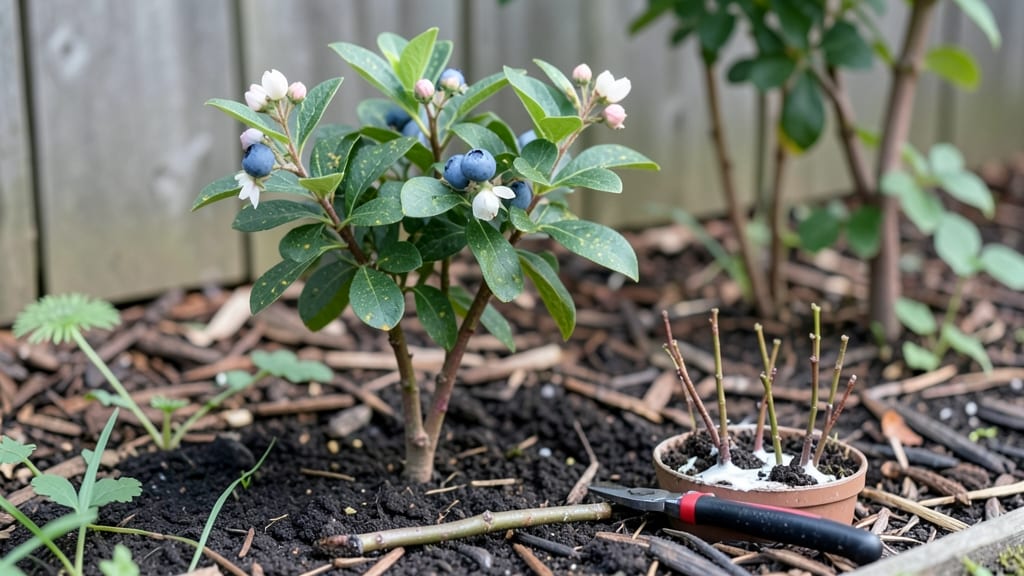
Cloning blueberry plants from stem cuttings lets you multiply your best varieties without buying new plants or dealing with unpredictable seeds. 🌱 I’ve propagated dozens of blueberry bushes this way, and the secret isn’t complicated—it’s about timing, moisture, and patience.
The right cuttings taken in late summer or early fall root faster than you’d expect, and within a few months, you’ve got identical bushes ready to fruit.
You’ll need sharp pruners, rooting hormone (optional but helpful), small pots with drainage, and a mix of peat moss and perlite to keep cuttings moist without rotting.
The process takes about 8-12 weeks from cutting to transplanting, but the payoff is worth it: cloned plants fruit 1-2 years sooner than seed-grown bushes. Plus, you preserve the exact flavor, size, and disease resistance of the parent plant.
Common challenges like rot or slow rooting happen when cuttings dry out or sit too wet. I’ve learned to keep them in a humid environment—like a plastic bag with holes—until roots form.
Once established, these clones thrive in the same conditions as their parent, meaning you can expand your harvest without the guesswork of seeds or the cost of nursery plants.
This method works best for northern highbush varieties like Duke or Bluecrop, but even southern lowbush types can be cloned with adjustments. Whether you’re filling gaps in your yard or sharing plants with neighbors, cloning turns a single bush into a whole grove of reliable producers.
Let’s get those cuttings rooted!
📚 In This Guide
- What you need
- Instructions
- Tips and common mistakes
- Wrapping up and next steps
What you need
- ● Healthy blueberry plant cuttings: 4–6 inch-long, semi-hardwood stems (from current season’s growth, pencil-thick). Tip: Choose tips with 3–4 leaves and a node (where leaves meet the stem).
- ● Rooting hormone: 1 small bottle (e.g., Clonex or similar—look for auxin-based formulas).
- ● Potting mix: 1 bag of sterile, well-draining mix (e.g., perlite + peat moss or a pre-mixed propagation blend).
- ● Small pots or trays: 4–6 (4-inch diameter) with drainage holes, or a seedling tray with cells.
- ● Clear plastic domes or plastic wrap: To create a humid environment (or a humidity tent kit).
- ● Spray bottle: 8–12 oz, filled with water (room temperature).
- ● Pruning shears or sharp scissors: Sterilized (rubbing alcohol wipe).
- ● Gloves: 1 pair (nitrile or gardening gloves for hygiene).
- ● Labeling tags: 10+ (to track varieties/date).
- ○ Heat mat (optional): 1 (70–75°F range) to speed rooting.
- ○ Grow lights (optional): 1–2 LED bulbs (12+ hours/day if natural light is <6 hrs/day).
- ○ Fertilizer (low-dose, optional): 1 bottle (e.g., diluted fish emulsion or seaweed extract, 10-10-10).
- ● Timing: Clone in early spring (before buds swell) or late summer (after harvest). Avoid extreme heat/cold.
- ● Parent plant health: Source cuttings from disease-free, well-established bushes (3+ years old).
- ● Space: A clean, shaded area (60–70°F) for rooting (e.g., greenhouse, windowsill, or basement with grow lights).
Step-by-step instructions for cloning blueberry plants
Here’s how to propagate blueberry cuttings with precision—no guesswork, just reliable new plants.
🌱 Step 1: Select and Prepare Healthy Cuttings
Choose newly matured wood from current season’s growth—look for pencil-thick stems with 3-4 leaf nodes and no flowers or fruit. Use clean, sharp pruners to cut 4-6 inch sections just below a leaf node at a 45-degree angle. This angled cut increases surface area for root formation.
Strip the lower 1-2 inches of leaves to expose the stem, leaving only the top leaves intact. This prevents moisture loss while allowing the plant to photosynthesize. Store cuttings in a plastic bag with a damp paper towel until ready to root—this keeps them hydrated without rotting.
💧 Step 2: Root in a Sterile, Moist Medium
Fill a 6-inch pot with a mix of 50% perlite and 50% peat moss—this balance ensures aeration while retaining moisture. Moisten the medium until it’s damp but not soggy, then insert each cutting 2 inches deep at the 45-degree angle. Space them 2 inches apart to avoid overcrowding.
Place a clear plastic bag over the pot to create a humidity dome, securing it loosely with a rubber band. This traps warmth and moisture, mimicking the natural environment where roots form. Keep the medium consistently moist—never waterlogged—by misting lightly every 2-3 days or when the surface feels dry.
☀️ Step 3: Provide Warmth and Indirect Light
Set the pot in a location with bright, indirect light—a south-facing window works well, but avoid harsh midday sun, which can scorch tender new growth. Maintain a temperature of 70-75°F for optimal rooting. A seedling heat mat under the pot ensures warmth if your home runs cooler.
Roots typically form in 4-8 weeks, but patience is key. Watch for new growth at the top—this signals successful rooting. If leaves yellow or wilt, reduce humidity slightly by lifting the plastic for 10 minutes daily to prevent fungal issues.
✂️ Step 4: Transplant and Acclimate New Plants
Once roots fill the pot or reach 2-3 inches long, gently remove the cuttings and trim any mushy or blackened roots with sterilized scissors. Plant each in a 6-inch pot with well-draining soil (a mix of peat moss, perlite, and compost). Bury the stem 1 inch deeper than before to encourage stability.
Hardening off takes 2 weeks: gradually expose the plants to outdoor conditions for 1-2 hours daily, increasing time as they adapt. Transplant to the garden or 1-gallon containers after the last frost, spacing them 4-5 feet apart for mature growth. Mulch heavily to retain moisture and simulate their natural acidic soil needs.
Tips & tricks for perfect blueberry plant cloning
A few strategic moves will dramatically improve your success rate with blueberry cuttings—these are the secrets I wish I knew when I started.
Timing is Everything: Take your cuttings in late spring or early summer when new growth is mature but still flexible. This is when the plant's hormones are most active, making root formation much more likely. Avoid cutting in extreme heat or cold—aim for mild weather when temperatures hover around 70-75°F during the day. The 4-6 inch length specified isn't arbitrary: this size balances enough stem for rooting with manageable size for handling.
Sterilization Secret: Before you even pick up your pruners, sterilize them with 70% isopropyl alcohol to prevent disease transmission. This is non-negotiable when working with plant material. For the 6-inch pots in Step 2, wash them thoroughly with hot, soapy water and rinse with a 10% bleach solution (1 part bleach to 9 parts water) before using. I've seen entire batches fail due to contaminated growing medium—don't make my mistake.
Rooting Environment: The humidity dome created by the clear plastic bag works wonders, but here's the pro move: poke a few tiny holes in the bag if you notice condensation dripping onto the leaves. This prevents fungal issues while maintaining humidity. For the 2-3 days misting schedule, I've found that morning misting works best—it gives the medium time to dry slightly between waterings without stressing the cuttings. And always use room-temperature water to avoid shocking the delicate roots.
Lighting Strategy: While a south-facing window provides ideal light, I've had great success with a simple grow light on a timer for 12 hours daily when natural light is insufficient. The key is maintaining that 70-75°F temperature range consistently. If your home runs cooler, that seedling heat mat becomes your best friend—it makes all the difference in northern climates. Watch those leaves closely: they'll tell you everything you need to know about the environment.
Pro Tips for Cloning Blueberry Plants
- A few strategic moves will dramatically improve your success rate with blueberry cuttings—these are the secrets I wish I knew when I started.
- Timing is Everything: Take your cuttings in late spring or early summer when new growth is mature but still flexible.
- Sterilization Secret: Before you even pick up your pruners, sterilize them with 70% isopropyl alcohol to prevent disease transmission.
Frequently asked questions
Got questions about cloning blueberry plants? You’re not alone!
Here are some of the most common concerns—plus expert answers to help you grow like a pro.
How long does it take for a blueberry cutting to root?
A healthy blueberry cutting typically roots in 4–8 weeks, depending on conditions like humidity, warmth, and moisture. Keep the soil damp (not soggy) and avoid direct sunlight until new growth appears. Patience pays off—rooted cuttings are ready for transplanting in 8–12 weeks!
When is the best time of year to clone blueberry plants?
The ideal window is late spring to early summer (May–June in most climates), when new growth is vigorous but not yet woody. Avoid extreme heat or frost—cuttings need stable temps (60–75°F) and high humidity. Pro tip: Early morning is the best time to take cuttings for maximum moisture retention.
Can I clone blueberries from store-bought plants?
Store-bought blueberries are often grafted or treated with growth inhibitors, making cloning unreliable. For success, start with organic, disease-free nursery plants or cuttings from your own healthy bushes. If you’re unsure, test a few cuttings—some may still root!
Why are my blueberry cuttings turning yellow or mushy?
Yellowing or mushy cuttings usually signal rot (overwatering) or stress (underwatering). Check your setup:
Too wet? Reduce watering and improve drainage.
Too hot/cold? Move to a shaded, stable environment.
No roots? Trim any blackened stems and replant in fresh, sterile soil.
Healthy cuttings should stay firm and green!What’s a faster alternative to cloning blueberry plants?
If cloning feels too slow, try:
- Layering: Bend a low branch to the ground, bury it, and wait for roots (3–6 months).
- Division: Split mature bushes in early spring (less stress than cuttings!).
- Nursery plants: Buy rooted blueberry starts for instant results.
Wrapping up and next steps
Cloning blueberry plants is a rewarding way to expand your harvest while preserving the exact traits of your favorite varieties—and you’ve got all the tools to succeed! 🌱 Whether you’re a seasoned gardener or just starting, mastering propagation unlocks endless possibilities for lush, productive bushes.
Now that you’re equipped with the how-to and answers to common questions, it’s time to roll up your sleeves and give it a try.
Ready to take the next step? Start small with a single cutting, experiment with different methods, and soon you’ll be sharing your blueberry bounty—or even selling clones to fellow plant enthusiasts. Happy growing! 🌟