
Pests
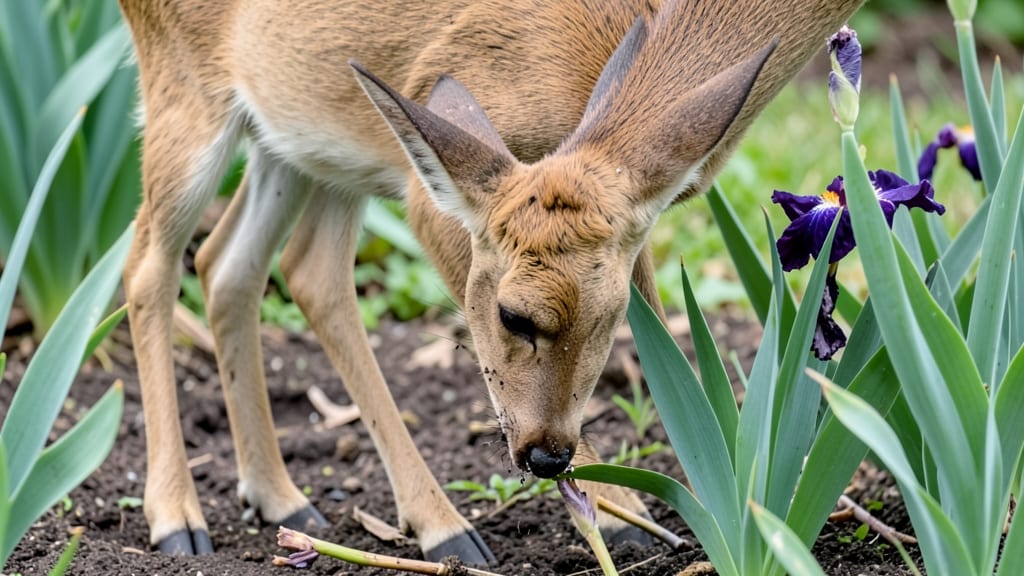
Deer eat iris plants, especially the tender leaves and rhizomes, when other food sources are limited. Their feeding can strip gardens of blooms and weaken plant health, requiring proactive deterrents.
Deer often target irises because the plants' soft foliage and nutrient-rich rhizomes provide an easy, high-value meal. 🌿 During late spring and summer, when deer face food shortages, they'll aggressively browse irises, sometimes completely stripping plants of leaves.
The underground rhizomes—where the plant stores energy—are particularly vulnerable, as deer dig to access them. This damage not only ruins the plant's appearance but also starves it of the resources it needs to thrive next season.
What makes this worse is that deer rarely eat everything in a garden—they focus on the most palatable plants first. If your irises start looking ragged with jagged edges on leaves or missing sections, that's a classic sign of deer activity.
Without intervention, repeated grazing can kill the plant over time, leaving you with an empty garden spot where beautiful blooms once stood.
💡 In This Article
- Why Deer Target Iris Plants in Gardens
- Effective Natural Deterrents for Protecting Iris
Why deer target iris plants in gardens
Deer prioritize iris plants because their tender foliage and rhizomes offer a perfect balance of nutrition and accessibility. The leaves contain moderate protein levels (around 12-15% dry matter) and carbohydrates that deer crave, while the rhizomes provide stored energy reserves—like a natural snack pack.
This combination makes them more appealing than many other perennials with tougher textures or lower nutritional payoff, such as lavender or ornamental grasses. 🌱
The timing of deer browsing aligns with iris growth cycles. During late spring and early summer, when irises are actively growing, deer take advantage of the soft, new shoots that are easier to digest. In contrast, mature leaves with thicker cell walls become less appealing.
What's particularly damaging is how deer target the rhizomes—especially during drought conditions when other food sources dry up. These underground stems can store up to 40% of the plant's energy reserves, making them a high-value target for hungry deer.
Ecological trade-offs come into play here too. While irises thrive in many climates, their popularity in gardens makes them easy targets for deer accustomed to human landscapes. Unlike wild irises that grow in dense thickets (making them harder to access), cultivated varieties are often spaced out, inviting deer to feast.
The irony? These same plants are prized for their striking blooms and hardy nature—but their vulnerability to deer creates a paradox for gardeners. 🦌
Seasonal patterns also dictate deer behavior. In winter, when deer rely on stored fat, they're less likely to browse irises. However, during late winter and early spring, when food is scarce, they'll strip irises down to the ground in search of calories.
This explains why gardeners often notice damage in March-April, just as new growth emerges. The damage isn't just cosmetic—it can prevent irises from flowering that season entirely.
Botanically, deer show a clear preference for younger tissue. New iris leaves have thinner cell walls and higher moisture content (around 85-90% water), making them easier to chew and digest. Mature leaves, with their fibrous structure, require more energy to consume, which deer avoid when better options exist.
This selective feeding pattern explains why you might see some iris plants in a garden completely devoured while others nearby remain untouched—deer are picky eaters with specific nutritional triggers. ✨
What most gardeners don't realize is how drought exacerbates this issue. When other plants wilt or become unpalatable, deer double down on irises. The stress from dehydration makes the leaves even more tender, releasing sugars that deer detect from up to 50 feet away through scent.
This creates a vicious cycle: the more stressed the plant, the more appealing it becomes to deer, leading to a downward spiral of damage and decline.
Understanding these patterns is key to protecting your irises. The combination of nutritional value, seasonal growth cycles, and environmental stressors explains why deer consistently target these plants—making deterrence strategies even more critical during peak browsing seasons. 🌿