Diseases
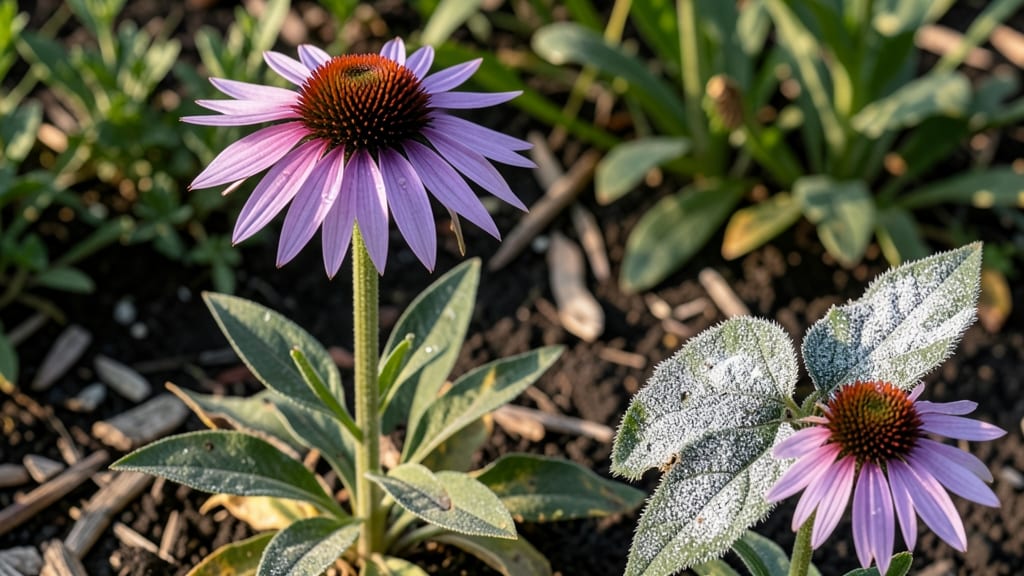
Echinacea plant diseases commonly include powdery mildew, rust, and bacterial leaf spot, often appearing as white fungal patches, orange-brown spots, or yellowing leaves. Preventative care like proper spacing, air circulation, and organic fungicides can help manage outbreaks effectively.
Echinacea plants are tough but not invincible—these vibrant perennials face three main threats that can turn lush foliage into a sad, spotted mess. 🌿 Powdery mildew thrives in humid conditions, creating that telltale white dusting on leaves, while rust fungi produce those unsightly orange-brown pustules that weaken stems.
Bacterial leaf spot, often triggered by overhead watering, shows up as dark, water-soaked marks that spread rapidly. The good news? Catching these early with regular inspections and improving airflow can save your plants before they spiral.
What sets echinacea apart is how responsive it is to preventive care. Unlike many perennials that need harsh chemicals, echinacea often recovers well when you address the root causes—literally. I've found that combining neem oil sprays every two weeks with compost tea applications boosts natural defenses.
The key is consistency: prune back infected leaves immediately, avoid overhead watering, and space plants properly to let air circulate. These simple steps can turn a potential disaster into just another season of those iconic purple blooms.
💡 In This Article
- Identifying Echinacea Fungal and Bacterial Infections
- Organic Treatment Guide for Echinacea Disease Prevention
Identifying echinacea fungal and bacterial infections
Here's what's actually happening when your echinacea leaves develop those suspicious marks. Powdery mildew starts as tiny white specks that resemble dust or flour, spreading into a thick, cottony layer that disrupts photosynthesis. Under a magnifying glass, you'd see these fungal spores connected by thread-like structures called hyphae.
Rust diseases, on the other hand, begin with small yellow spots that develop into raised, orange-brown pustules containing rust-colored spores—these often appear on the undersides of leaves first. The key difference? Mildew stays on the surface while rust penetrates deeper into leaf tissue.
The life cycles of these pathogens are fascinating but frustrating. Powdery mildew spores can survive winter in plant debris and become airborne at temperatures between 60-80°F with high humidity—perfect for those late-summer blooms. Rust fungi require two hosts to complete their cycle, often jumping from nearby weeds to your echinacea.
Bacterial leaf spot spreads through water splashes, with bacteria entering through leaf wounds created by poor watering practices or physical damage. What most people don't realize is that poor drainage creates the perfect breeding ground—waterlogged soil keeps leaves wet for long periods, ideal for bacterial growth.
Visual identification gets tricky when symptoms overlap. For instance, bacterial leaf spot can cause yellowing similar to mildew's early stages, but look closer: bacterial spots have dark centers and often appear with a yellow halo.
Rust pustules may look like mildew's white coating when dry, but they'll have that distinctive orange-brown color when moist. The environmental triggers are your best clues—powdery mildew thrives in 75-85% humidity with little airflow, while rust prefers cooler, wetter conditions.
I've noticed outbreaks spike after heavy rains when plants can't dry quickly enough.
Consider these distinguishing factors when inspecting your plants:
- Powdery Mildew: White, powdery coating (like baby powder) on leaf surfaces, often starting at leaf edges
- Rust: Orange-brown pustules that may appear on both leaf surfaces, sometimes with yellowing underneath
- Bacterial Leaf Spot: Dark, water-soaked spots with yellow halos, often on older leaves first
The science behind these infections involves fungal spores or bacterial cells finding weak points in your plant's defenses. Echinacea's natural waxy coating helps repel water, but when humidity stays above 70% for more than 12 hours, this protection breaks down.
That's why proper spacing (at least 18-24 inches apart) creates airflow that prevents spores from landing and settling. The worst case scenario? A combination of poor drainage, dense planting, and humid weather creates the perfect storm for all three diseases to appear simultaneously.
What saves most gardeners is understanding these patterns. I've seen echinacea plants recover completely when caught early, but neglected cases can lead to defoliation and reduced flowering. The good news is that these diseases rarely kill mature echinacea plants—they just make them look sad.
With regular inspections (especially after rain) and proper growing conditions, you can keep your echinacea thriving year after year. 🌿