
Fertilization
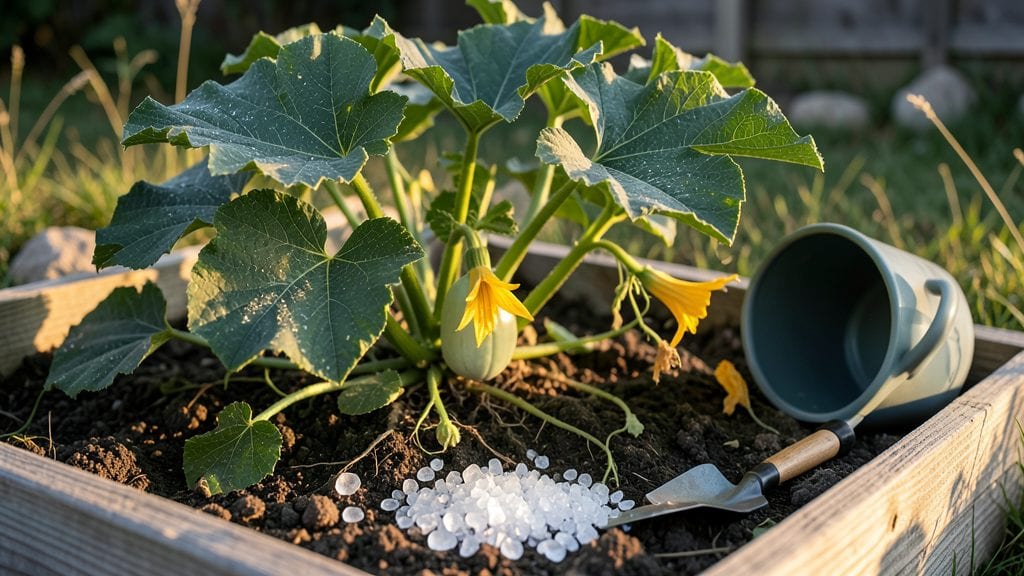
Using Epsom salt on squash plants delivers magnesium and sulfur, which helps prevent blossom end rot and enhances fruit development. Mix 1 tablespoon per gallon of water and apply monthly during flowering, but avoid overuse to prevent soil salt buildup.
Magnesium is a powerhouse nutrient for squash plants—it's essential for chlorophyll production, which gives leaves their vibrant green color.
When squash plants lack magnesium, you'll often see yellowing between leaf veins, a classic sign of deficiency. 🌱 Epsom salt (magnesium sulfate) is a fast-acting solution because it dissolves quickly in water, allowing plants to absorb magnesium through their leaves and roots almost immediately.
This is especially helpful for container-grown squash or plants in sandy soil, where nutrients can wash away more easily.
What many gardeners don't realize is that sulfur, the second ingredient in Epsom salt, also plays a role in plant health. It helps maintain the proper pH balance in soil and aids in the formation of certain amino acids.
The key is moderation—while Epsom salt can work wonders, overapplying it can actually harm your plants by creating a salt crust on the soil surface or burning the roots. Always test your soil's magnesium levels before starting a regular treatment schedule.
💡 In This Article
- How Epsom Salt Fixes Magnesium Deficiency in Squash
- Step-by-Step Guide to Safely Using Epsom Salt on Squash
How Epsom salt fixes magnesium deficiency in squash
Magnesium deficiency in squash plants starts with chlorophyll breakdown. This essential mineral sits at the center of chlorophyll molecules, acting like a bridge that helps plants convert sunlight into energy during photosynthesis.
When magnesium levels drop, the older leaves turn yellow between the veins—a condition called interveinal chlorosis—because the plant prioritizes moving nutrients to new growth. 🌿 The deficiency also disrupts calcium transport, which leads to blossom end rot in squash fruits, where the blossom end turns brown and mushy.
Epsom salt (magnesium sulfate) works because its magnesium is highly soluble in water, allowing plants to absorb it quickly through both roots and leaves. A 1 tablespoon per gallon solution provides about 1.5 grams of magnesium per application—enough to give squash plants a noticeable boost within 3-5 days of treatment.
This is faster than relying on soil amendments like dolomitic lime, which takes weeks to break down and release magnesium. The sulfur component also helps maintain soil acidity, creating optimal conditions for nutrient uptake.
Here's what's actually happening at the cellular level: Magnesium activates over 300 enzymes in plants, including those that help produce ATP (adenosine triphosphate), the energy currency of cells. Without sufficient magnesium, these enzymes slow down, leading to stunted growth and poor fruit development.
Squash plants, in particular, are heavy feeders and often deplete soil magnesium quickly, especially in sandy or acidic soils where nutrients leach away faster. 💡
The visual signs of deficiency—yellowing leaves and deformed fruits—are your plant's SOS signals. Blossom end rot occurs because calcium can't move properly without magnesium's help, causing the fruit's end to collapse.
Epsom salt's foliar spray method (applying to leaves) is especially effective for container-grown squash, where root systems have limited access to soil nutrients. However, overuse can create a salt crust on soil or cause leaf burn, so always follow the 1 tablespoon per gallon ratio and monitor your plants' response.
For best results, apply Epsom salt during the flowering stage when squash plants are actively producing fruit. The magnesium helps strengthen cell walls and improves sugar production, leading to sweeter, more vibrant fruits.
Think of it like giving your plants a quick energy drink—they'll respond with healthier leaves and better yields. 🌱
What most people don't realize is that Epsom salt's effectiveness comes from its immediate availability. Unlike organic amendments that require microbial breakdown, magnesium sulfate dissolves instantly, making it ideal for emergency treatments when you spot deficiency symptoms.
Just remember: consistency is key—monthly applications during the growing season will keep your squash plants thriving without risking nutrient overload.