
Companion Plants
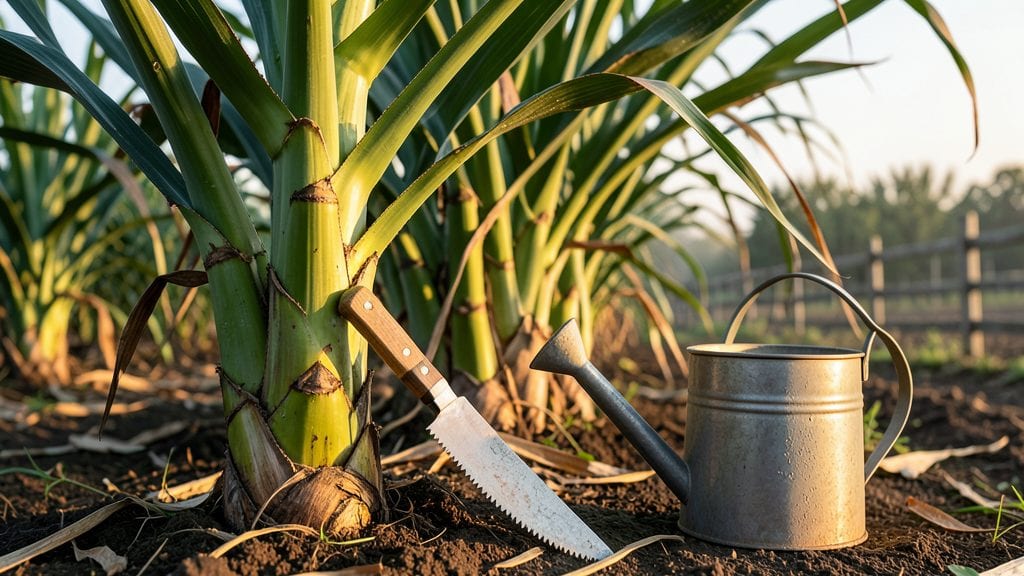
Glucose and plants are intrinsically linked through photosynthesis, where sunlight, carbon dioxide, and water combine in leaves to create glucose—the primary energy currency for growth. This sugar is either used immediately, stored as starch in roots or stems, or transformed into cellulose for structural support.
This natural process isn't just about energy—it's the foundation of a plant's entire lifecycle. 🌱 From the moment sunlight hits chlorophyll, enzymes kickstart a chain reaction that produces glucose molecules.
What's fascinating is how plants adapt: some store excess glucose as starch in tubers (like potatoes), while others convert it into sucrose for transport through their vascular system.
Even the rigid cell walls we see in stems and bark are made from cellulose, a glucose polymer that gives plants their strength.
For gardeners, understanding this means optimizing conditions—like providing bright indirect light—to boost glucose production. Too little light or water stresses the plant, forcing it to divert energy away from growth and toward survival.
The key is balance: enough sunlight to fuel photosynthesis, but not so much that it causes heat stress. This is why many plants thrive in partial shade during peak summer months.
💡 In This Article
- Photosynthesis: The Science Behind Plant Glucose Production
- How Plants Store and Utilize Glucose for Growth
Photosynthesis: the science behind plant glucose production
Here's what's actually happening inside a leaf when sunlight hits it: chlorophyll molecules in chloroplasts absorb photons, which excite electrons and trigger the light-dependent reactions.
This process splits water molecules (H₂O) into oxygen (O₂), protons, and electrons, while converting ADP + Pᵢ into ATP (energy carrier) and NADP⁺ into NADPH (electron carrier). Think of it like a tiny solar-powered battery factory operating at 100-200 million reactions per second in each chloroplast!
The energy from ATP and NADPH then powers the Calvin cycle, where CO₂ is fixed into a 3-carbon molecule called 3-phosphoglycerate. Through a series of enzyme-mediated steps, this gets converted into glyceraldehyde-3-phosphate (G3P), the building block for glucose.
A single glucose molecule (C₆H₁₂O₆) requires 6 CO₂ molecules and 12 NADPH molecules to synthesize, showing how tightly coupled these reactions are. 💫
Environmental factors dramatically influence this process. Light intensity directly affects electron flow—too little light slows reactions, while excess can damage chlorophyll. CO₂ levels above 400 ppm typically boost glucose production, but most plants saturate around 800-1000 ppm.
Temperature matters too: optimal ranges are 20-30°C (68-86°F), but enzymes denature above 45°C (113°F). That's why desert plants like cacti have adapted to photosynthesize at cooler temperatures or store water to maintain metabolic function.
Chlorophyll isn't the only player—accessory pigments like carotenoids (which give carrots their color) absorb different light wavelengths, expanding the plant's light-harvesting capacity. These pigments also protect chlorophyll from photodamage by dissipating excess energy as heat.
The entire system operates with remarkable efficiency: about 3-6% of sunlight energy gets converted to chemical energy in glucose, which is comparable to the efficiency of solar panels today!
What most people don't realize is how quickly this process happens. A single corn leaf can produce 0.1-0.2 grams of glucose per hour under ideal conditions, enough to fuel its growth and store energy for later use.
This glucose isn't just food—it's the raw material for everything from the starch in potatoes to the cellulose in wood fibers. The same biochemical pathways that create glucose also produce amino acids and fatty acids, showing how central this process is to plant biology. ✨
The light-dependent reactions and Calvin cycle work together like an assembly line. First, sunlight splits water and creates energy carriers (ATP/NADPH), then those power the carbon fixation process.
This two-stage system allows plants to separate light absorption (which happens in the thylakoid membranes) from carbon processing (which occurs in the stroma), creating an efficient division of labor within the chloroplast. 🌿