Diseases
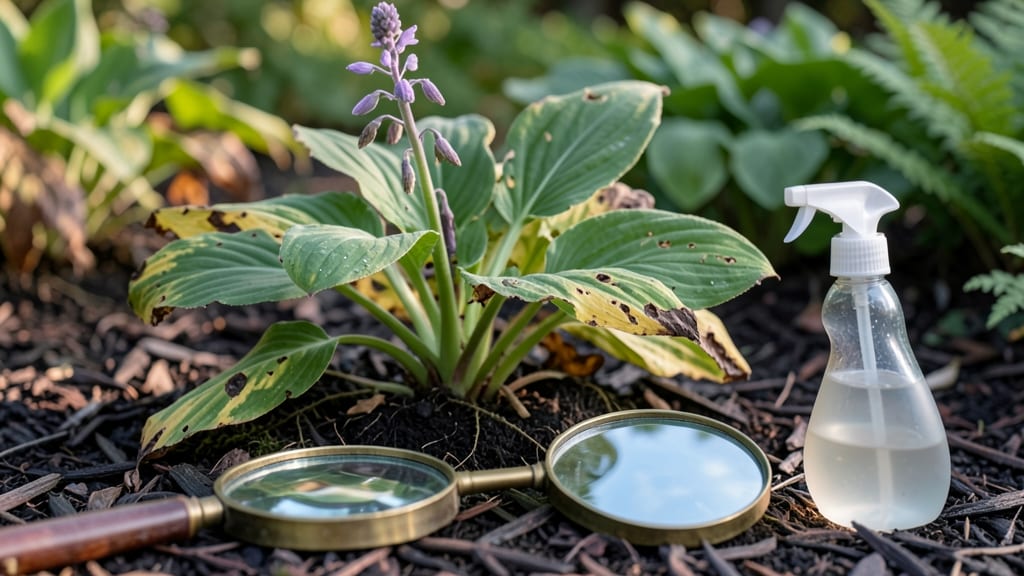
Those telltale brown spots on your hosta leaves signal the start of hosta plant diseases, and without quick action, your prized shade garden could crumble into a fungal wasteland.
I’ve lost count of how many hostas I’ve nursed back from leaf spot and rot, and the key is catching it early when treatments actually work. The good news? Most hosta diseases respond well to simple, organic fixes if you act fast.
Fungal diseases like leaf spot, crown rot, and slime mold thrive when hostas get too wet, crowded, or stressed. Poor airflow from overplanting or water splashing leaves creates the perfect breeding ground. My biggest mistake?
Ignoring the early signs until the damage spread—don’t make that mistake. Proper spacing, watering at the soil level (not overhead), and removing infected leaves immediately cuts off the fungus’s lifeline.
You’ll be able to save your hostas with a few targeted sprays—neem oil for leaf spot, copper fungicide for stubborn rot, or even a homemade baking soda mix for mild cases.
Within weeks, you’ll see fresh, unblemished growth pushing through, and your plants will bounce back stronger than ever. The secret weapon? Consistency in prevention.
This works for both shade-loving hostas in gardens and container-grown varieties—just adjust your watering routine based on pot size. Once you’ve mastered these basics, your hostas will stay lush, disease-free, and the envy of every neighbor. Let’s get those leaves looking crisp again.
Root Causes of Hosta Troubles
Hostas are prized for their lush foliage and adaptability, but their susceptibility to diseases often stems from a mix of environmental, biological, and cultural factors. Understanding the why behind these issues is the first step to prevention.
Let’s break down the key culprits—from unseen pathogens to gardener habits—that turn your hostas into a buffet for fungal foes.
Fungi thrive in damp, stagnant environments, and hostas packed too tightly create the perfect breeding ground. When leaves brush against each other, moisture lingers, slowing evaporation and trapping spores.
Common diseases like **slime mold (🍄 Fuligo septica) or leaf spot (🍃 Alternaria spp.) flourish here because spores can’t dry out.
The science:
- Poor airflow = relative humidity stays high near the foliage, even in dry climates.
- Overcrowded plants retain moisture longer after rain or watering, giving fungi 24–48 hours of ideal conditions to infect.
- Solution: Space hostas 12–24 inches apart (depending on variety) and prune lower leaves to improve circulation.
Hostas love moisture, but too much water—especially on leaves—is a fast track to disease. Fungal spores (like those causing powdery mildew 🌫️ Erysiphe spp.) need free water to germinate and infect.
Even well-draining soil can become problematic if: - You water from above (foliar splashing). - Soil stays soggy for days (poor drainage or heavy clay). - Mulch is too thick (trapping moisture against stems).
The science:
- Leaf wetness duration > 6 hours = 50% higher risk** of fungal infection (studies from Plant Disease journal).
- Splash dispersal from overhead watering can spread spores up to 3 feet from the original infection.
- Solution: Water at the base, not overhead, and use drip irrigation or soaker hoses. Mulch 2–3 inches deep (not more) to balance moisture retention.
Diseases don’t just appear—they hitchhike on contaminated soil, old plant debris, or gardening tools. Spores from pathogens like **crown rot (🍂 Phytophthora spp.) or rust (🔥 Puccinia spp.) can survive in soil for years, waiting for the right conditions to strike.
The science:
- Phytophthora spores can persist in waterlogged soil for decades.
- Pruners, gloves, or pots used on infected plants can transfer spores to healthy ones.
- Solution:
- Rotate hostas every 3–4 years to avoid reinfection in the same soil.
- Test soil for fungal pathogens if diseases recur yearly (contact your local Cooperative Extension Service).
Hostas are hardy, but sudden temperature shifts (like hot days followed by cold nights) weaken their defenses. Stress makes them more vulnerable to pathogens like bacterial leaf blight (💀 Xanthomonas campestris) or gray mold (🏔️ Botrytis cinerea).
The science:
- Temperature stress disrupts the cuticle wax layer on leaves, making them easier to penetrate.
- Nighttime dew + daytime heat = ideal fungal growth (many pathogens have optimal temp ranges**, e.g., Botrytis thrives at 60–77°F).
- Solution:
- Avoid planting in full sun without shade cloth (especially in hot climates).
- Mulch with straw or wood chips to moderate soil temps.
- Water deeply in the morning to reduce evening moisture buildup.
A lack of key nutrients (like nitrogen, potassium, or micronutrients) stresses hostas, making them easier targets for diseases.
For example: - Low nitrogen = thin, weak leaves (easier for fungi to penetrate). - Potassium deficiency = poor cell wall strength (fungi break through faster). - Zinc or magnesium deficiencies = intercellular leaf damage, giving spores entry points.
The science:
- Potassium (K) helps regulate stomatal closure, reducing fungal entry.
- Zinc (Zn) is critical for protein synthesis, which repairs cell damage.
- Solution:
- Soil test every 2–3 years and amend with balanced fertilizer (10-10-10) in spring.
- Compost or worm castings improve soil microbial balance, which suppresses pathogens naturally.
Some pests don’t just damage hostas—they open doors for disease.
For example: - Slugs and snails leave irregular holes that expose tissue to bacterial or fungal infections. - Aphids excrete honeydew, which fosters **sooty mold (🖤 Capnodium spp.). - Japanese beetles chew leaves, creating wounds where rust spores can land.
The science:
- Physical damage from pests reduces hosta resistance by 30–50%** (per HortScience studies).
- Honeydew is a fertilizer for mold—sooty mold thrives on sugary residues.
- Solution:
- Handpick pests early (especially beetles).
- Use beer traps for slugs or copper barriers.
- Neem oil (applied at dusk) deters pests without harming beneficial insects.
Some diseases peak at specific times due to weather patterns:
- Spring rains + cool nights = powdery mildew outbreaks.
- Summer humidity > 75% = leaf spot epidemics.
- Fall leaf litter = slime mold or crown rot spores spreading.
The science:
- Relative humidity (RH) > 80% for 48+ hours = optimal for fungal spore germination.
- Autumn leaf drop creates moist, decaying mulch, perfect for saprophytic fungi (like Fusarium).
- Solution:
- Rake up fallen leaves in autumn to reduce spore reservoirs.
- Choose disease-resistant varieties (e.g., ‘Halcyon’ for mildew resistance).
- Adjust planting locations—e.g., avoid low spots where cold air pools.
Quick Fixes for Hosta Ailments
When your hostas show signs of distress, acting fast can save their lives—and your garden’s beauty. Below are practical, step-by-step solutions tailored to the most common hosta diseases, plus prevention tips to keep them thriving. Think of this as your hosta first-aid kit—no green thumb required!
Fungi thrive in damp, shady spots, turning your hostas into a buffet. Here’s how to starve the spores and restore health:
🔥 Remove the Problem (Prune Like a Pro) 1. Snip infected leaves at the base (don’t compost them—toss in the trash or burn). 2. Avoid overhead watering—use a soaker hose or drip irrigation to keep foliage dry.
- Space plants properly (12–18 inches apart) for airflow. Crowded hostas = fungal paradise.
🧴 Fungicide Treatments That Work - Baking soda spray: Mix 1 tsp baking soda + 1 tbsp vegetable oil + 1 tsp mild soap per gallon of water.
Spray undersides of leaves (where spores hide). - Neem oil: A natural fungicide and growth regulator for powdery mildew. Apply at dusk (avoids harming bees). - Copper fungicide: For stubborn cases like leaf spot or rust, use a fixed copper spray (follow label rates).
🌡️ Prevention: Dry Out the Enemy
- Water in the morning so foliage dries by night.
- Mulch with gravel or pine straw (not organic mulch) to reduce soil moisture.
- Rotate hostas annually to prevent soil-borne fungi from building up.
Pests create wounds that invite disease. Outsmart them with these tactics:
👨🍳 Slug & Snail Barricades
- Copper tape: Wrap around pots or create a copper ring in the soil (slugs hate the shock!).
- Beer traps: Bury a shallow dish filled with beer near plants—slugs crawl in and drown.
- Diatomaceous earth: Sprinkle food-grade DE around the base (reapply after rain).
🔪 Insect Control Without Chemicals
- Handpick chewers (like earwigs or cutworms) at night with a flashlight.
- Introduce predators: Ladybugs and ground beetles love aphids and slug eggs.
- Spray with soapy water: Mix 1 tsp dish soap + 1 quart water for soft-bodied pests.
🌿 Long-Term Defense
- Plant slug-repellent neighbors: Garlic, chives, or thyme around hostas.
- Use raised beds (harder for slugs to invade).
- Avoid over-fertilizing—soft, lush growth attracts pests.
- 🌱 Choose resistant varieties: Look for hostas labeled "disease-resistant" (e.g., ‘Halcyon’ for powdery mildew).
- ⏰ Prune in stages: Remove only the worst leaves in early summer, not all at once (shock weakens plants).
- 🔄 Rotate crops: Don’t plant hostas in the same spot yearly—fungi linger in the soil.
- 🌡️ Monitor humidity: Use a hygrometer—keep shade gardens below 70% humidity when possible.
Remember: The key is early action. A little prevention now means lush, disease-free hostas for years to come! 🌿✨
Frequently asked questions
What are the most common signs of fungal diseases in hostas?
Watch for brown or black spots with yellow halos on leaves (leaf spot), white powdery coatings (powdery mildew), or slimy, gray patches (slime mold). Dark, mushy stems signal crown rot. Always check leaf undersides—spores hide there!
Can I still use infected hosta leaves in my compost?
No! Fungal spores survive composting and reinfect your garden. Toss severely diseased leaves in the trash or burn them. Only compost healthy leaves or use them as mulch in a separate "hot" compost pile (140°F+ for 3+ days).
How often should I apply fungicide to prevent diseases?
For prevention, spray every 2-3 weeks during rainy seasons or when humidity stays above 75%. Use neem oil or baking soda mixes as a weekly maintenance when conditions are ideal for fungi (spring/fall). Stop treatments once new growth appears disease-free.
Are there hosta varieties that naturally resist diseases?
Yes! Look for varieties like 'Halcyon' (powdery mildew resistant), 'Francee' (rust resistant), or 'Blue Angel' (leaf spot tolerant). These hybrids were bred to handle humidity better. Check labels or ask nurseries for "disease-resistant" hostas.
What's the fastest way to save a hosta with crown rot?
Dig up the plant immediately, trim away all mushy roots/stems with sterilized shears, then replant in fresh, well-draining soil. Add copper fungicide to the soil and avoid watering overhead. For severe cases, propagate from healthy leaves in water before replanting.