
Light Requirements
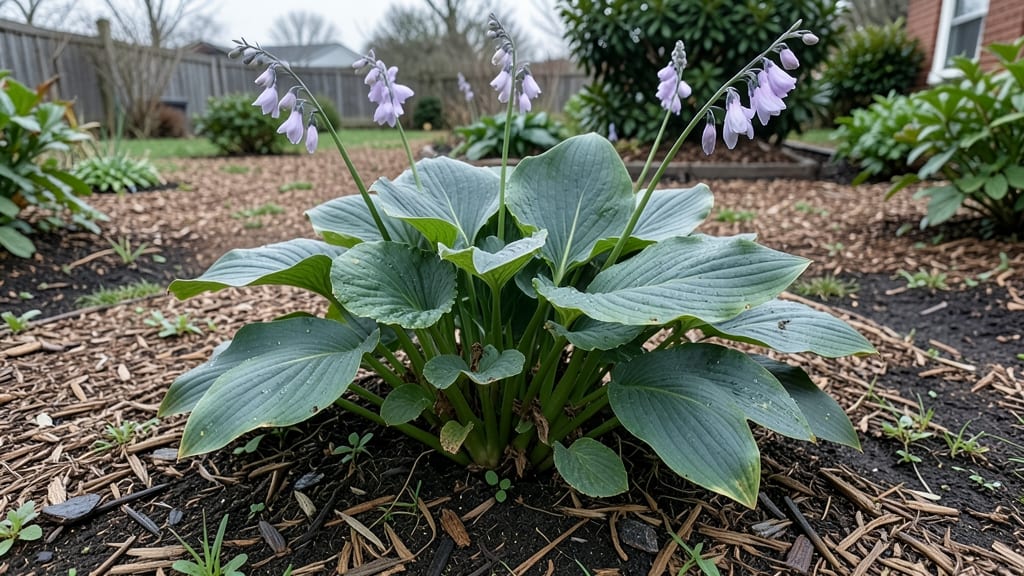
Hosta plants thrive in partial shade but tolerate morning sunlight, avoiding harsh afternoon rays that can scorch leaves. Ideal light exposure is 3-6 hours of filtered sun daily, with deeper shade for variegated varieties to maintain foliage color.
Hostas rely on balanced light to produce vibrant foliage, but too much direct sun can turn their leaves yellow or crispy at the edges. 🌿 The key is mimicking their natural woodland habitat—think dappled light under tall trees rather than full sun exposure.
Variegated types, with their white or yellow stripes, need even more protection since those lighter areas lack chlorophyll and burn easily in strong light.
For gardeners in sunnier climates, I recommend positioning hostas near north-facing walls or under deciduous trees that provide summer shade while allowing winter sun. Even just a few hours of morning light can keep them happy, while afternoon rays are the real enemy for leaf health.
💡 In This Article
- How Sunlight Affects Hosta Leaf Color and Growth
- Best Light Solutions for Hostas in Sunny or Shady Gardens
How sunlight affects hosta leaf color and growth
Here's what's actually happening at the cellular level: Hostas produce chlorophyll in their leaves to convert sunlight into energy through photosynthesis, but their sensitivity to UV rays creates a delicate balance.
The blue-green hues in hosta leaves come from chlorophyll, while the yellow or white variegation contains less chlorophyll and more carotenoids or anthocyanins. When exposed to intense sunlight, these lighter areas overheat because they lack the protective chlorophyll layer, leading to bleaching or crispy edges.
The key factor is light intensity, not just duration. Morning sunlight has lower UV levels than afternoon rays, which is why east-facing gardens work better.
For example, a variegated 'Halcyon' hosta with creamy edges needs only 2-3 hours of morning sun to maintain its striking pattern, while a solid green variety like 'Francee' can handle 4-6 hours of dappled light.
Too much direct sun causes oxidative stress, reducing leaf size by up to 30% and making plants more susceptible to fungal diseases like leaf spot.
This works because hostas evolved in woodland understories where light fluctuates. Their leaves have a waxy cuticle that reflects some sunlight, but it's not enough for full sun.
What most people don't realize is that low-light conditions actually make hostas more tender and slug-resistant—their thicker leaves contain more mucilage, a gel-like substance that deters pests.
In shady spots, you'll see larger, broader leaves with deeper colors because the plant invests energy in fewer, more robust foliage units rather than producing many small ones.
Temperature plays a hidden role too. Hostas grown in cooler climates (USDA zones 3-5) can tolerate slightly more sun because the air temperature moderates UV exposure.
For instance, a hosta in Zone 4 might handle 6 hours of morning sun without damage, while the same variety in Zone 7 would need shade by 10 AM.
The science behind this involves photoprotection mechanisms that shut down when temperatures exceed 85°F, forcing the plant to prioritize survival over growth.
Consider these practical implications for leaf thickness: Hostas grown in partial shade develop leaves that are 20-30% thicker than those in full sun. This extra thickness comes from increased cell division in the mesophyll layer, where photosynthesis occurs.
Thicker leaves also store more water, making plants more drought-tolerant. The trade-off? Slower growth rates—hostas in deep shade may take 2-3 years longer to reach maturity compared to those in ideal light conditions.
What's fascinating is how variegation patterns respond to light. The white or yellow sectors in leaves contain 50-70% fewer chloroplasts than green areas, making them highly sensitive to UV. In low light, these sectors can actually darken slightly as the plant redistributes chlorophyll to compensate.
But under intense sun, they bleach out permanently, creating an irreversible "sunburn" pattern. This is why gardeners often see variegated hostas with uneven coloration—it's a sign of inconsistent light exposure.
For gardeners, this means placement matters more than you might think. A hosta near a south-facing window might get too much light, while one under a dense evergreen could struggle with less than 3 hours of light daily.
The sweet spot is 30-60% shade cloth or dappled light from deciduous trees like maples or oaks, which naturally filter sunlight while allowing airflow. 💫