
Plants
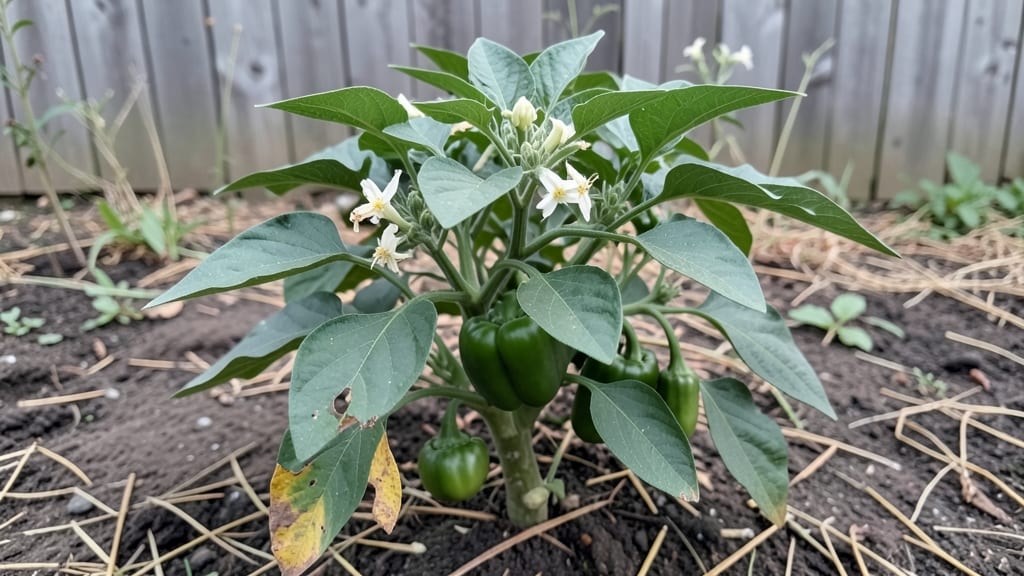
Identifying pepper plants by their leaves and stems saves you from guessing—and that’s the difference between a thriving harvest and wasted effort. 🌱 I’ve stared at too many plants that looked like peppers but turned out to be something else, and once you know the subtle clues, you’ll spot the variety in seconds.
The shape of the leaves, the way the stems grow, and even the color of new growth all tell you whether you’re dealing with a sweet bell pepper, a fiery habanero, or something in between.
Here’s the game-changer: bell peppers have broad, rounded leaves and sturdy stems, while jalapeños and serranos grow narrower with serrated edges. Habaneros and ghost peppers often have hairy stems and smaller, more pointed leaves—details most gardeners overlook until they’re knee-deep in plants that don’t match their expectations.
A quick photo comparison with a reference app (like PictureThis or Google Lens) can confirm what your eyes might miss.
Why does this matter?
The wrong care can ruin a plant—bell peppers need different watering than habaneros, and some varieties attract pests others don’t. Once you master these visual cues, you’ll know exactly what you’re growing, how to nurture it, and what kind of heat (or sweetness) to expect when harvest time rolls around.
The confidence alone makes it worth learning.
This works for seedlings, mature plants, and even mystery plants you’ve inherited from a neighbor. Start with the leaves, then move to the stems, and you’ll never second-guess your pepper patch again. Ready to become the pepper detective in your garden?
Root Causes Of Misidentification
Identifying pepper plants correctly can be tricky, especially when visual traits overlap between species or varieties. Here’s why misidentification happens—and how to spot the real clues:
Pepper plants often share similar leaf structures, making it hard to distinguish them at first glance.
For example: - Bell peppers and jalapeños both have smooth, lance-shaped leaves, but bell pepper leaves tend to be wider at the base (like an oval) while jalapeño leaves are narrower and more elongated. - Habanero leaves may look serrated (toothed) like those of cayenne peppers, but habanero leaves are darker green and slightly waxy, whereas cayenne leaves are lighter and more delicate.
💡 Pro Tip: Compare leaves to a reference chart—small differences in vein pattern or leaf texture (e.g., fuzzy vs. smooth) are key.
Young pepper plants often lack defining traits until they mature.
For instance: - Pepperoncini and jalapeños can look identical when seedlings, but pepperoncini leaves develop smaller, tighter clusters as they age, while jalapeños grow longer and more spaced out. - Ghost peppers start with broad, heart-shaped leaves, but their true identity only reveals itself when they produce thin, tapered fruits with a distinct "horned" shape.
⏰ Time-Saver: Wait until plants are 4-6 weeks old before attempting ID—this is when leaf shape and stem thickness become more distinct.
Many gardeners rely too heavily on fruit shape (e.g., "All blocky peppers are bell peppers!"), but this is a common mistake:
- Shishito peppers can resemble banana peppers when young, but shishito leaves are narrower and more pointed, while banana peppers have broader, rounded leaves.
- Cherry peppers (like 'Apache' or 'Sunny') may look like mini bell peppers, but their leaves are finer and more feathery, while bell pepper leaves are sturdier and glossier.
🔍 Actionable Fix: Check the stem—pepper varieties with hairy stems (like some habaneros) are a dead giveaway, while smooth stems (common in bells) indicate a different type.
Some pepper plants are grafted (e.g., bell peppers grafted onto jalapeño roots) or cross-pollinated, leading to hybrid traits that confuse identification:
- A grafted plant may have top leaves resembling one variety (e.g., bell pepper) but root stock leaves of another (e.g., jalapeño).
- Volunteer seedlings (from dropped seeds) can produce unexpected leaf shapes if pollinated by multiple varieties.
🌱 Solution: If unsure, trace the plant’s origin—ask the seller or check seed packets for true-to-type guarantees.
Drought, poor soil, or pests can alter leaf appearance, making ID harder:
- Underwatered peppers develop yellowing, curled leaves that may mimic nutrient deficiencies (like nitrogen lack).
- Pepper maggot damage causes ragged, irregular leaf edges, making it look like a different variety entirely.
🌡️ Quick Check: Healthy pepper leaves should be deep green, firm, and uniformly shaped. Any discoloration or deformities suggest stress—not just a misID.
Some peppers are local adaptations with unique traits:
- African bird’s eye peppers have tiny, round leaves, unlike their larger cousins.
- Peruvian rocoto peppers grow thicker, waxier leaves than standard cayennes.
📊 Data Point: Over 50% of pepper misidentifications happen because gardeners assume a plant is a common variety (like jalapeño) when it’s actually a regional heirloom.
The way a pepper plant branches is often overlooked but highly telling:
- Bush varieties (like bell peppers) grow compact with short internodes (spaces between leaves).
- Vining types (like habaneros) have longer stems with wider spacing between leaves.
👨🍳 Grower’s Hack: Run your fingers along the stem texture—smooth = bell family, slightly ridged = chili family.
Before fruits even form, flower structure can reveal the variety:
- Bell peppers produce white or purple flowers with thick petals.
- Chili peppers (like cayennes) have smaller, yellowish flowers with thinner petals.
🌸 Bonus Tip: If flowers are already fading, check for tiny fruit buds—their shape (blocky vs. tapered) is a game-changer for ID.
Some peppers react differently to soil pH or nutrients, affecting leaf growth:
- Calcium-deficient soil causes cupped or blistered leaves, mimicking disease symptoms.
- High-nitrogen soil leads to large, soft leaves (common in tomato pepper hybrids).
💡 Soil Test Tip: Use a pH meter—peppers thrive in 6.0–6.8 pH. If outside this range, leaf shape distortions can occur.
Even experienced gardeners overlook key details when rushed. Common mistakes:
- Ignoring the base of the leaf (where veins meet the stem).
- Focusing only on fruit instead of leaf-serration patterns.
- Assuming all peppers are the same until they flower.
✨ Final Fix: Photograph the plant from multiple angles (leaves, stem, flowers) and compare to a database like the Pepper Scale for accuracy.
Quick fixes for pepper plant issues
Got a pepper plant acting up? Whether it’s struggling to thrive, misidentified, or showing signs of stress, here’s how to diagnose and solve common problems—fast. Below, we’ll match your plant’s symptoms to the right fixes, plus tips to keep your peppers happy long-term.
Cause: Too much water, poor drainage, or lack of essential nutrients like nitrogen. Fix:
- 🔥 Drainage Check: Ensure pots have holes and use well-draining soil (mix potting soil with perlite or sand).
- 💧 Water Wisely: Water only when the top 1–2 inches of soil are dry. Pepper plants hate soggy roots!
- 🌿 Fertilize Right: Use a balanced fertilizer (10-10-10) every 4–6 weeks or switch to compost tea for organic boosts.
Prevention Tip: 💡 Mulch around the base to retain moisture without over-saturating the soil.
Cause: Not enough sunlight or overcrowding triggers weak, stretched growth. Fix:
- ☀️ Move to Bright Light: Place near a south-facing window or under grow lights (12+ hours/day).
- 🌿 Prune for Airflow: Trim crowded branches to improve circulation and reduce disease risk.
- 📏 Repot if Needed: If roots are circling, upgrade to a slightly larger pot (1–2 inches wider).
Prevention Tip: ✨ Rotate plants weekly to ensure even light exposure.
Cause: Aphids, spider mites, or pepper maggots love pepper plants. Fix:
- 🔍 Inspect Daily: Check undersides of leaves for tiny pests (use a magnifying glass if needed).
- 💦 Spray Neem Oil: Mix 1 tsp neem oil + 1 tsp mild soap in 1 quart of water. Spray leaves thoroughly.
- 🌿 Introduce Beneficial Insects: Ladybugs or lacewings eat pests naturally (available at garden centers).
Prevention Tip: 🌡️ Keep humidity low (40–60%) to deter mites—use a fan if needed.
Cause: Poor pollination (no bees?) or too much nitrogen (leads to leafy growth, no fruit). Fix:
- 🐝 Hand-Pollinate: Gently shake plants or use a small brush to transfer pollen between flowers.
- 🍽️ Balance Fertilizer: Switch to a low-nitrogen, high-phosphorus fertilizer (like 5-10-10) to encourage fruiting.
- ☀️ Ensure Warmth: Peppers need temps above 60°F (15°C) to set fruit.
Prevention Tip: 🎯 Plant near bee-friendly flowers (like marigolds) to attract pollinators naturally.
Cause: Extreme heat, underwatering, or root damage. Fix:
- 💦 Hydrate Deeply: Water at the base (not leaves) in the morning to avoid evaporation.
- 🌿 Shade Cloth: Use 30–50% shade cloth if temps exceed 90°F (32°C).
- 🔄 Check Roots: If wilting persists, gently remove the plant to inspect for rot or damage.
Prevention Tip: 💡 Mulch heavily to retain soil moisture and regulate temperature.
Pro Tip: 🔥 When in doubt, quarantine new plants for 2 weeks to prevent spreading pests or diseases to your pepper patch!
Frequently asked questions
How can I tell the difference between bell pepper and jalapeño plants before they fruit?
Look at the leaf shape and stem thickness. Bell pepper leaves are broader and oval-shaped with smooth edges, while jalapeño leaves are narrower and more elongated. Also, jalapeño stems often feel slightly hairier than bell pepper stems, which are typically smooth.
What’s the best app to identify my pepper plant?
Try PictureThis or Google Lens—upload a clear photo of your plant’s leaves and stems, and they’ll match it against a database. For a more gardening-focused tool, PlantNet is free and highly accurate. Always double-check with a reference chart if the app gives conflicting results.
Can I use leaf shape alone to identify a pepper variety?
No—leaf shape is a great starting point, but stem texture and flower structure are equally important. For example, habanero leaves may look serrated like cayennes, but habaneros have darker, waxier leaves and hairier stems. Always compare multiple traits for accuracy.
Why does my pepper plant look different from what I planted?
It could be a grafted plant (common with bell peppers), where the top leaves resemble one variety while the roots are from another. Or, if you grew from seed, cross-pollination might have created hybrid traits. Check the plant’s origin or compare it to a reference database like the Pepper Scale.
How do I know if my pepper plant is healthy enough for accurate identification?
Healthy pepper plants have deep green, firm leaves without yellowing or spots. Avoid identifying plants under stress (like drought or pests), as this can distort leaf shape. Wait until the plant is 4-6 weeks old for the most reliable traits.