Companion Plants
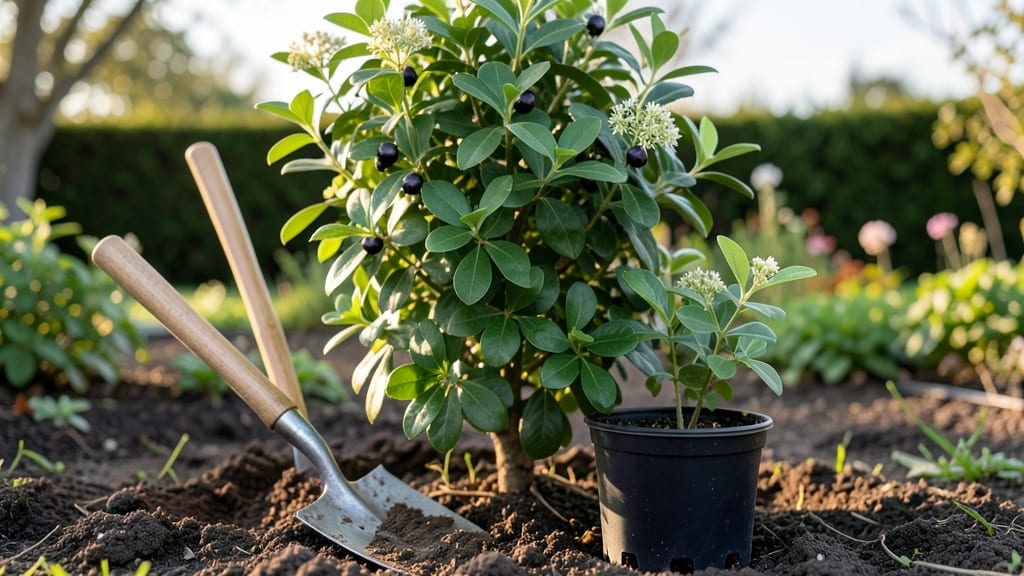
The right ligustrum planting distance ensures your hedge thrives lush and strong—avoid the tangled mess others face.
Planting ligustrum too close can stunt growth, invite pests, and create a tangled mess—but spacing them just right unlocks lush, low-maintenance hedges that thrive for decades. I’ve seen 3-foot gaps turn into 10-foot monsters when pruned wrong, and 6-foot spacing yield dense walls in 3 years.
Whether you’re planting for a privacy screen or a manicured hedge, the right distance depends on your ligustrum variety, soil, and sunlight. Too tight? You’ll battle fungal diseases and weak stems. Too wide? You’ll waste space and money on extra plants.
Here’s how to calculate the perfect spacing for your Privet (Ligustrum)—plus fixes for common mistakes that turn hedges into headaches.
Optimal ligustrum planting distance by variety and growth habit
Ligustrum shrubs—commonly called privet—come in dozens of varieties, each with unique spacing needs based on their mature size and growth habits.
Planting them too close can lead to competition for nutrients, increased pest pressure, and poor air circulation, while spacing them too far wastes space and reduces visual impact. The key is balancing their spread and height for either hedges or specimen plants.
For example, Ligustrum vulgare (common privet) can grow up to 15 feet tall and 10 feet wide, while Ligustrum sinense (Chinese privet) stays more compact at 6-10 feet tall and 4-6 feet wide.
Even within a single species, dwarf varieties like 'Golden Sun' need far less space than standard types. Understanding these differences ensures your ligustrum thrives without crowding or gaps.
Here’s how to calculate spacing for three common ligustrum types—plus how to adjust for hedges vs. single plants—using mature dimensions as your guide. Always measure from the center of one plant to the center of the next to avoid overcrowding.
For hedges, reduce spacing by 20-30% to create a dense, uniform barrier. For privacy screens, increase spacing by 10-20% to allow for future growth and better airflow.
Pruning also plays a role: Frequently pruned varieties like 'Wax Leaf' can handle closer spacing, while unpruned types need more room to sprawl.
Always consider your soil type and climate. In poor-draining soil, space plants 10-15% farther apart to prevent root rot. In arid climates, wider spacing improves water efficiency by reducing competition.
Below, we break down the optimal spacing for the most popular ligustrum varieties, including dwarf, semi-dwarf, and standard types.
🌿
| Variety | Mature Height (ft) | Mature Spread (ft) | Optimal Spacing (ft) | Hedge Spacing (ft) | Notes |
|---|---|---|---|---|---|
| Ligustrum vulgare ('Common Privet') | 10-15 | 8-12 | 8-10 | 5-6 | Needs full sun; prune annually for dense growth. |
| Ligustrum sinense ('Chinese Privet') | 6-10 | 4-6 | 5-6 | 3-4 | Tolerates partial shade; great for smaller gardens. |
| Ligustrum japonicum ('Wax Leaf Privet') | 8-12 | 6-8 | 6-8 | 4-5 | Fast-growing; ideal for hedges and privacy screens. |
| Ligustrum 'Golden Sun' (Dwarf) | 3-5 | 3-4 | 3-4 |
Common ligustrum spacing mistakes and how to fix themOvercrowded ligustrum shrubs suffer silently—until you notice stunted growth, fungal infections, or weak stems that snap in storms. The problem? Most gardeners plant them too close together without considering mature size or airflow needs. I’ve seen hedges turn into dense, disease-ridden walls because of this one mistake. Let’s fix it with science-backed spacing rules and quick recovery steps. Poor spacing doesn’t just hurt aesthetics—it creates a perfect storm for powdery mildew and root rot. Ligustrum needs room to breathe, especially Ligustrum vulgare, which can grow 10–15 feet tall and spread just as wide. When shrubs compete for nutrients, they compromise their immune systems, making them vulnerable to pests like spider mites and scale insects. The good news? Adjusting spacing and pruning can revive even neglected hedges. ⚠️ callout-warning
⚠️ Warning: Ligustrum Overcrowding = Disease Magnet
Planting ligustrum shrubs closer than 3 feet apart (for dwarf varieties) or 5–6 feet apart (for standard types) creates a humid microclimate that traps moisture. This leads to:
Fix it now: Measure your mature ligustrum’s spread (not just height) and space them at least 50% wider than their projected width. For example, a 6-foot-wide shrub needs 9–12 feet between plants. If your ligustrum is already overcrowded, don’t panic—pruning is your best tool. Start by removing 1/3 of the oldest wood in late winter or early spring to open up the canopy. Thin out the innermost branches to improve air circulation. For severe cases, consider dividing the shrub into smaller sections and replanting them with proper spacing. This might seem drastic, but it’s far better than watching your hedge decline. Soil health plays a surprisingly big role in spacing success. Ligustrum thrives in well-draining soil with a pH of 6.0–7.5. If your soil is compacted or waterlogged, roots strangle each other faster. Amend the soil with compost or sand before replanting to give roots room to expand. A 3-inch layer of mulch around each plant also helps regulate moisture and temperature, reducing stress. Companion planting can work with your ligustrum’s spacing instead of against it. Pair it with drought-tolerant perennials like lavender or Russian sage, which thrive in the same full sun to partial shade conditions but won’t compete aggressively for space. Avoid planting ligustrum near deep-rooted trees (like oaks) or aggressive spreaders (like mint), which can outcompete your shrubs. For hedges, stagger your planting rows like bricks in a wall. This creates a natural airflow pattern and lets you fit more plants in the same space without sacrificing health. For example, plant one row at 5 feet apart, then offset the next row by 2.5 feet. This technique maximizes sunlight exposure for all plants and makes pruning easier. Just remember: never plant in straight lines—it creates dead zones where pests hide. |