
Companion Plants
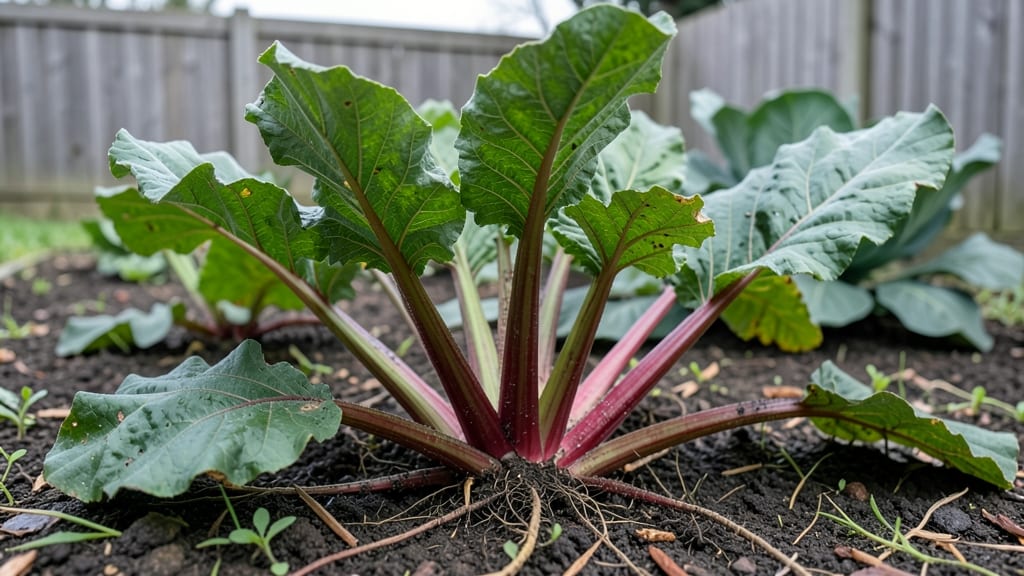
Managing mature rhubarb plants 🌱 is the key to turning your patch from a tangled mess into a high-yielding powerhouse.
If your rhubarb patch looks more like a tangled mess than a thriving garden, it’s time to act—crowded mature rhubarb plants produce smaller stalks and weaker growth. Dividing them every 3-4 years isn’t just maintenance; it’s the secret to a bountiful harvest for years to come.
You’re not alone if you’ve ever wondered why your stalks seem thinner or your plants struggle to bounce back after winter. The answer lies in proper spacing, pruning, and understanding when to give your rhubarb a little elbow room.
Below, I’ll walk you through the exact steps to divide, replant, and care for your mature rhubarb so you can enjoy thicker stalks, healthier growth, and fewer headaches in the garden.

When and how to divide overgrown mature rhubarb plants
Dividing mature rhubarb plants every 3-4 years is the best way to rejuvenate your patch and ensure larger, healthier stalks. When left undivided, rhubarb forms dense clumps that compete for nutrients, resulting in smaller harvests and weaker growth.
The key to success lies in timing, proper tools, and careful handling to preserve the crown and roots.
Most gardeners prefer dividing in early spring (March-April) when new growth begins but before the plant becomes too active. However, fall division (September-October) works too if you're in a cooler climate.
Avoid dividing during hot summer months or when the plant is actively producing stalks, as this stresses the roots and reduces recovery time.
- 1 Choose the right time: Divide in early spring (March-April) or fall (September-October) when the plant is dormant or just waking up.
- 2 Gather your tools: Sharp spade or garden fork, pruning shears, gloves, compost, and a wheelbarrow for transport.
- 3 Water thoroughly: Soak the area 24 hours before dividing to soften the soil and make roots easier to separate.
- 4 Dig up the plant: Use your spade to cut around the rhubarb crown in a 12-inch circle, lifting gently to expose roots.
- 5 Separate the crowns: Gently pull apart the root clumps to create 3-5 smaller divisions, ensuring each has 3-5 stalks and healthy roots.
- 6 Trim the foliage: Cut back leaves and stalks to 6 inches above the crown to reduce stress and encourage root establishment.
- 7 Prepare new beds: Amend soil with compost and ensure 2-3 feet spacing between divisions for optimal growth.
- 8 Replant immediately: Place each division 2-3 inches deep in the soil, firm gently, and water deeply to settle roots.
- 9 Mulch and water: Apply 2-3 inches of mulch and keep soil moist but not soggy for the first 4-6 weeks. <
Optimal planting spacing and soil conditions for divided rhubarb
After dividing your mature rhubarb plants, proper planting spacing and soil conditions are critical for robust growth. Rhubarb thrives with 2-3 feet between plants, giving roots room to spread and stalks space to reach their full 2-3 foot height.
Crowding leads to competition, resulting in smaller, woody stalks—something no gardener wants!
For soil preparation, rhubarb prefers well-draining, slightly acidic soil with a pH between 6.0 and 6.8. Amend heavy clay with compost or sand to improve drainage, while sandy soils benefit from organic matter like peat moss.
A 6-inch layer of mulch helps retain moisture and suppress weeds, creating the ideal environment for your newly divided plants.
| Category | Requirement | Specification |
|---|---|---|
| Spacing | In-Ground | 2-3 feet apart |
| Spacing | Containers | 1 plant per 12-inch pot |
| Soil pH | Ideal Range | 6.0-6.8 (slightly acidic) |
| Sunlight | Daily Needs | 6+ hours full sun |
| Soil Type | Drainage | Well-draining (amend clay) |
| Mulch | Depth | 6 inches (organic mulch) |
When replanting divided rhubarb, consider your garden setup. In-ground planting is ideal for most gardeners, offering ample space and natural soil benefits. However, container gardening works well for small spaces or urban gardens—just ensure each plant has its own 12-inch pot with drainage holes.
Containers dry out faster, so monitor moisture closely, especially during hot summer months.
Rhubarb’s sunlight requirements are non-negotiable: 6+ hours of full sun daily is a must. Without adequate light, stalks become thin and leggy, and yields suffer. If your garden lacks full sun, consider partial shade solutions like reflective surfaces or nearby plants that provide indirect light.
Even with perfect spacing and soil, insufficient sunlight will limit your harvest potential.
Finally, don’t overlook the importance of post-planting care. Water deeply after transplanting to help roots establish, then maintain consistent moisture without waterlogging. A balanced fertilizer (10-10-10) applied in early spring promotes vigorous growth.
With the right spacing, soil, and sunlight, your divided rhubarb will reward you with plump, tender stalks for years to come.
With these conditions met, your divided rhubarb will thrive, producing the bountiful harvests you’ve been dreaming of—no tangled messes in sight! 🌱