
Trees
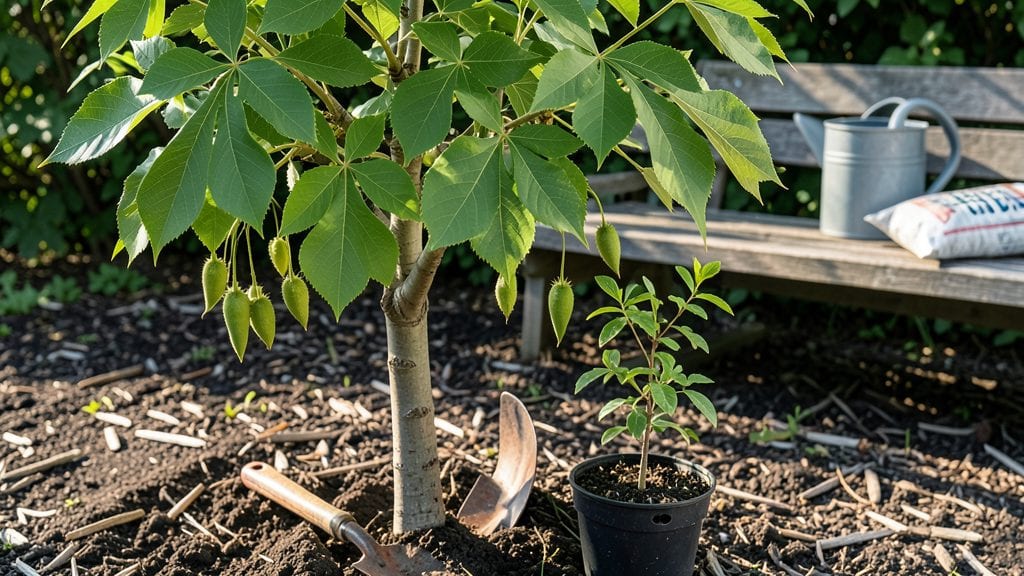
Planting buckeye trees isn't just about putting a seed in the ground—it's about unlocking fast germination and setting up saplings for decades of striking foliage and wildlife benefits.
I learned the hard way that rushing the process leads to weak roots, but with the right timing and soil prep, you can have strong seedlings in just 4-6 weeks.
The secret lies in mimicking their native woodland conditions: moist, well-draining soil and partial shade during their first growing season.
Start with fresh seeds (never store-bought ones—they're often treated to prevent sprouting) and soak them in warm water for 24 hours before planting. Ohio buckeye (Aesculus glabra) and horse chestnut (A. hippocastanum) both respond well to this method, though horse chestnuts need slightly deeper planting.
Choose a spot with 6-10 feet of space between trees, as buckeyes grow wide with age. The key is patience—these trees reward you with glossy compound leaves and clusters of spiky seed pods that birds adore.
After planting, keep the soil consistently moist but not soggy—think of a wrung-out sponge. Mulch around the base to retain moisture and suppress weeds, but avoid piling it against the trunk. In 3-4 months, you'll see the first true leaves emerge, signaling successful germination.
The payoff? A tree that thrives for 50+ years with minimal care once established. Now, let's get those seeds in the ground.
This method works best when planted in early spring or fall, avoiding extreme heat or frost. For container-grown saplings, transplant them when they're 2-3 feet tall to minimize shock.
Whether you're restoring a woodland edge or adding shade to your yard, buckeyes deliver fast results and long-term beauty. Here's how to make it happen without the guesswork.
📚 In This Guide
- What you need
- Instructions
- Tips and common mistakes
- Wrapping up and next steps
What you need
- ● Buckeye seeds: 3–5 seeds (collected from mature trees or purchased from a nursery). Pro tip: 💡 Soak seeds in warm water for 24–48 hours to speed up germination!
- ● Well-draining potting mix: 2–3 gallons of a blend designed for trees or seed starting (e.g., 60% peat moss, 30% perlite, 10% compost).
- ● Planting containers: 6–8 inch pots with drainage holes (or a seed tray with individual cells).
- ● Garden soil (for transplanting): Loamy, slightly acidic soil (pH 6.0–7.0) with good drainage. Test soil if unsure!
- ● Mulch: 2–3 inches of organic mulch (e.g., wood chips or straw) to retain moisture and suppress weeds.
- ● Hand trowel or small shovel for digging.
- ● Watering can or hose with a gentle spray nozzle.
- ● Spray bottle (for misting seeds during germination).
- ○ Garden gloves (optional but helpful for handling soil).
- ● Label markers (to track seed varieties or planting dates).
- ● Grow lights or a sunny windowsill (if starting indoors before last frost).
- ● Fertilizer (balanced 10-10-10 or slow-release tree fertilizer for young saplings).
- ● Epsom salt (1 tsp per gallon of water) to boost magnesium for healthy leaves.
- ● Pest deterrents (e.g., neem oil spray if slugs or insects are a concern).
Step-by-step instructions for planting buckeye trees
Here’s how to get your buckeye seeds sprouting quickly and your saplings off to a strong start.
Prepare Buckeye Seeds for Faster Germination
Buckeye seeds need a cold stratification process to break dormancy. Place your seeds in a breathable cloth bag and refrigerate them for 90 days—this mimics winter conditions and triggers germination. I keep mine in a sealed plastic bag with a damp paper towel to maintain moisture without rot. Check periodically to ensure they stay damp but not soggy.
After stratification, soak the seeds in warm water for 24 hours to rehydrate. This step is critical—skipping it can delay germination by months. You’ll know they’re ready when the outer shell softens slightly and the seed feels plump to the touch.
Choose the Right Planting Location
Buckeye trees thrive in full sun to partial shade, with well-draining soil that’s slightly acidic to neutral (pH 6.0-7.0). Avoid low spots where water pools—buckeyes hate soggy roots. I dig a hole twice as wide as the root ball but only as deep as the container it came in. This prevents burying the stem too deep, which can suffocate the plant.
If your soil is heavy clay, mix in 2-3 inches of compost from the ingredients list to improve drainage. Work it into the native soil until the hole’s bottom is loose and airy. A quick scratch test—if the soil clumps when moist, it needs more organic matter.
Plant Seeds at the Correct Depth
Plant stratified seeds 1 inch deep, spacing them 6-8 inches apart if sowing multiple. For container-grown saplings, place the root ball in the hole and backfill with native soil, tamping gently to remove air pockets. Water deeply to settle the soil and eliminate gaps.
Mulch the area with 2-3 inches of organic mulch (like wood chips) to retain moisture and suppress weeds. Keep the mulch 2 inches away from the stem to prevent rot. Water again lightly to help the mulch settle evenly.
Provide Consistent Moisture and Light
Buckeye seedlings need 1-2 inches of water per week, either from rainfall or manual watering. Stick your finger 2 inches into the soil—if it feels dry, water deeply. Overwatering is the biggest mistake here; buckeyes are drought-tolerant once established but need steady moisture as saplings.
Place young trees in full sun for at least 6 hours daily. If your climate is hot, provide afternoon shade until roots establish. You’ll see new leaves emerge within 4-6 weeks—that’s your sign the tree is thriving.
Monitor for Pests and Prune as Needed
Check for aphids or spider mites regularly, especially on new growth. A strong spray of water usually dislodges them, but severe infestations may require neem oil. Prune any dead or crossing branches in early spring to encourage a strong structure.
After the first growing season, reduce watering to once every 2 weeks unless the weather is extremely dry. By year three, your buckeye should be self-sufficient, with a sturdy trunk and lush canopy.
Tips & tricks for planting buckeye trees
Fast germination is all about timing and technique—here's how to accelerate your buckeye's growth without sacrificing long-term health.
Stratification Timing: The 90-day cold period is non-negotiable for buckeye seeds, but you can start this process earlier than you think. Begin refrigerating seeds in early fall to complete stratification by late winter, giving you a head start on spring planting. I've found that seeds stratified by February show the fastest germination when planted in March. Use a small mesh bag inside a sealed plastic bag with a damp paper towel to maintain consistent moisture without creating anaerobic conditions—this balance is critical for breaking dormancy efficiently.
Soaking Secrets: That 24-hour warm water soak is your fast-track to germination, but there's a trick to maximize its effectiveness. Use water that's just warm to the touch (around 85°F) rather than boiling or scalding. I've noticed seeds soaked in cooler water take nearly twice as long to soften. After soaking, gently rub the seed between your fingers to help the shell soften further—this mimics natural weathering and can shave days off your germination timeline.
Soil Preparation Shortcuts: For heavy clay soils that need the 2-3 inches of compost amendment, consider using a pre-mixed potting soil with perlite instead of digging. This creates instant drainage while maintaining the slightly acidic to neutral pH range buckeyes prefer. I've had success using a 50/50 mix of native soil and composted pine bark fines—this combination mimics the forest floor conditions where buckeyes naturally grow. The key is to work this mixture into the bottom of your planting hole before adding the root ball.
Watering Watch: The 1-2 inches of water per week guideline is perfect, but timing matters more than quantity. Water deeply in the morning rather than evening to allow foliage to dry completely before nightfall, which prevents fungal issues. I've found that using a soaker hose or drip irrigation system delivers water directly to the root zone without wetting the leaves, creating ideal conditions for fast establishment. During the critical 4-6 week period when new leaves emerge, maintain this schedule religiously—consistency is what turns saplings into thriving trees.
Pro Tips for Planting A Buckeye
- Fast germination is all about timing and technique—here's how to accelerate your buckeye's growth without sacrificing long-term health.
- Stratification Timing: The 90-day cold period is non-negotiable for buckeye seeds, but you can start this process earlier than you think.
- Soaking Secrets: That 24-hour warm water soak is your fast-track to germination, but there's a trick to maximize its effectiveness.
Frequently asked questions
When is the best time to plant a buckeye?
Plant buckeye trees in early spring (after the last frost) or fall (4-6 weeks before the first frost). Avoid planting in extreme heat or cold—buckeyes thrive when soil temps are 50–70°F. Container-grown trees can be planted year-round, but spring/fall gives them the best start!
How long does it take for buckeye seeds to germinate?
Buckeye seeds are notoriously slow—germination can take 30–90 days (or even longer!). Soak seeds in warm water for 24–48 hours before planting to speed things up. Keep soil consistently moist and patient—success often rewards persistence!
Can I plant a buckeye from a seed, or should I buy a sapling?
Both work! Seeds are cheaper but take years to mature. For faster results, buy a 1–3 year-old sapling from a nursery. If growing from seed, scarify (nick) the hard shell first to improve germination odds.
Why isn’t my buckeye seed sprouting?
Buckeye seeds need cold stratification—mimic winter by refrigerating seeds in moist sand for 60–90 days before planting. Poor soil drainage, dry conditions, or old seeds can also stall germination. Try again with fresh seeds or a pre-sprouted sapling!
How much space does a buckeye tree need to grow?
Buckeyes grow 30–50 feet tall with a wide canopy (20–40 feet). Space saplings 25–35 feet apart to avoid root competition. They’re adaptable but prefer full sun and well-draining soil—ideal for large yards or parks!
Wrapping up and next steps
Planting a buckeye tree is a rewarding journey—whether you’re drawn to its striking foliage, wildlife benefits, or historical charm. 🌱 With the right soil, timing, and care, you’ll soon watch your sapling grow into a sturdy, shade-providing giant.
Now that you’re equipped with fast-germination tips and troubleshooting know-how, roll up your sleeves and get planting!
Ready to take the next step? Mark your calendar for autumn planting season—your buckeye’s future starts with today’s actions. Happy gardening! 🌳