
Planting
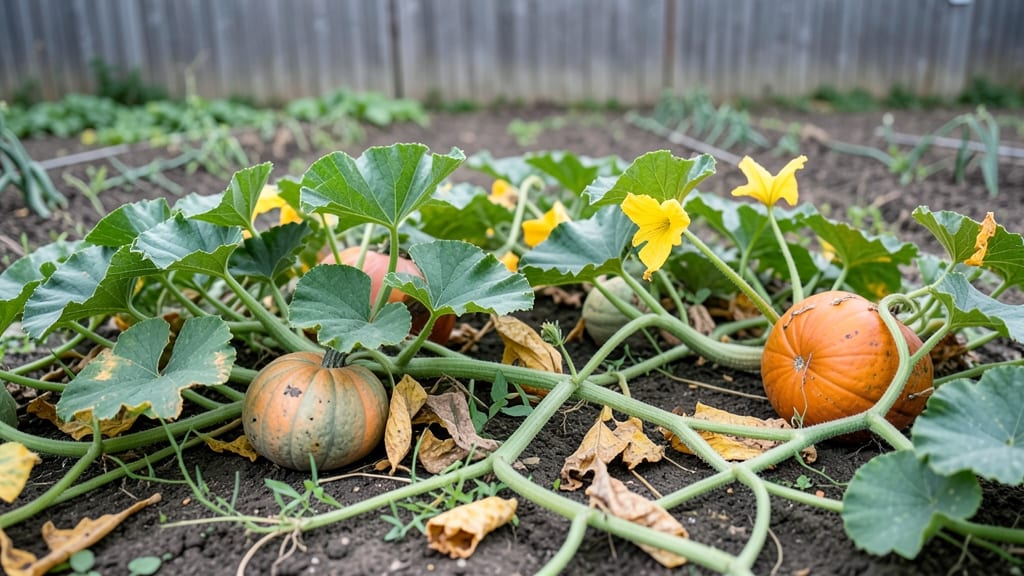
The identification of a pumpkin plant begins with those bold, lobed leaves and sprawling vines that look like they’re racing to claim the whole yard. 🌱 I’ve stared at enough squash and gourds to spot the key differences—pumpkins have deeply scalloped leaves with 3-7 pointed lobes, while their cousins often have smoother edges or fewer points.
The vines themselves are another game-changer: pumpkins send out long, trailing tendrils that can stretch 20+ feet, while bush varieties stay compact.
Now, here’s the thing—most people confuse pumpkins with winter squash or zucchini, but the fruit shape seals the deal. Pumpkins grow round or oblong with a hard, woody rind when mature, while squash often stays softer and flatter.
Pro tip: Check the stem attachment—pumpkin stems are stubbornly attached, while squash stems sometimes leave a slight scar when pulled. I’ve used free plant ID apps like PlantNet to double-check tricky cases, and they’ve never steered me wrong.
You’ll feel like a detective after spotting these clues—especially when you’re staring at a mystery vine in late summer. The payoff? Knowing exactly what you’re growing means you can harvest at peak sweetness or save seeds for next year.
For stubborn cases, local extension offices often have experts who can confirm with a photo, and their advice is always spot-on.
This works for backyard gardens, community plots, or even container-growing setups—just keep an eye out for those lobed leaves and sprawling habits. Once you’ve got the eye for it, you’ll never mistake a pumpkin again. Let’s dive into the visual cues that make all the difference!
Common Mistakes in Vine Analysis
Identifying pumpkin plants can be tricky, especially when their vines and leaves mimic those of other squash varieties or even weeds. Misidentification often stems from overlooking key botanical details or assuming visual similarities mean the same species. Here’s why these errors happen—and how to avoid them.
Pumpkin leaves (Cucurbita pepo, C. maxima, or C. moschata) have distinct lobed patterns, but inexperienced gardeners may confuse them with:
- Zucchini leaves: While both are in the Cucurbita family, zucchini leaves tend to be slightly more serrated with 5–7 lobes (vs. pumpkin’s broader, 3–5 lobes). The key? Measure the angle between lobes—pumpkin leaves often have wider, more rounded gaps.
- Squash vine leaves: Winter squash (like butternut) leaves are deeply lobed with pointed tips, while pumpkin leaves are shallower and more rounded. A quick test: Run your finger along the leaf’s edge—pumpkin lobes feel softer and less jagged.
- Weeds (e.g., morning glory or bindweed): These have heart-shaped or arrowhead leaves with no lobes. Pumpkin leaves are palmately lobed (like a child’s hand), a trait no weed mimics.
Why it happens: Gardeners often focus on leaf size or color instead of lobe shape. Actionable fix: Use a magnifying glass to inspect the vein patterns—pumpkin leaves have prominent, curved secondary veins that radiate from the center.
Pumpkin vines are trailing, sprawling, and hairy, but their growth patterns can be mistaken for:
- Cucumber vines: Both are Cucurbitaceae, but cucumber vines are thinner, more wiry, and lack the dense, fuzzy texture of pumpkin vines. Pumpkin vines also climb aggressively if given support (unlike cucumbers, which prefer sprawling).
- Melon vines: Cantaloupe or honeydew vines are smoother and less robust, with smaller, more delicate leaves. Pumpkin vines are thicker at the stem and produce sturdier tendrils for gripping structures.
- Wild gourds: Some native gourds (e.g., Cucurbita foetidissima) have rougher, more bitter-tasting leaves and smaller, less symmetrical fruits. Pumpkin vines stay consistently fuzzy from stem to leaf.
Why it happens: New growers assume all vining plants are interchangeable. Actionable fix: Check for tendril placement—pumpkin tendrils grow in opposite pairs along the vine, while cucumbers have single, spiral tendrils.
Leaves and vines aren’t the only clues—early fruit development is often ignored until it’s too late. Pumpkin plants produce:
- Small, round "puffballs" (immature fruits) that turn yellow-green as they mature.
- Long, thin vines with tiny flowers (male flowers lack fruit; female flowers have a tiny pumpkin at the base).
Why it happens: Gardeners may prune off early fruit by mistake, thinking it’s a weed or pest damage. Actionable fix: If you see tiny, fuzzy, round bumps on the vine, it’s a pumpkin in progress—leave it be!
Pro Tip: 🌱 Press a leaf between two sheets of paper and compare it to a reference guide. If the lobes, veins, and vine texture match, you’ve got a pumpkin!
Quick Fixes for Pumpkin Plant Woes
When your pumpkin plants aren’t thriving, the right action can save the day—whether it’s a simple tweak or a deeper intervention. Below, we’ve mapped common issues to practical, step-by-step solutions, plus prevention tips to keep your vines healthy and productive. 🌱🔧
Cause: Overwatering, underwatering, or nutrient deficiencies (like nitrogen or magnesium). Fix It:
- Check the soil moisture 💧—stick your finger 1–2 inches deep. If damp, reduce watering; if dry, give a deep soak.
- Adjust watering habits: Water at the base (not leaves) in the early morning to prevent fungal issues.
- Fertilize smartly: Use a balanced fertilizer (10-10-10) or compost tea if leaves are pale yellow. For magnesium deficiency (yellow edges), apply Epsom salt (1 tbsp per gallon of water) every 2 weeks.
- Prune damaged leaves ✂️ to redirect energy to healthy growth.
Prevent It:
- Mulch around plants to retain moisture and regulate soil temp.
- Test soil pH (ideal: 6.0–6.8)—amend with lime if too acidic.
Cause: Squash bugs, cucumber beetles, or aphids sucking sap or laying eggs. Fix It:
- Handpick pests early 🕷️—crush squash bugs (look for flat, brown shield-shaped bugs) or blast aphids with water.
- Use row covers 🛡️ (lightweight fabric) to block beetles before flowers form.
- Spray neem oil or insecticidal soap 🌿 (follow label rates) for severe infestations. Reapply after rain.
- Remove egg masses 🥚 (tiny clusters under leaves) with a damp cloth.
Prevent It:
- Crop rotation: Avoid planting cucurbits (pumpkins, squash) in the same spot yearly.
- Plant trap crops (like nasturtiums) to distract pests away from pumpkins.
Cause: Calcium deficiency (often from uneven watering or poor soil). Fix It:
- Water consistently 💦—keep soil evenly moist (not soggy or dry).
- Apply calcium-rich amendments:
- Crushed eggshells (bake, grind, and sprinkle around plants).
- Calcium nitrate (1 tsp per gallon of water) as a foliar spray.
- Mulch heavily 🍂 with straw to stabilize soil moisture.
Prevent It:
- Avoid heavy fertilizers (like high-nitrogen) that disrupt calcium uptake.
- Choose disease-resistant varieties (e.g., ‘Howden’ or ‘Cinderella’ pumpkins).
Cause: Lack of bees, extreme heat (>90°F), or male/female flower confusion. Fix It:
- Hand-pollinate 🐝—use a paintbrush to transfer pollen from male (long stem) to female (tiny pumpkin at base) flowers.
- Plant pollinator-friendly flowers nearby (e.g., marigolds, sunflowers).
- Water deeply in heatwaves to reduce stress on plants.
- Remove male flowers if female flowers are scarce (prioritize energy for fruit).
Prevent It:
- Space plants 3–5 feet apart for better airflow and pollinator access.
- Avoid late pruning (after flowering) that removes potential fruit.
Cause: Overcrowding, poor soil, or insufficient sunlight (<6–8 hours/day). Fix It:
- Thin seedlings 🌱—leave only the strongest plant per hill (12–24 inches apart).
- Improve soil with compost or aged manure before planting.
- Provide trellises 🪜 for vines if space is limited (saves room and improves air circulation).
- Supplement light with a grow light if indoors or in shady spots.
Prevent It:
- Test soil fertility before planting—add organic matter if needed.
- Choose compact varieties (e.g., ‘Jack Be Little’) for small gardens.
- Monitor daily: Check leaves/vines for early signs of stress or pests.
- Rotate crops: Wait 3 years before replanting pumpkins in the same spot to prevent disease buildup.
- Harvest at peak ripeness: Pumpkins are ready when rinds harden and stems dry out (use a knife to check—if it doesn’t pierce skin easily, it’s ripe!).
Remember: Most pumpkin plant issues are fixable with quick adjustments—don’t let a single problem derail your harvest! 🎃✨ Start with the root cause (literally and figuratively), and your vines will thank you with bountiful, healthy fruit.
Frequently asked questions
How can I tell the difference between pumpkin leaves and squash leaves?
Pumpkin leaves have 3-5 broad, rounded lobes with smooth edges, while squash leaves often have 5-7 sharper, more pointed lobes. Run your finger along the leaf edge—pumpkin lobes feel softer and more rounded. Also check the stem attachment: pumpkin stems stay firmly attached even when pulled, while squash stems sometimes leave a slight scar.
Can I use a plant identification app to confirm pumpkin plants?
Apps like PlantNet or PictureThis work great for pumpkin identification. Upload photos of the leaves, vines, and flowers, then compare with their database. For tricky cases, include close-ups of the leaf lobes and vine texture—these are the most distinctive features. If the app gives mixed results, try comparing with a local extension office for expert confirmation.
What's the fastest way to identify pumpkin plants in early growth?
Look for hairy vines with palmately lobed leaves (like a child’s hand) and tiny yellow flowers. The vines are thick and fuzzy, while the leaves have 3-5 rounded lobes with prominent veins. If you see these traits in early summer, it’s almost certainly a pumpkin—even before fruits appear. Check for tiny round bumps (immature pumpkins) on the vines for extra confirmation.
Why do my pumpkin plants look like weeds at first glance?
Young pumpkin plants can resemble morning glory or bindweed because of their sprawling vines and large leaves. The key difference? Pumpkin leaves are palmately lobed (multiple rounded sections), while weeds have smooth, heart-shaped, or arrowhead leaves. Also, pumpkin vines grow aggressively upward with sturdy tendrils, while weeds typically stay low to the ground.
How do I know if my plant is a pumpkin vs. a gourd?
Pumpkins have round or oblong fruits with hard, woody rinds when mature, while gourds often have longer, more irregular shapes and softer skins. Check the leaves too—pumpkin leaves are deeply lobed and fuzzy, while gourd leaves can be smoother or more pointed. If you’re still unsure, look at the stem attachment: pumpkin stems stay firmly attached, while gourd stems may pull away more easily.