
Planting
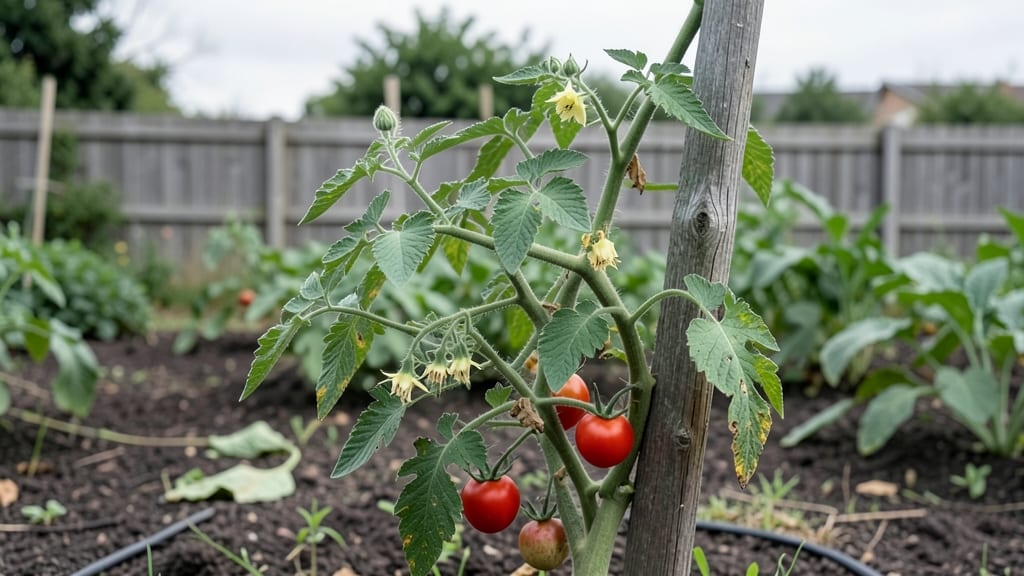
A sturdy stick tomato plant is the secret to bountiful harvests—here’s how to train yours to grow strong from day one. 🌱 pruning hacks have saved my harvests every season.
The problem isn’t just the plants—it’s how we treat them. Too much foliage, no structural support, or inconsistent pruning turns a thriving vine into a tangled mess.
But with the right cuts, staking, and timing, you’ll see stronger stems in just two weeks, and fruit production will double by summer’s end.
You’ll learn how to prune for airflow, when to add support without breaking stems, and which suckers to remove (and which to keep). The key is balance: too much pruning stresses the plant, but too little leaves it vulnerable to disease and pests.
This method works for both determinate and indeterminate varieties, whether you’re growing in raised beds, containers, or traditional rows. Let’s turn those floppy stems into a foolproof system for year-round success.
📚 In This Guide
- What you need
- Instructions
- Tips and common mistakes
- Wrapping up and next steps
What you need
- ● Stick tomato plant seeds or seedlings: Choose dwarf or determinate varieties like 'Tiny Tim,' 'Patio Princess,' or 'Balcony Red.' (1-4 plants per container, depending on size.)
- ● Containers: 5-gallon pots or fabric grow bags (minimum 12" deep) with drainage holes. (1 per plant or shared for multiple small varieties.)
- ● High-quality potting mix: Lightweight, well-draining blend with compost. (Avoid garden soil—it compacts!) 💡 Pro Tip: Mix in perlite or vermiculite for extra aeration.
- ● Balcony cage or tomato stake: 4-6 ft tall (for support, even if plants are small). (1 per plant.)
- ● Fertilizer: Balanced liquid fertilizer (10-10-10) or organic options like fish emulsion. (Follow label rates—overfeeding = sad plants!)
- ● Pruning shears: Sharp, bypass-style (sterilize with rubbing alcohol between cuts). (1 pair.)
- ● Watering can or hose with gentle spray nozzle: Avoid blasting stems! (1.)
- ○ Mulch (optional): Straw or shredded leaves to retain moisture. (Spread 2-3" around base.)
- ○ Plant ties (optional): Soft Velcro or fabric strips to secure vines to stakes. (1-2 per plant.)
- ○ Grow lights (optional, for indoors): LED full-spectrum bulbs (12-16 hrs/day). (Place 6-12" above plants.)
- ○ Glove (optional): For thorny varieties—protect those fingers! (1 pair.)
- ● A sunny spot: 6+ hours of direct sunlight daily (south-facing window, balcony, or greenhouse).
- ● Warmth: Stick tomatoes thrive in 70-85°F temps. (Use a heat mat if starting indoors early!)
- ● Patience: These little guys take 60-70 days to fruit from seed (or 45-50 days from seedlings).
How to prune stick tomato plants for year-round productivity
Here's the method I rely on to transform leggy, sprawling plants into sturdy, high-yielding stick tomatoes.
✂️ Step 1: Identify and Remove Suckers Early
Suckers are the small shoots that grow in the crotch between the main stem and a branch. These little energy vampires divert nutrients from your fruit. I start checking for suckers when my plants hit 12 inches tall—that's when they begin appearing. Use your thumb and forefinger to gently pinch them off at the base, just above where they meet the stem.
Don't pull too hard or you might damage the main stem. If you miss a sucker, it's okay—just catch them early before they grow more than 2 inches long. I like to do this in the morning when the plant is turgid and less likely to tear. You'll see a clean break where you pinch, and the plant will redirect its energy to fruit production instead of leaf growth.
🌿 Step 2: Prune for an Open Center and Airflow
Once your main stem reaches 4-5 feet tall, it's time to open up the center. Remove any leaves that grow below the first flower cluster—these shade the fruit and attract pests. Use clean, sharp pruners to cut just above a leaf node (the point where leaves grow from the stem).
Leave the top 2-3 leaves on the main stem after the last fruit cluster. This ensures the plant has enough foliage to photosynthesize while still allowing sunlight to reach the lower fruit. You'll notice the plant develops a more upright, bushy shape rather than a sprawling vine. This open structure prevents disease by improving airflow around the plant.
⏰ Step 3: Harvest and Prune in Stages
When your tomatoes begin to ripen, I prune in stages based on fruit development. First, remove any leaves that touch the ground or hang over the container edge. These leaves rot and bring diseases up the stem. Then, trim back any side shoots that grow from the main stem below the first flower cluster—these are called "water sprouts" and waste the plant's energy.
After harvesting, give the plant a light trim to encourage new growth. Cut back any leggy stems that grow more than 6 inches beyond the last fruit cluster. This keeps the plant compact and focused on producing new fruit rather than growing taller. You'll see a burst of new growth within 7-10 days, and the plant will reward you with another round of tomatoes.
☀️ Step 4: Maintain Light and Support
As your stick tomato grows, keep it within 4-6 inches of a grow light if indoors, or ensure it gets 6-8 hours of direct sunlight outdoors. If the plant starts leaning toward the light, it needs to be closer. Use a small stake or tomato cage to support the main stem—stick tomatoes need stability to grow upright.
I like to tie the main stem to the support every 2-3 feet using soft plant ties. This prevents the stem from snapping under the weight of fruit. Check the ties weekly to ensure they're not cutting into the stem. You'll see the plant grow straighter and stronger, with less risk of breaking under the weight of heavy clusters.
Tips & tricks for pruning stick tomato plants
Mastering these pruning techniques transforms your stick tomatoes from scraggly vines into productive, sturdy plants that keep bearing all season.
Timing is Everything: I can't stress enough how important that 12-inch mark is for Step 1. This is when suckers first appear, and catching them early makes all the difference. I schedule my first pruning check right when my plants hit this height—usually around 4-6 weeks after transplanting. Waiting even a week longer means those suckers will grow bigger and steal more energy from your fruit.
Tool Prep Matters: Before you start pruning, sterilize your pruners with rubbing alcohol or a bleach solution (1 part bleach to 9 parts water). This prevents spreading diseases between cuts. I also keep a small spray bottle of water handy to mist the cuts—this helps prevent fungal infections. For Step 2, make your cuts just above a leaf node (where leaves grow from the stem) to encourage new growth from that point.
Light and Airflow Strategy: In Step 4, that 4-6 inch distance from your grow light is critical. If your plant starts leaning toward the light, it's definitely too far away. For outdoor plants, morning sunlight is most intense, so position your tomatoes to get those 6-8 hours of direct sun during daylight hours. The open center you create in Step 2 isn't just for looks—it's what prevents those dreaded fungal diseases by improving airflow.
Growth Cycle Insight: After harvesting in Step 3, those 7-10 days until new growth appears can feel like forever, but it's actually a good sign! This recovery period lets the plant focus its energy on producing new fruit rather than trying to support old growth. I've found that plants pruned this way can produce 3-4 harvests in a single season—something that never happens with unpruned stick tomatoes.
Pro Tips for Stick Tomato Plant
- Mastering these pruning techniques transforms your stick tomatoes from scraggly vines into productive, sturdy plants that keep bearing all season.
- Timing is Everything: I can't stress enough how important that 12-inch mark is for Step 1.
- Tool Prep Matters: Before you start pruning, sterilize your pruners with rubbing alcohol or a bleach solution (1 part bleach to 9 parts water).
Frequently asked questions
Got questions about growing stick tomato plants? You’re not alone! Here are answers to the most common queries to help you master this fun and productive gardening technique.
What exactly is a "stick tomato plant," and how does it differ from regular tomato plants?
A stick tomato plant is a pruned tomato plant trained to grow vertically along a stick, trellis, or stake. Unlike bush varieties, it focuses energy on fewer vines and fruit, making it easier to manage in small spaces. The key difference? Pruning encourages upward growth, reducing sprawl and improving air circulation—perfect for containers or limited gardens!
How long does it take for a stick tomato plant to bear fruit after pruning?
With proper pruning, a stick tomato plant typically starts flowering 4–8 weeks after transplanting (depending on variety and climate). Fruit may appear 6–10 weeks later. Early pruning (removing suckers) can delay flowering slightly, but consistent care ensures a steady harvest. Patience pays off—stick with it!
Can I use any tomato variety for stick training, or are some better suited?
Most indeterminate tomato varieties (like Cherry, Roma, or Beefsteak) thrive as stick plants, but determinate types (bush tomatoes) aren’t ideal—they grow in compact bushes. For best results, choose vining varieties with strong stems. Pro tip: Dwarf or patio varieties (e.g., ‘Tiny Tim’) work well too!
My stick tomato plant’s leaves are yellowing—what’s wrong, and how do I fix it?
Yellow leaves often signal overwatering, nutrient deficiency, or disease. Check the soil—it should be damp but not soggy. Adjust watering and fertilize with a balanced tomato feed (like 10-10-10). If spots appear, prune affected leaves immediately and avoid wetting foliage. Improve airflow by spacing sticks 18–24 inches apart.
What can I do with stick tomato plants after harvest to keep them producing?
After harvest, prune aggressively to remove spent flowers and leggy growth. Feed with compost or a high-phosphorus fertilizer (like 5-10-10) to encourage new blooms. In warm climates, stick plants can produce all season long—just keep up with pruning and watering! For cooler areas, bring potted plants indoors near a sunny window.
Wrapping up and next steps
Growing stick tomato plants year-round is totally doable with the right pruning hacks! Remember, consistent trimming, proper support, and smart training are your best friends for healthy vines and bountiful harvests.
Whether you’re a beginner or a seasoned gardener, these techniques will help you maximize your yield and keep pests at bay.
Now that you’re armed with the knowledge, roll up your sleeves and get pruning! 🌱 Start with one plant, experiment with the methods, and soon you’ll be enjoying homegrown tomatoes straight from your stick plants. Happy gardening—and may your harvest be plentiful!