
Planting
That bold striped tomato plant—like Tigerella or Striped Roman—transforms your garden into a showstopper, with its vibrant yellow-and-red fruits that taste as stunning as they look. 🌱 I’ve grown them for years, and the secret to their dramatic stripes isn’t just the variety; it’s the right balance of sun, pruning, and patience that keeps them producing from early summer through fall.
The key starts with 6-8 hours of full sun daily and well-draining soil mixed with compost—no soggy roots here. Stake or cage them early (they get heavy), and prune aggressively to focus energy on fruit, not foliage.
I snip suckers weekly, and by midsummer, my plants are loaded with 1-2 pound striped beauties that taste like classic beefsteak tomatoes but with a visual punch.
These tomatoes handle heat and humidity better than most, but watch for cracking (too much water) or blight (space plants 2 feet apart for airflow). The real magic? They’re just as stunning in salads as they are in vases—slice one open, and your neighbors will ask, “What are those?”
Perfect for small spaces, containers, or even greenhouses—just adjust sunlight and pruning to your setup. Here’s how to keep them thriving all season long.
What Triggers Those Striped Leaves
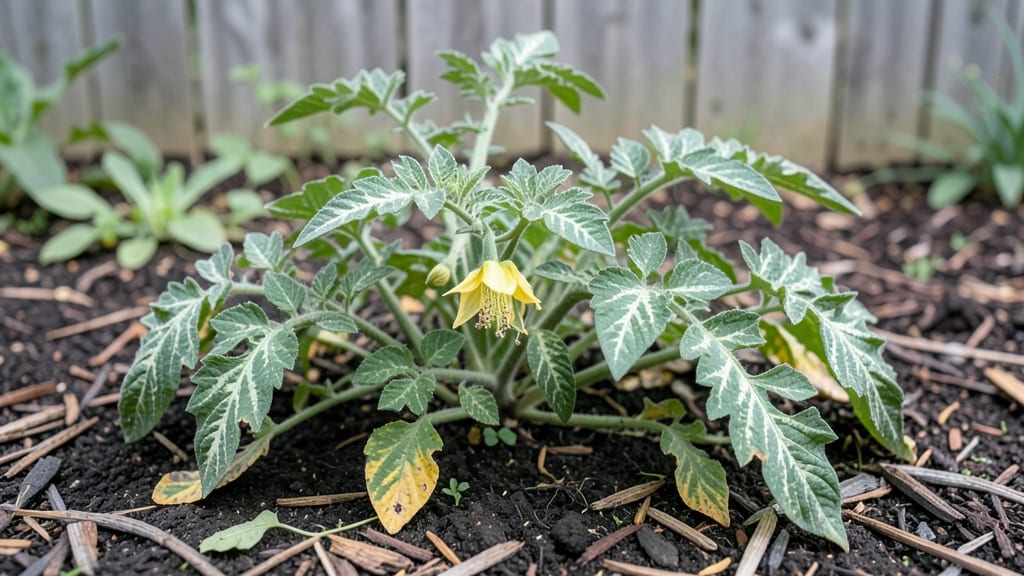
If your tomato plant is showing up with unusual white or yellow stripes on its leaves, don’t panic—it’s usually a sign of a specific issue rather than a fatal disease. These patterns often appear due to environmental stressors, pest activity, or nutrient imbalances.
Understanding the root cause helps you take precise action to restore your plant’s health. Let’s break down the most common culprits behind those telltale stripes.
Tomatoes thrive in warm but not extreme temperatures. When exposed to sudden heat spikes (above 90°F or 32°C) or cold snaps (below 50°F or 10°C), leaves can develop white or yellow striped patterns as a stress response. This is especially common in greenhouses or during heatwaves.
Why it happens: High temperatures disrupt chlorophyll production, causing uneven pigmentation. Cold stress can also trigger physiological leaf disorders, where cells fail to develop normally, leading to striped or mottled leaves.
💡 Actionable fix:
- Provide afternoon shade with lightweight shade cloth (30-50%) during peak heat.
- Ensure consistent soil moisture—drought stress worsens heat damage.
- Use mulch (straw or grass clippings) to regulate soil temperature.
- Avoid fertilizing during extreme heat—it can burn roots and increase stress.
Tiny pests like spider mites and thrips feed on plant sap, leaving behind white or silver striped patterns on leaves. These marks are often accompanied by webbing (in spider mites) or stippled damage (in thrips).
Why it happens: As pests pierce leaf cells, they inject toxins that disrupt normal cell function. The plant’s response is to seal off damaged areas, creating striped or bleached patches. Thrips, in particular, scrape cells in a linear pattern, mimicking stripes.
💡 Actionable fix:
- Inspect leaves daily—look for tiny moving dots or fine webbing on the undersides.
- Blast pests off with a strong spray of water (early morning works best).
- Use neem oil or insecticidal soap (apply at dusk to avoid harming bees).
- Introduce beneficial predators like ladybugs or predatory mites for long-term control.
If your tomato plant’s leaves develop yellow or white stripes along the veins or edges, it could be a sign of root suffocation or nutrient leaching from overwatering. Poor drainage forces roots to struggle, leading to oxidative stress in leaves.
Why it happens: Excess moisture in the soil depletes oxygen around roots, causing them to drown. This triggers a chain reaction: roots can’t absorb nutrients efficiently, leading to chlorosis (yellowing) and necrosis (dead tissue) in striped patterns.
💡 Actionable fix:
- Check soil moisture with your finger—water only when the top 1-2 inches are dry.
- Improve drainage by amending soil with perlite or sand (20% mix).
- Ensure pots have drainage holes and elevate containers to prevent waterlogging.
- If overwatering is chronic, repot the plant in fresh, well-draining soil.
Striped or interveinal chlorosis (yellowing between veins) often signals a lack of magnesium or calcium. These nutrients are crucial for chlorophyll production and cell structure.
Why it happens:
- Magnesium deficiency (common in acidic or sandy soils) disrupts chlorophyll, causing yellow stripes between veins.
- Calcium deficiency (often from overwatering or high nitrogen) leads to white or brown striped patches, especially on younger leaves.
💡 Actionable fix:
- Test your soil’s pH—aim for 6.0-6.8 for tomatoes.
- Apply Epsom salt (magnesium sulfate) (1 tbsp per gallon of water) every 2-3 weeks.
- Use crushed eggshells or calcium nitrate to boost calcium levels.
- Avoid high-nitrogen fertilizers—they compete with calcium absorption.
By identifying the exact cause of those stripes—whether it’s heat stress, pests, overwatering, or nutrient issues—you can target the problem directly and keep your tomato plant thriving. 🌱
Quick Fixes for Striped Tomato Troubles
When your tomato plants start showing those unsightly stripes—whether it’s puffy stems, yellowing leaves, or stunted growth—don’t panic. Most issues have simple, actionable solutions. Below, we’ve mapped common causes to their fixes, plus tips to keep your plants thriving long-term.
Signs: Yellowing leaves, mushy stems, or soil that stays soggy for days.
How to Fix It: 🔥 Adjust Your Watering Routine
- Water deeply but only when the top 1–2 inches of soil are dry (stick your finger in to check!).
- Morning watering is best—it reduces fungal risks and gives plants time to dry before nightfall.
🍳 Improve Soil Drainage
- Mix in compost or perlite (1 part to 3 parts soil) to loosen heavy clay.
- If potted, ensure containers have drainage holes and elevate them slightly to prevent water pooling.
👨🍳 Prune Affected Leaves
- Snip off yellow or wilted leaves with clean scissors to redirect energy to healthy growth.
Prevent It: ✨ Use mulch (straw or wood chips) to retain moisture without drowning roots. 🌡️ Avoid overhead watering—use drip irrigation or a watering can at the base.
Signs: Pale green or purple-tinged leaves, weak stems, or slow fruit production.
How to Fix It: 🔥 Test Your Soil
- Grab a DIY soil test kit (or send a sample to a local extension office) to confirm deficiencies.
🍳 Fertilize Smartly
- Nitrogen deficiency? Use a balanced fertilizer (like 10-10-10) or compost tea every 2–3 weeks.
- Potassium deficiency? Switch to a potassium-rich fertilizer (like banana peel tea or greensand) or use Epsom salt (1 tbsp per gallon of water, sprayed on leaves).
👨🍳 Boost Organic Matter
- Work in aged manure or worm castings at planting time for a slow-release nutrient boost.
Prevent It: 💡 Side-dress plants (add fertilizer to the soil beside roots, not touching the stem) mid-season. 🎯 Rotate crops yearly to avoid depleting the same nutrients.
Signs: Sticky residue (honeydew), tiny webs, or chewed leaves with black sooty mold.
How to Fix It: 🔥 Blast Them Off
- Spray plants with a strong stream of water (aphids hate this!) or use neem oil (1 tsp per quart of water + a drop of dish soap).
🍳 Introduce Beneficial Insects
- Release ladybugs or lacewings (available at garden centers) to eat pests naturally.
👨🍳 Prune and Dispose
- Remove heavily infested leaves and drop them in a sealed bag (not the compost!).
Prevent It: ✨ Encourage biodiversity—plant basil, marigolds, or nasturtiums nearby to repel pests. 🌡️ Inspect plants weekly (especially undersides of leaves) to catch infestations early.
Signs: White or brown patches on leaves, curled edges, or tomatoes with blossom-end rot (black bottoms).
How to Fix It: 🔥 Provide Shade Cloth
- Use 30–50% shade cloth during peak afternoon sun (1–4 PM) if temps exceed 90°F (32°C).
🍳 Water Deeply in Heatwaves
- Soak the root zone (not just the surface) to cool the soil and reduce stress.
👨🍳 Adjust Planting Times
- In hot climates, start seeds indoors and transplant after the last frost, or choose heat-tolerant varieties (like ‘Solar Fire’ or ‘Heatmaster’).
Prevent It: 💡 Mulch heavily to keep roots cool. 🎯 Harvest frequently—overripe tomatoes on the vine attract pests and stress the plant.
Signs: Concentric rings or spots on leaves, yellowing, and premature leaf drop.
How to Fix It: 🔥 Remove Infected Debris
- Pull and destroy (don’t compost!) all diseased leaves and stems.
🍳 Apply Fungicide
- Spray with copper fungicide or a baking soda mix (1 tbsp baking soda + 1 quart water + a drop of soap) every 7–10 days.
👨🍳 Space Plants Properly
- Ensure 18–24 inches between plants for airflow—crowding fuels fungal spread.
Prevent It: ✨ Water at the base only (avoid wetting leaves). 🌡️ Rotate crops—don’t plant tomatoes in the same spot yearly.
Pro Tip: 💡 Keep a garden journal! Note what works (and what doesn’t) each season to refine your care routine. Happy growing! 🍅✨
Frequently asked questions
What makes striped tomato varieties different from regular tomatoes?
Striped tomatoes like Tigerella or Striped Roman have bold yellow-and-red stripes on their fruit, giving them a dramatic visual appeal. Beyond looks, they often have thicker flesh and fewer seeds than heirloom varieties, making them perfect for slicing. Their flavor is typically sweeter with a balanced acidity, and they ripen consistently all season long.
Can I grow striped tomatoes in containers?
These varieties thrive in 5-gallon containers or larger with proper drainage. Use a high-quality potting mix with compost, and ensure the pot gets 6-8 hours of sunlight daily. Dwarf varieties like Tigerella are ideal for containers, while larger types need sturdy cages or stakes. Just monitor watering closely—containers dry out faster than garden beds.
Why are my striped tomatoes cracking?
Cracking happens when tomatoes grow too quickly due to inconsistent watering or sudden moisture changes. To prevent it, water deeply once or twice weekly (depending on heat) and mulch heavily. If cracks appear, harvest the fruit immediately—it’s still safe to eat! For future crops, use drip irrigation to maintain even soil moisture.
Are striped tomatoes good for sauces?
While their bold stripes make them stunning for salads and garnishes, their thick flesh and lower water content actually work beautifully in sauces too! Their natural sweetness balances acidity perfectly. For best results, blend ripe striped tomatoes with garlic, basil, and a splash of olive oil—skip adding extra water to preserve their rich flavor.