
Planting
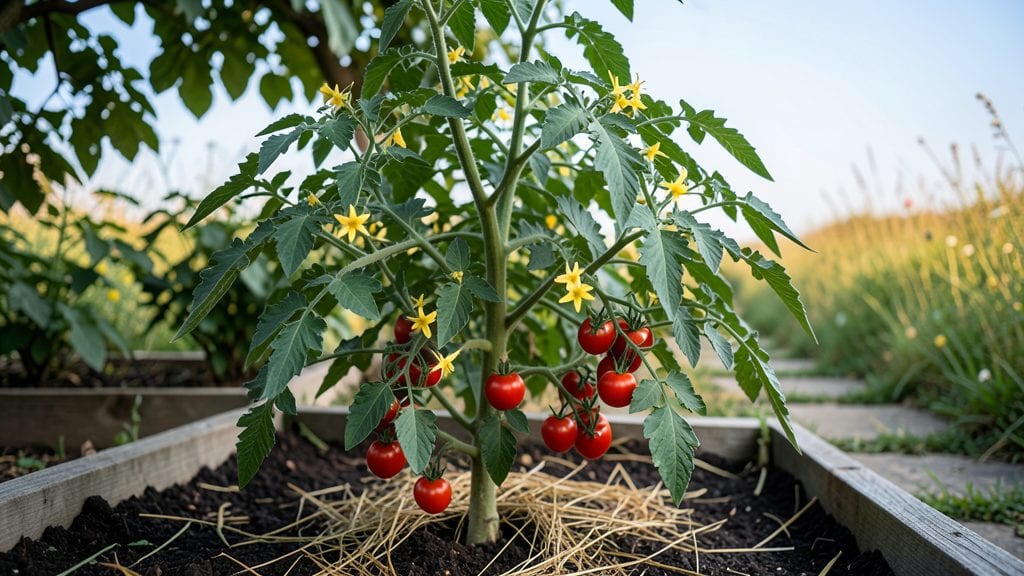
The lifespan of a tomato plant spans one growing season, with most varieties bearing fruit for 60-90 days before dying after harvest. Annual types complete their cycle in 3-6 months, while heirloom or indeterminate varieties may keep producing until frost ends their growth.
The tomato plant lifespan is tightly linked to its growth cycle, which accelerates from seed germination to fruit production in just a few months. 🌱 Most gardeners plant new seeds each spring because tomatoes are annuals—they focus their energy on flowering and fruiting rather than long-term survival.
Indeterminate varieties, however, can keep producing tomatoes until late fall if conditions stay favorable, though their overall lifespan remains tied to seasonal changes. Understanding these patterns helps you plan for continuous harvests by staggering plantings throughout the season.
What many gardeners overlook is how environmental stress—like extreme heat or drought—can shorten a plant's productive window. 🌡️ For example, a sudden temperature drop below 50°F can halt fruit development entirely, even in hardy varieties.
That's why I always monitor weather forecasts and prepare for early harvests when autumn approaches. The key is balancing care with realism: these plants are built to thrive for a single season, not years.
💡 In This Article
- Stages of a Tomato Plant’s Life Cycle
- Extending Tomato Plant Productivity Before Harvest
Stages of a tomato plant’s life cycle
Here's what's actually happening during a tomato plant's rapid development: it undergoes five distinct phases that unfold in just a few months. The journey begins with germination, where seeds absorb moisture and sprout within 5-14 days at optimal soil temperatures of 70-85°F.
This stage is all about energy mobilization—stored nutrients in the seed fuel the emergence of the radicle (root) and hypocotyl (stem), while chlorophyll production begins in the cotyledons (seed leaves). 🌱 The speed of germination depends on moisture levels, with consistent dampness (not soggy) being critical—dry soil can delay sprouting by days.
The next phase is vegetative growth, where the plant prioritizes leaf and stem development over fruit production. During this 3-6 week period, you'll notice rapid vertical growth as the plant establishes its vascular system to transport water and nutrients.
This stage is highly sensitive to light—tomatoes need 6-8 hours of direct sunlight daily to prevent leggy growth. The plant's energy comes from photosynthesis in the expanding leaves, which can reach 12-18 inches in height weekly under ideal conditions.
Water stress here causes wilting and stunted growth, while overwatering leads to root rot.
Flowering marks the transition to reproductive growth, typically occurring when the plant reaches 12-24 inches tall. The hormonal shift from vegetative to reproductive growth is triggered by day length and temperature—most varieties flower best when nights stay above 55°F.
Each flower cluster contains 5-10 blossoms, but only about 10-30% will successfully set fruit due to natural pollination limitations. 🌸 The key factor here is calcium availability—deficiencies cause blossom end rot, where developing fruits develop dark, leathery spots.
This phase lasts 2-3 weeks before fruit development begins, with indeterminate varieties continuing to produce new flowers throughout the season.
The fruiting phase is where tomatoes become the star of the show, with fruit development taking 30-60 days depending on variety. Here's where environmental factors become most critical: temperatures above 90°F can cause flowers to drop (a condition called "heat stress"), while inconsistent watering leads to uneven fruit sizes.
The plant's energy now shifts toward fruit growth, with each tomato requiring 1-2 tablespoons of water daily during peak production.
This is also when you'll notice the plant's leaves yellowing slightly—a normal response as nutrients are redirected to the fruits. 🍅 The final stage, senescence, begins when days shorten and temperatures drop, triggering the plant to redirect resources to seed production in the remaining fruits before dying back.
What most people don't realize is how deeply tied these stages are to the plant's survival strategy. Tomatoes are annuals because their entire lifecycle is optimized for rapid reproduction—not long-term survival.
The energy that perennial plants like shrubs allocate to root systems and bark growth goes instead to flowering and fruiting in tomatoes. 🌿 This is why they die after harvest: their biological clock tells them to focus all resources on seed production before winter.
Even in warm climates, the shortening daylight triggers this final senescence phase, making it impossible for tomatoes to survive multiple growing seasons without human intervention.
Consider these key factors when planning your garden: the entire cycle from seed to harvest takes about 60-120 days for most varieties, with indeterminate types stretching this to 150 days or more. This is why gardeners often stagger plantings every 2-3 weeks—it creates a continuous harvest window.
The plant's inability to survive winter isn't a flaw but an evolutionary adaptation to maximize fruit production in a single growing season. Understanding these natural rhythms helps you work with—not against—the plant's biology for the most successful harvests. 🌱