
Watering
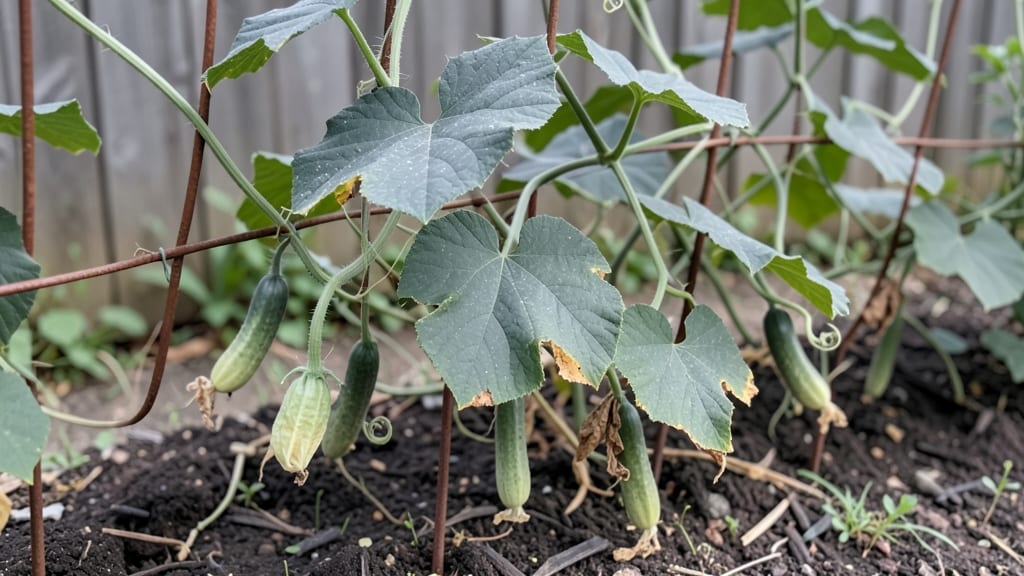
Is your cucumber plant looking like a sad, droopy mess because it’s an underwatered cucumber plant? Underwatered cucumber plants can bounce back faster than you think with the right approach.
I’ve nursed back more than a few by focusing on soil moisture and recovery timing—some plants respond within hours, others need a few days of consistent care. The key is acting fast before the roots start to fail completely.
Start by giving your plant a deep watering—not just a quick splash—that soaks the soil down at least 12 inches. Cucumbers are thirsty vines, and their roots need to stay damp, not just wet on the surface.
After that, check the soil daily: stick your finger in about 2 inches—if it’s dry, water again. Mulch helps too, keeping moisture locked in and cutting down on evaporation.
You’ll see the first signs of revival within 24-48 hours—leaves perking up, new growth starting. But here’s the catch: once you’ve revived it, you’ll need to adjust your watering routine. Cucumbers hate dry spells, so aim for 1-2 inches of water per week, more if it’s hot.
A drip irrigation system or soaker hose makes this foolproof—no more guessing if it’s had enough.
This works for both garden beds and containers, though container plants dry out faster. The fix is the same: deep, consistent watering and keeping an eye on soil moisture. With these three steps, your cucumber plant will be back to producing crisp, cool vines in no time.
Root Causes Of Thirsty Plants
When your cucumber vines start wilting, drooping, or developing crispy leaves despite your best efforts, the culprit is often insufficient water delivery—but the reasons behind it aren’t always obvious.
Understanding the science behind why underwatering happens helps you address the problem at its source. Let’s break down the key factors that leave your cucumbers parched.
Cucumbers are heavy drinkers, with shallow root systems that absorb moisture quickly. Unlike drought-resistant plants, they thrive when the soil stays consistently moist—never soggy, but never bone-dry either. Here’s why skipping watering sessions backfires:
- Evaporative loss: Sandy or well-draining soils lose moisture faster (up to 50% in 24 hours on hot days). Cucumbers can’t tap into deep reserves like trees, so surface evaporation leaves roots high and dry.
- Transpiration demands: A single mature cucumber plant can lose 1–2 gallons of water per day through its leaves in peak heat. If you’re only watering every 2–3 days, the plant is already playing catch-up.
- Human error: Busy schedules or misjudging soil dryness (e.g., poking a finger only 1 inch deep instead of 2–3 inches) means roots stay thirsty.
Pro tip: 💡 Morning watering (before 10 AM) minimizes evaporation, and drip irrigation delivers water directly to roots, reducing waste.
Healthy cucumber roots need aerated soil to absorb water efficiently. If the soil is compacted, clay-heavy, or lacks organic matter, water either pools on top or drains too fast—leaving roots gasping for hydration. Here’s the science:
- Air pockets block absorption: Compacted soil creates tiny air pockets that displace water from root zones. Roots can’t uptake moisture if it’s trapped in a film around soil particles.
- Clay soil’s “waterlogging” paradox: Clay holds moisture but binds it tightly, making it inaccessible to roots. Even if the soil feels damp, roots may still suffer from hydraulic stress.
- Lack of organic matter: Soil with <1% organic content has 30% less water-holding capacity. Compost or aged manure adds hydrophilic (water-loving) particles that improve retention.
Fix it: ✨ Amend clay soil with sand + peat moss (50/50 mix) or top-dress with coco coir to improve structure. For containers, use a lightweight potting mix with perlite.
If your cucumbers are in pots, root restriction is a silent water thief. Containers dry out faster and limit root expansion, forcing plants to drink more frequently. The math doesn’t add up:
- Small pots = limited soil volume: A 5-gallon container holds ~20 liters of soil, but a cucumber plant’s root ball can expand to 3–5 gallons in 4 weeks. Cramped roots can’t explore enough soil to find moisture.
- Drainage holes = double-edged sword: While they prevent rot, they also accelerate drying. Water escapes faster than roots can absorb it, especially in terracotta or plastic pots.
- Material matters: Black plastic pots absorb heat, increasing evaporation by up to 20% compared to insulated fabric grow bags.
Upgrade your setup: 🌡️ Use fabric grow bags (breathable + insulating) or 10+ gallon containers for vining cucumbers. Add a self-watering reservoir or mulch with straw to slow evaporation.
Even with perfect watering, external factors can turn your soil into a desert. Heat, wind, and sunlight act like invisible straws, siphoning moisture away from roots:
| Factor | How It Drains Soil | Actionable Fix |
|---|---|---|
| High temperatures (above 85°F) | Doubles evaporation rates; roots can’t keep up with demand. | 🌿 Shade cloth (30–50%) or water twice daily (early morning + late evening). |
| Strong winds | Desiccates leaves, increasing transpiration by 40%. | 🏡 Use windbreaks (burlap screens) or mulch heavily to retain soil moisture. |
| Low humidity (<40%) | Forces plants to open stomata longer, losing water vapor. | 💦 Mist leaves lightly in AM or place a humidity tray near containers. |
Remember: 🎯 Cucumbers in full sun need 1.5–2x more water than shaded plants. Adjust your schedule accordingly!
Revive Your Cucumber Plant Now
Here’s your step-by-step guide to bringing your thirsty cucumber plant back to life—plus tips to keep it thriving long-term. Whether your plant is wilting, dropping leaves, or just looking sad, these fixes are tailored to the root causes (literally!). Let’s get those vines hydrated and happy again.
Cause: Shallow watering or infrequent hydration leads to dry soil and stressed roots. Solution:
- 🔥 Step 1: Soak the Soil Thoroughly Grab a watering can or hose with a gentle nozzle and water until the soil is completely moistened—about 1–1.5 inches deep. Stick your finger in the soil; if it’s dry past your first knuckle, keep watering.
- Pro tip: 💡 Use a moisture meter for accuracy if you’re unsure.
- 👨🍳 Step 2: Water at the Base (Not the Leaves) Pour water directly at the plant’s base to avoid fungal diseases. Wet leaves can trap moisture and invite pests like powdery mildew.
- 🥘 Step 3: Let It Drain Ensure your pot has drainage holes. If not, water will pool, drowning the roots. Elevate the pot on a saucer or tray to catch excess water.
- ⏰ Step 4: Repeat Every 2–3 Days Cucumbers love consistent moisture. Check soil daily in extreme heat—it dries out faster than you think!
Prevention: ✨ Mulch like a pro: Spread 2–3 inches of organic mulch (straw or shredded leaves) around the base to retain soil moisture and regulate temperature. ✨ Group plants together: Cucumbers thrive in "plant communities." Cluster them with other water-loving veggies (like basil or beans) to create a microclimate that holds humidity.
Cause: Overwatering or underwatering—both extremes stress cucumbers. Solution:
- 📊 Step 1: Master the "Finger Test" Stick your finger 2 inches into the soil. If it feels dry, water. If damp, wait. Overwatering is just as deadly as underwatering!
- 🌡️ Step 2: Water Early in the Day Morning watering (6–9 AM) gives roots time to absorb moisture before the heat of the day. Evening watering can lead to fungal issues.
- 🎯 Step 3: Use the Right Amount - Containers: Water when the top 1 inch of soil is dry. - Garden Beds: Water 1–2 inches deep, 2–3 times per week (adjust for climate). - Hot tip: 🔥 If your soil is sandy, water more frequently.
Clay soil? Less often but deeper.
Prevention: ✨ Self-watering hacks: Bury a terracotta pot near the plant and fill it with water—it’ll slowly release moisture into the soil. ✨ Drip irrigation: Set up a slow, steady drip system to mimic natural rainfall. It’s a game-changer for consistency!
Cause: Poor soil structure or compacted roots can’t absorb water efficiently. Solution:
- 🔪 Step 1: Loosen the Soil Gently Use a fork or trowel to lightly aerate the soil around the roots (but don’t damage them!). This helps water penetrate deeper.
- 🍳 Step 2: Amend the Soil Mix in compost or aged manure to improve water retention and drainage. Aim for a loamy texture—like a sponge that holds moisture without drowning.
- 🥗 Step 3: Add Organic Matter Work in coco coir or peat moss (20–30%) to boost moisture retention. Avoid heavy amendments like pure clay, which can suffocate roots.
Prevention: ✨ Test your soil: 💡 A simple DIY test—squeeze a handful of moist soil. If it crumbles easily, it’s ideal. If it sticks together, it’s too clay-heavy. ✨ Rotate crops: If you’re growing cucumbers in the same spot yearly, rotate them to prevent soil depletion.
If your cucumber plant is already crispy or drooping badly, don’t give up yet: 1. 🌊 Submerge the pot in a basin of water for 15–30 minutes to fully rehydrate the roots.
- 🍃 Trim damaged leaves with clean scissors to redirect energy to new growth.
- 🌱 Move to shade for a few days to reduce stress while it recovers.
Final Thought: Cucumbers are 95% water—they need consistent hydration to produce juicy, crisp fruits. With these fixes, your plant should perk up in 3–7 days. Keep an eye on it, adjust as needed, and soon you’ll be harvesting vines full of plump cucumbers! 🥒✨
Frequently asked questions
How do I know if my cucumber plant is truly underwatered?
Check the soil 2 inches deep—if it's dry, that's your first clue. Look for wilting leaves, especially in the morning when plants should be turgid. Crispy leaf edges or yellowing lower leaves also signal thirst. Pro tip: Gently tug on the plant—if it resists, roots are dry; if it pulls out easily, roots have died back from lack of water.
Can I save a cucumber plant that's been underwatered for a week?
It depends on how far the damage has progressed. If the leaves are still slightly green and the stems aren't completely brittle, submerge the pot in water for 30 minutes to rehydrate roots. Trim any mushy or brown leaves and move it to partial shade. Most plants show recovery signs within 3-5 days, but if the stems are hollow or black, the plant may be beyond saving.
Why does my cucumber plant wilt even after I water it?
This could mean several things: your water isn't penetrating deep enough (aim for 12+ inches in garden beds), the roots are damaged from previous drought stress, or you're watering too late in the day. Try the "soak and dry" method—water until it runs out the bottom, then wait until the top 1 inch feels dry before watering again. Also check for pests like aphids that can stress plants.
What's the best time of day to water cucumbers?
Early morning (between 6-9 AM) is ideal because it gives roots time to absorb moisture before the heat of the day increases evaporation. Avoid evening watering, which can promote fungal diseases. If you must water in extreme heat, do it in the late afternoon so leaves have time to dry before nightfall. For container plants, watering twice daily (morning + evening) may be necessary during heatwaves.
How often should I fertilize my cucumber plant after reviving it?
Wait 2-3 weeks after reviving before fertilizing to let roots recover. Then use a balanced 10-10-10 fertilizer every 2-3 weeks during growing season. Too much fertilizer can actually stress plants by promoting leafy growth at the expense of roots. For organic options, compost tea or fish emulsion works well—just dilute to half strength after underwatering stress.