
Transplanting
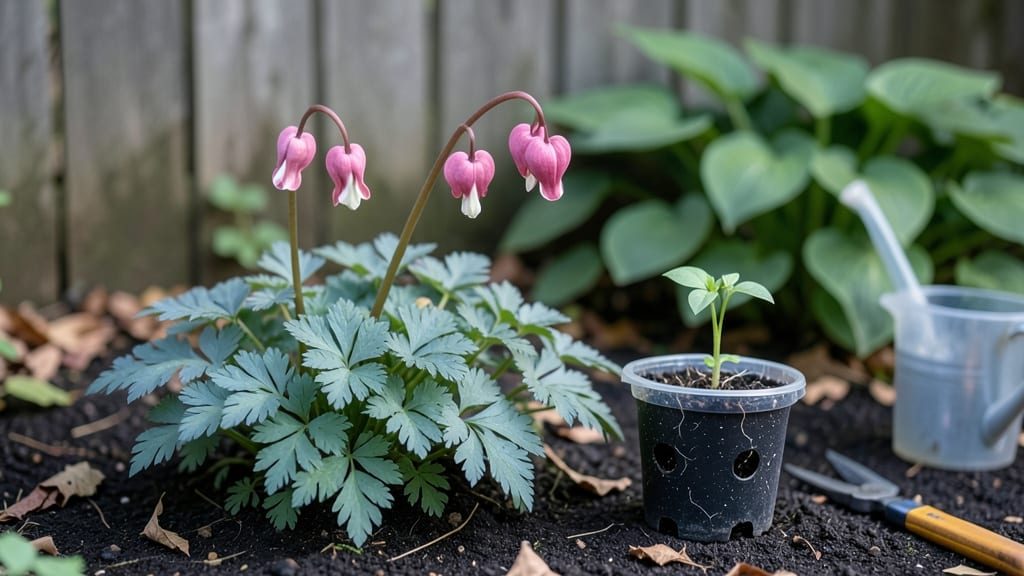
Transplant your bleeding heart plant 💖 in early spring or fall—when soil temperatures hit 50°F and roots are established but not stressed.
Transplanting your bleeding heart at the wrong time can stifle its delicate growth—or even kill it. Timing is everything, but most gardeners miss the optimal window, leading to wilted foliage and lost blooms.
In USDA Zone 6a, aim for March–April or September–October, when the plant’s natural dormancy cycle aligns with milder weather. Summer heat or winter cold throws off its recovery, so avoid mid-season moves.
Below, I’ll walk you through the exact signs your bleeding heart needs relocating, how to prep it for minimal shock, and the 30-day care routine that keeps it thriving.


Optimal bleeding heart transplant seasons: spring vs fall timing guide
Timing your bleeding heart transplant (Dicentra spectabilis) correctly makes all the difference between a thriving plant and one that struggles to recover. These delicate perennials prefer gentle transitions, so rushing them into the wrong season can cause transplant shock or even death.
The key is choosing between early spring or late fall, each with distinct advantages depending on your USDA hardiness zone and local climate.
Spring and fall are the ideal transplant windows because they offer cooler temperatures and moisture levels that reduce stress. However, summer heat or winter dormancy can turn a well-intentioned transplant into a disaster.
Let’s break down the optimal timing, regional adjustments, and how to avoid common pitfalls—so your bleeding heart blooms beautifully for years to come.
For spring transplants, aim for March to April—right after your last frost date and when soil temperatures hit 50°F (10°C). This gives your bleeding heart a full growing season to establish roots before summer heat arrives.
In USDA zones 3–5, wait until late April to avoid late frosts that can damage tender new growth. Meanwhile, gardeners in zones 6–9 can start as early as February in mild climates, but monitor weather forecasts for unexpected cold snaps.
If you prefer fall transplants, focus on September to October, ideally 6 weeks before your first frost. This timing allows roots to settle in without rushing to grow before winter dormancy.
In zones 4–8, early September is ideal, while cooler northern zones (like zone 3) should wait until late August. The goal is to give your plant enough time to recover before the ground freezes—aim for soil temps above 55°F (13°C).
Regional adjustments are critical. In hot, humid climates (e.g., zone 9), avoid fall transplants entirely—the combination of heat and moisture can promote fungal diseases. Instead, opt for early spring (February–March) when temperatures are cooler.
Conversely, in dry climates (e.g., zone 7), fall transplants work well if you water deeply to compensate for low humidity. Always check your local microclimate—shady spots stay cooler longer than sunny areas.
One of the biggest mistakes is transplanting during summer heat. Bleeding hearts despise intense sunlight and dry soil, which can cause leaves to scorch and roots to dry out.
If you must transplant in summer (e.g., relocating due to construction), do it on a cool, cloudy day and provide extra shade for at least 2 weeks. Mulch heavily with 3–4 inches of organic matter to retain moisture and protect roots from temperature swings.
Winter dormancy is another risk if you transplant too late. While bleeding hearts are hardy (zones 3–9), freshly transplanted plants lack the energy reserves to survive deep freezes.
If you’re in a cold zone (3–5), prioritize spring transplants and avoid fall moves unless you’re certain the ground won’t freeze before roots establish. In warmer zones (8–9), fall transplants are safer, but still monitor frost dates closely.
To minimize stress, prepare your bleeding heart for transplant by pruning back 1/3 of its foliage 2 weeks before moving. This reduces water loss and redirects energy to root growth. On transplant day, dig a hole twice as wide as the root ball but no deeper—bleeding hearts hate soggy soil.
Amend the native soil with compost or peat moss to improve drainage, and water thoroughly before and after transplanting. A root stimulator can also boost recovery in the first few weeks.
After transplanting, focus on consistent moisture—water deeply 2–3 times per week for the first month, keeping soil evenly damp but not waterlogged. Avoid fertilizing for 4–6 weeks to prevent root burn. Instead, apply a light layer of mulch (2–3 inches) to retain moisture and regulate soil temperature.
With the right timing and care, your bleeding heart will reward you with lush foliage and heart-shaped blooms for seasons to come.
Signs your bleeding heart needs transplanting (and how to prepare)
Your bleeding heart plant (Dicentra spectabilis) may look stunning now, but if it's been in the same spot for years, its roots could be circled and bound in that container.
This restricts growth and starves the plant of nutrients, leading to stunted blooms and yellowing leaves. Overcrowding is the #1 reason these delicate perennials need relocating—before it’s too late.
Another red flag? Soil depletion after 2-3 years in the same bed. Even with regular feeding, the soil may lose its structure, becoming compacted or nutrient-poor. If you notice fewer blooms each year or pale, sparse foliage, your plant is signaling it’s time for a fresh start.
Ignoring these signs can lead to root rot or even death during extreme weather.
Bleeding hearts are sensitive to temperature extremes. Never transplant during summer heatwaves (above 85°F) or late fall when frost is imminent. The ideal window is early spring (March–April) or early fall (September–October), when soil temps are 50–65°F and roots can establish before stress.
🌱 Pro Tip: Check your USDA zone—zones 3–7 should aim for after last frost (typically mid-April in most regions).
Start prepping 4–6 weeks before transplanting to minimize shock. First, prune back 1/3 of the foliage to reduce stress on the roots. Focus on dead or yellowing leaves, but avoid cutting into healthy growth. This helps the plant redirect energy to root development rather than leaf maintenance.
Next, adjust your watering schedule to mimic outdoor conditions. For 2 weeks before transplanting, water deeply every 5–7 days to encourage root growth toward the edges of the container.
Avoid letting the soil dry out completely, but also don’t overwater, as soggy roots are harder to handle during transplanting.
Amend the new planting site with organic matter like compost or well-rotted manure. Bleeding hearts thrive in rich, moist, slightly acidic soil (pH 6.0–7.0). Mix in 1–2 inches of compost into the top 6–8 inches of soil.
If your soil is heavy clay, add perlite or sand to improve drainage—waterlogged roots are a common killer post-transplant.
Finally, acclimate your plant to outdoor conditions if it’s been indoors. Move it to a shaded, sheltered spot for 3–5 days before transplanting. This gradual exposure helps prevent sunburn or windburn on delicate leaves.
On transplant day, water the plant thoroughly the night before to ensure roots stay flexible and easy to handle.