
Fertilization
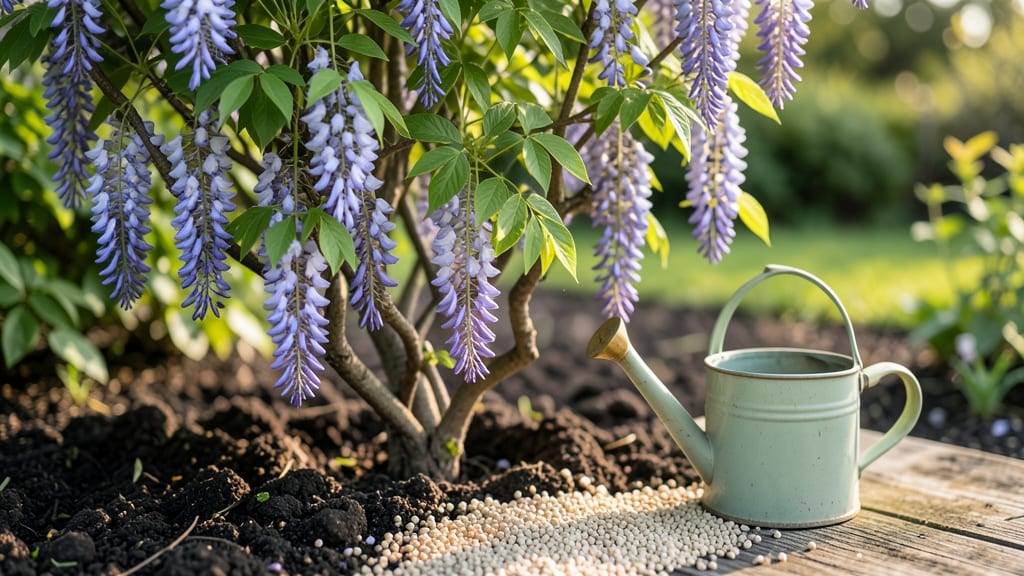
Feeding your wisteria the right plant food 🌸 can turn a sparse vine into a cascading cloud of blooms—if you pick the right nutrient mix and timing.
Struggling to get your wisteria to bloom? The secret might be hiding in the numbers—N-P-K ratios—that can transform your plant from a struggling vine into a lush, flowering masterpiece.
Most gardeners overlook how wisteria’s nutrient needs shift from leafy growth to flower production, and that’s why even healthy vines sometimes refuse to bloom. A balanced fertilizer in early spring kickstarts growth, while a phosphorus boost in late spring encourages those iconic clusters.
Below, I’ll break down the exact ratios, organic alternatives, and common mistakes that keep wisteria from reaching its full potential—so you can finally enjoy those fragrant spring cascades.
Optimal N-P-k ratios for wisteria growth and flowering
Wisteria thrives when fed the right nutrients at the right time. The N-P-K ratio—nitrogen, phosphorus, and potassium—directly impacts whether your vine grows lush foliage or produces stunning flowers.
Too much nitrogen? You’ll get leaves, not blooms. Too little phosphorus? Your buds may never open. Let’s break down the science-backed ratios that turn green vines into flowering powerhouses.
Wisteria is a heavy feeder during its active growing season (spring to early summer), but its needs shift dramatically between vegetative growth (leafy stems) and flowering. Understanding these stages helps you adjust your fertilizer strategy for maximum impact.
For example, a 10-10-10 ratio is a good starting point, but wisteria often needs more phosphorus in late winter to trigger blooming. Let’s dive into the specifics.
| Growth Stage | Ideal N-P-K Ratio | Key Nutrient Role | Best Fertilizer Type |
|---|---|---|---|
| Early Spring (Feb-Mar) | 5-10-10 | Phosphorus boosts root growth and bud formation | Bone meal or low-nitrogen granular |
| Active Growth (Apr-May) | 10-10-10 | Balanced for leafy vines and flower buds | All-purpose granular or liquid fertilizer |
| Pre-Bloom (Jun) | 5-20-20 | High phosphorus/potassium for flower development | Bloom-boosting fertilizer (e.g., 7-9-5) |
| Post-Bloom (Jul-Aug) | 10-5-5 | Lower phosphorus to prevent leafy regrowth | Low-phosphorus organic (e.g., compost) |
| Dormancy (Sep-Nov) | 0-0-0 | No fertilization needed; plant rests | None (focus on mulching) |
Why does this matter? Wisteria’s flowering mechanism relies on a phosphorus kick in late winter to form buds. If you skimp on phosphorus (the "P" in N-P-K) during this critical window, your plant may produce leaves instead of flowers.
Conversely, too much nitrogen (the "N") in summer will encourage leafy growth at the expense of blooms next year. Think of phosphorus as the bloom trigger and potassium as the strengthener for those delicate flower clusters.
For young wisteria plants (under 3 years old), focus on nitrogen-rich fertilizers like 12-6-6 to build a strong root system and vine structure. Mature wisteria, however, need that phosphorus shift to produce the heavy clusters of fragrant flowers they’re famous for.
A common mistake is using the same high-nitrogen lawn fertilizer on wisteria—this will leave you with a wall of green and zero blooms.
Organic gardeners can achieve similar results using composted manure (high in nitrogen) in spring and bone meal (high in phosphorus) in late winter. Synthetic fertilizers offer more precise control, but organic options work beautifully if applied 6-8 weeks before blooming.
For example, a fish emulsion (5-1-1) in early spring provides nitrogen for foliage, while a kelp meal (0-0-2) in late summer adds potassium for winter hardiness.
Pro tip: Test your soil before fertilizing. Wisteria prefers a slightly acidic to neutral pH (6.0-7.0). If your soil is too acidic (<6.0), the plant struggles to absorb phosphorus, even if you’re applying it. A simple lime application can correct this and unlock better nutrient uptake. Pair this with a mulch layer of compost to slowly release nutrients throughout the growing season.
Watch for signs of nutrient deficiency or excess. Yellowing leaves? Likely a nitrogen deficiency. Brown leaf edges? Possible potassium deficiency or over-fertilization. Purple stems or small leaves?
Your wisteria might need more phosphorus. Adjust your ratios based on what you observe—this is how you fine-tune your wisteria’s diet for peak performance.
Remember, wisteria is a patient plant. It can take 3-5 years for a newly planted vine to produce its first significant blooms. During this time, focus on
Best organic and synthetic wisteria plant foods compared
Choosing the right wisteria plant food can feel overwhelming with so many options. Organic fertilizers like compost and fish emulsion build soil health gradually, while synthetic blends like 10-10-10 NPK deliver quick nutrient boosts.
Each has unique benefits for your wisteria blooms and vine strength. Let’s compare the top choices to help you decide what works best for your garden.
For organic wisteria plant food, compost and worm castings are my go-to because they improve soil structure while providing slow-release nutrients. On the synthetic side, balanced NPK fertilizers (like 10-10-10) offer precise control over nutrient ratios, which is critical for encouraging those showy wisteria flowers.
Cost, ease of use, and bloom effectiveness all play a role in your final choice.
Organic Options
- Pros:
- 🌱 Improves soil long-term
- 🌿 Slow-release nutrients reduce burn risk
- 🌳 Encourages microbial activity
- Cons:
- ⏰ Slower results for blooms
- 💧 Requires frequent reapplication
Synthetic Options
- Pros:
- ⚡ Fast nutrient delivery
- 📊 Precise NPK ratios for blooms
- 💰 Cost-effective for large plants
- Cons:
- 🔥 Risk of over-fertilization if misused
- 🌱 No soil improvement
Best for: Organic = soil health | Synthetic = quick blooms
If you’re growing wisteria in containers, synthetic fertilizers like 10-10-10 granular are easier to measure and dissolve quickly in water. For in-ground vines, I recommend mixing compost into the soil at planting time, then top-dressing with fish emulsion in early spring.
This combo supports both root development and flower production without overwhelming the plant.
One common mistake is overusing synthetic fertilizers, which can lead to leaf burn or excessive foliage at the expense of blooms. Always follow the package instructions and dilute liquid fertilizers to half-strength for wisteria.
For organic options, I’ve found that worm castings combined with a light layer of compost tea every 4-6 weeks keeps my vines thriving without the risk of chemical buildup.
For budding wisteria plants, a balanced approach works best: use organic matter to build the soil foundation, then supplement with a low-phosphorus synthetic fertilizer (like 5-10-5) when buds form in late winter.
This two-step method ensures your plant has the energy to produce those stunning lavender blooms while maintaining healthy roots.
Remember, wisteria is a long-term investment. Whether you choose organic or synthetic, consistency is key. Start with a soil test to check your pH levels (ideal range: 6.0–7.0), then adjust your feeding plan accordingly.
With the right nutrients, your wisteria will reward you with years of breathtaking spring fragrance and cascading flowers.