
Pests
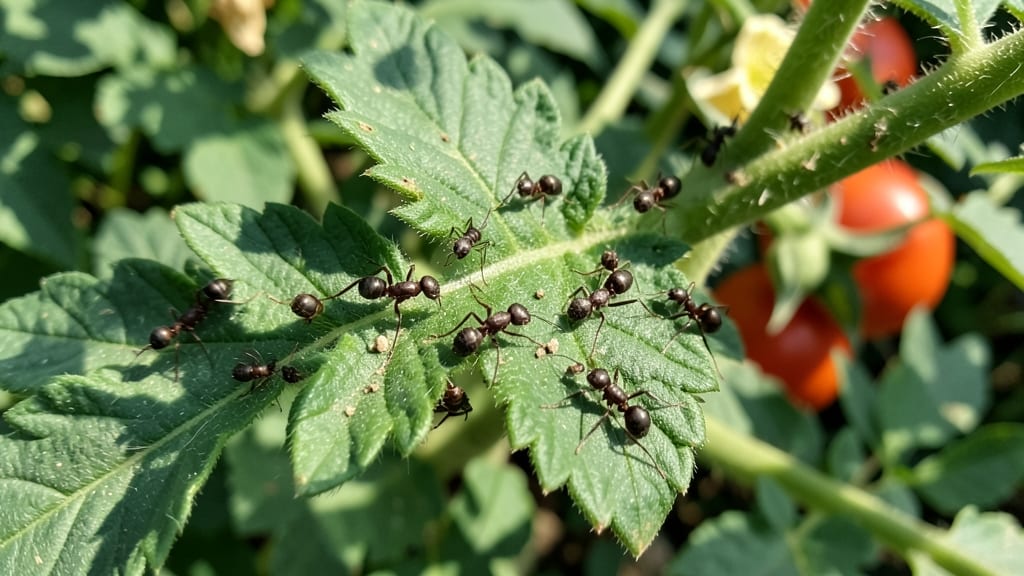
Ants on tomato plants aren’t just a nuisance—they’re a red flag for bigger problems. 🌱 I’ve watched them march up my vines, only to discover they’re protecting aphids or other sap-sucking pests that weaken my plants.
The good news? You don’t need harsh chemicals to stop them. A few simple organic barriers and adjustments can keep your tomatoes thriving while sending ants packing.
Here’s the thing—ants themselves don’t eat your tomatoes, but they do farm pests that drain your plants. That’s why I focus on cutting off their access while luring them away from the garden.
It’s a two-part strategy: disrupt their trails and offer them a better buffet elsewhere. The best part? These tricks work whether you’re growing in raised beds, containers, or the ground.
By the time you’re done, your tomato plants will be ant-free, aphid-free, and ready to produce juicy, disease-resistant fruit. You’ll see fewer sticky leaves, stronger vines, and a garden that stays healthy without toxic sprays.
The secret is in the details—like where to place barriers and what to bait the ants with.
This works for backyard gardens, community plots, or even balcony containers. Once you try it, you’ll wonder why you didn’t do this years ago. Let’s get those ants out of your tomatoes for good.
The Hidden Reasons Ants Invade Your Garden
Ants on your tomato plants aren’t just a nuisance—they’re often a sign of deeper ecological imbalances in your garden. While they may seem harmless, these tiny invaders can disrupt your plants’ health and even attract worse pests.
Understanding why they show up is the first step to keeping them away for good. Let’s break down the most common causes, backed by science and actionable insights.
Ants are drawn to tomato plants primarily because of sugary rewards left behind by other pests.
Here’s how it works: - Aphids, mealybugs, and whiteflies feed on tomato sap, excreting a sticky, sugary substance called honeydew. - Ants farm these pests like livestock, protecting them from predators (like ladybugs) in exchange for honeydew. - Result? A thriving ant colony and a tomato plant weakened by aphid damage.
Actionable fix: 🔍 Inspect leaves (especially undersides) for tiny clusters of aphids or white, cottony mealybugs. Remove them manually or use soapy water sprays to disrupt the ant-aphid relationship.
Ants seek out three key resources in your garden:
- Water – They need hydration, especially in dry climates, and tomato plants provide moisture through dew or irrigation.
- Shelter – Cracks in soil, mulch piles, or dense foliage offer protection from predators and weather.
- Protein – Decaying organic matter (like fallen fruit or compost) provides the protein ants need to raise their colonies.
Actionable fix: 💡 Reduce hiding spots by:
- Keeping mulch 2–3 inches away from plant stems.
- Sealing soil cracks with dry sand or diatomaceous earth.
- Avoiding overwatering—ants love damp soil!
Mature tomato fruits and seeds contain natural oils and sugars that ants find irresistible. Once they discover a ripe tomato:
- They swarm the fruit, accelerating rot and making it unharvestable.
- They may even carry fruit pieces back to their nests, spreading decay and inviting mold.
Actionable fix: ⏰ Harvest tomatoes promptly when they’re 75% ripe (green shoulders first). 🎯 Use fine mesh bags over clusters to block ant access while allowing pollination.
If your garden has active ant trails leading to tomato plants, the problem might start underground:
- Compost piles near plants act as ant highways, providing food and nesting sites.
- Disturbed soil (from planting or weeding) exposes ant colonies, forcing them to relocate—often onto your crops.
Actionable fix: 🔥 Move compost piles at least 10 feet away from tomato beds. 🌡️ Use heat or vinegar to disrupt trails (see our barrier methods section for details).
Sometimes, ants hitch a ride with beneficial insects you’ve introduced:
- Ladybugs or lacewings (natural aphid predators) may bring ant eggs or larvae with them.
- Bees or wasps nesting nearby can share territory with ants, creating a pest alliance.
Actionable fix: 💡 Monitor beneficial insect populations—if you see sudden ant activity, check for hitchhikers. ✨ Encourage solitary bees (like mason bees) in separate nesting boxes to avoid conflicts.
Ants are highly responsive to weather changes:
- After rain, trails become active as ants search for dry shelter.
- During droughts, they raid plants for moisture and nutrients.
- In late summer, colonies expand, increasing their need for food sources like tomatoes.
Actionable fix: 🌡️ Set up temporary barriers (like cardboard rings) before rain to block entry points. 🍂 Prune lower leaves in early fall to remove ant highways.
Left unchecked, ants can: ❌ Weaken tomato plants by protecting sap-sucking pests. ❌ Spread fungal diseases through honeydew contamination. ❌ Reduce fruit quality by contaminating harvests with ant frass (waste).
Key takeaway: Ants aren’t the primary problem—they’re a symptom of a larger garden imbalance. Target their food sources, shelter, and trails to break the cycle.
Quick Fixes for Tiny Garden Invaders
Discovering ants on tomato plants can feel like an unwelcome houseguest—annoying, persistent, and seemingly impossible to evict. But don’t stress! With the right strategies, you can reclaim your garden without harsh chemicals.
Below, we’ve mapped out practical solutions tailored to the root causes of ant infestations, from their sweet tooth to their role as pest protectors. Plus, we’ll share prevention tips to keep them from crashing your tomato party again.
If ants are drawn to your tomatoes because of honeydew (aphids’ sticky byproduct) or overripe fruit, the first step is to remove their buffet. Ants are opportunistic foragers, and cutting off their food supply often works faster than you’d think.
🔥 Step 1: Scout for Aphids & Sap Sources
Inspect your tomato plants for:
- 🐜 Tiny green/black aphids clustered on leaves or stems
- 🍓 Overripe or damaged tomatoes (ants love fermenting sugar)
- 🌿 Weeds or nearby plants with sticky residue (aphid hotspots)
🍳 Step 2: Clean Up Like a Pro
Take these actions immediately to disrupt their feast:
- 💦 Hose down plants with water to wash away honeydew (use a strong stream to dislodge aphids).
- 🗑️ Remove fallen fruit or prune damaged leaves—don’t leave them on the soil.
- 🌱 Pull weeds near your tomato patch (they’re aphid magnets).
👨🍳 Step 3: Trap & Distract
Set up borax or sugar traps (non-toxic to pets if placed carefully):
- Mix 1 part borax + 3 parts sugar + water in a shallow dish.
- Place traps away from tomato plants (ants will carry the bait back to their colony).
💡 Pro Tip: Repeat this process every 3–5 days until you see fewer ants. Patience is key—they’ll eventually lose interest!
Ants travel in trails marked by pheromones. If they’re marching up your tomato stakes or trellises, break their routes to scatter their ranks.
🔪 Step 1: Barrier Tactics
Create physical or chemical barriers to block their access:
- 🪵 Diatomaceous earth (DE): Sprinkle a thin layer around the base of plants (avoid overapplying—it can harm soil microbes). Reapply after rain.
- 🧴 Cinnamon or cayenne pepper: Mix with water to make a spray (ants hate the scent). Apply to stems and soil.
- 🛡️ Sticky traps: Place them near entry points (like garden edges) to catch scouts.
⏰ Step 2: Timing Matters
Ants are most active in the morning and late afternoon. That’s the best time to:
- 🔍 Disrupt trails with a hose or broom.
- 🌿 Reapply barriers before they rebuild paths.
💡 Pro Tip: If ants are climbing your trellis, wrap the bottom 12 inches with copper tape (a natural repellent) or aluminum foil.
Ants “farm” aphids for honeydew, so if they’re protecting pests like whiteflies or spider mites, you’ll need to target the whole ecosystem.
🎯 Step 1: Introduce Natural Predators
Encourage ants’ enemies to move in:
- 🐞 Ladybugs: Release them in the garden (they devour aphids).
- 🕷️ Spiders: They prey on ants—welcome them with diverse plantings.
- 🐦 Birds: Install a bird feeder nearby to attract ant-hunting species.
🌡️ Step 2: Heat or Cold Treatment
For stubborn colonies, use extreme temperatures:
- 🔥 Boiling water: Pour it directly into ant hills (early morning or late evening).
- ❄️ Ice cubes: Place them in mason jars and smash them over trails (ants avoid cold).
✨ Pro Tip: If you’re dealing with fire ants, mix equal parts water and dish soap and spray their mounds—they’ll retreat within hours.
Once you’ve kicked the ants out, lock the door with these long-term strategies:
- 🌱 Interplant with ant-repelling herbs: Basil, mint, thyme, and oregano confuse their scent trails.
- 🌿 Mulch strategically: Use gravel or wood chips (ants avoid rough textures). Avoid organic mulch near tomato bases.
- 🚫 Avoid overwatering: Damp soil attracts ants—water deeply but infrequently.
- 🍅 Harvest promptly: Pick ripe tomatoes ASAP to remove attractants.
- 🏡 Seal garden entry points: Check for cracks in pots, fences, or compost bins where ants nest.
With these fixes, your tomato plants will stay ant-free—and you’ll enjoy a pest-free harvest without breaking a sweat. Happy gardening! 🌱🍅
Frequently asked questions
Do ants actually harm tomato plants?
Ants themselves don’t eat tomato plants, but they protect sap-sucking pests like aphids and mealybugs in exchange for honeydew. This weakens your plants by draining nutrients. They also contaminate fruit with waste and can introduce mold through overripe tomatoes. The real damage comes from the pests they shield, not the ants directly.
Why do ants keep coming back after I remove them?
Ants follow pheromone trails and return if their food sources (like aphids or fallen fruit) remain. You must break their trails with barriers (diatomaceous earth, cinnamon spray) AND remove attractants. Without both steps, they’ll just rebuild paths. Think of it like sealing a leaky pipe—patch the entry points AND fix the root cause.
Can I use vinegar to get rid of ants on tomato plants?
Yes! Mix 1 part white vinegar with 1 part water and spray directly on ant trails and nests. The strong smell disrupts their scent trails. For extra protection, reapply every 3-4 days or after rain. Just avoid spraying leaves—vinegar can harm plant tissue. It’s a fast, non-toxic solution that works best for active trails.
Will companion planting actually keep ants away?
Plant basil, mint, oregano, or thyme near your tomatoes—their strong scents confuse ant trails. Marigolds also work well. The key is to interplant these herbs directly with tomatoes rather than placing them far away. Ants avoid these plants because their natural oils repel them, creating a protective barrier around your tomato patch.
How do I know if ants are protecting aphids on my tomatoes?
Look for tiny green/black clusters on leaf undersides (aphids) and sticky residue (honeydew) on lower leaves. If you see ants marching in straight lines toward these spots, they’re farming the aphids. Ants will also block predators like ladybugs from reaching the aphids. This is your cue to remove both the ants AND their aphid livestock.