
Plants
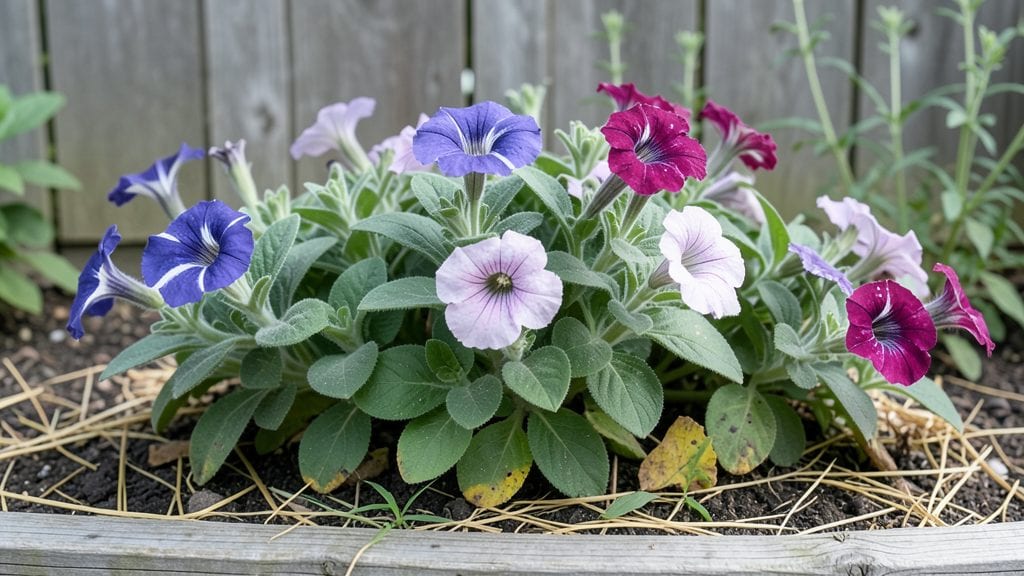
Petunias are full sun plants that need at least 6 to 8 hours of direct sunlight daily for vibrant blooms, though they can handle partial shade in intense heat to prevent wilting.
Petunias love basking in sunlight because it triggers their flowering mechanism—more light means more blooms and richer colors. 🌸 However, their tolerance for full sun varies by climate; in scorching regions like the Southwest, afternoon shade helps them conserve moisture.
I’ve found that varieties like 'Supertunia' handle heat better than delicate types, making them ideal for hotter gardens.
For best results, position petunias where they get morning sun and afternoon shade if temperatures regularly exceed 90°F. This balance prevents leaf scorch while keeping flowers abundant. Mulching with 2-3 inches of organic material also helps regulate soil temperature and retain moisture during peak sun hours.
💡 In This Article
- Petunia Light Requirements for Peak Blooms
- Heat and Sun Tolerance Tips for Petunias
Petunia light requirements for peak blooms
Petunias convert sunlight into energy through photosynthesis, but their blooming intensity depends on the light spectrum they receive. Blue and red wavelengths (400-500nm and 600-700nm) are most critical for flower production, while green light (500-600nm) passes through leaves without being absorbed.
In full sun, petunias absorb these key wavelengths efficiently, producing 10-15% more flowers than those in partial shade. The trade-off? Too much direct sun can cause heat stress, where leaf temperatures exceed 85°F, triggering wilting and scorch marks.
Color saturation in petunia blooms is directly tied to light exposure. Plants receiving 6-8 hours of direct sunlight develop deeper, more vibrant hues because photosynthesis produces higher concentrations of anthocyanins—the pigments responsible for red, purple, and blue tones.
For example, a 'Crimson Rapture' petunia grown in full sun will have a richer crimson color compared to the same variety in partial shade, where colors appear muted and pale.
This is why gardeners in sunny climates often see petunias with 20-30% more intense colors than those in cooler, shadier regions.
Regional adjustments are key to preventing sun damage. In desert climates like Arizona, petunias benefit from afternoon shade (using 30-50% shade cloth) to block the most intense rays between 12 PM and 4 PM. Meanwhile, in coastal areas with mild summers, petunias can handle full sun all day.
The trick is monitoring leaf condition: if edges turn crispy or yellow, it’s a sign of heat stress. Mulching with 2-3 inches of straw helps by keeping soil temperatures 10-15°F cooler than exposed ground.
Not all petunia varieties are created equal when it comes to sun tolerance. Heat-resistant types like 'Wave' or 'Superbells' thrive in full sun, while delicate varieties such as 'Mitchell' may need afternoon shade. These differences stem from genetic adaptations: sun-tolerant petunias have thicker cuticles and more efficient water transport systems.
For instance, 'Wave' petunias can survive 95°F+ temperatures with minimal wilting, whereas 'Mitchell' varieties may struggle above 85°F without shade.
Light intensity also affects petunia growth patterns. In full sun, plants grow more compact and bushy, producing 30-50% more blooms per stem due to increased photosynthesis. However, excessive heat can shorten the flowering season by 2-4 weeks if plants aren’t given adequate water.
The ideal balance is morning sun (when temperatures are cooler) and afternoon shade in hot climates, which mimics natural forest-edge conditions where petunias originally thrived.
What most gardeners don’t realize is that petunias can actually "sunburn" if exposed to sudden heat spikes. This happens when leaf temperatures rise above 90°F, causing cells to rupture and turn white or brown.
To prevent this, gradually acclimate petunias to full sun over 7-10 days, especially if they’ve been growing in shade. This slow transition allows their protective pigments to develop properly.