
Diseases
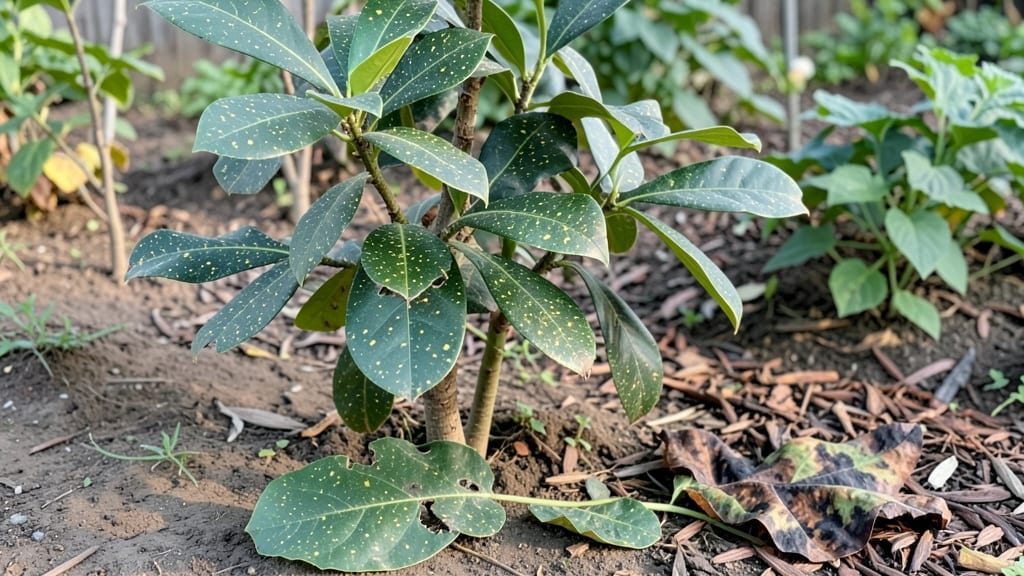
The diseases that plague your aucuba plant—like those creepy brown spots—can ruin its lush leaves if you ignore them. I’ve battled leaf spot on my aucubas for years, and I’ve learned which organic fixes actually work—no harsh chemicals needed.
The key is catching it early, when the spots are still small and the plant can bounce back.
Most aucuba diseases start with too much moisture—whether from overhead watering or poor drainage. Fungal leaf spots thrive in damp conditions, while bacterial issues often show up after pruning cuts or storms.
The good news? A simple copper fungicide spray or neem oil treatment (applied every 7-10 days) can stop the spread before your plant looks like Swiss cheese.
Once you identify the problem, prevention becomes your best friend. Space your plants for airflow, water at the base (not the leaves), and clean up fallen debris.
Within a few weeks, your aucuba’s leaves will regain that deep green, waxy shine—no more brown craters ruining the look. Trust me, your plant will thank you.
This works for both indoor aucubas and outdoor shrubs, though outdoor plants need extra vigilance during humid summers. The same principles apply whether your aucuba is a small potted plant or a tall hedge. Let’s get those leaves looking healthy again.
Root Causes Behind Aucuba Woes
Aucuba plants, with their glossy leaves and striking berries, are prized for their resilience—but even the toughest greenery isn’t immune to stress. When diseases strike, they rarely appear out of nowhere. Instead, they’re often the result of environmental mismatches, weak defenses, or unseen attackers.
Understanding the why behind these issues is the first step to prevention. Let’s break down the science behind the most common culprits.
Fungal pathogens like Phytophthora and Botrytis thrive in conditions that feel like a tropical rainforest to your aucuba—warmth + high humidity + poor airflow. Here’s how it plays out:
- Overwatering + stagnant soil: Aucubas hate soggy roots. When soil stays damp for days, fungal spores germinate, leading to root rot or leaf spot diseases. Phytophthora, a notorious water mold, exploits this by blocking water uptake, causing wilting even when soil is moist.
- Cold stress: Below 40°F (4°C), aucubas slow down their metabolic processes, weakening their ability to fight off pathogens. Botrytis cinerea (gray mold) capitalizes on this, infecting leaves and stems during cool, wet springs.
- Greenhouse effect: Plastic covers or dense foliage trap humidity, creating a Petri dish for fungal spores. Without airflow, spores land on leaves and germinate within 24–48 hours.
Pro tip: 💡 Aim for 60–70% humidity during the day and 40–50% at night. Use a hygrometer to monitor levels—if it’s creeping above 75%, it’s time to open vents or add a fan.
Fungi are the stealthy invaders of the plant world. They don’t just appear—they hitchhike on tools, soil, or even the wind. Here’s how aucubas get infected:
- Contaminated soil or mulch: If your aucuba’s soil was previously home to infected plants (e.g., rhododendrons with Phytophthora), spores linger for years. Even compost from diseased leaves can reintroduce them.
- Pruning tools and pots: A single cut with a dirty blade can transfer Colletotrichum (anthracnose) spores from one plant to another. Fungal spores are microscopic but mighty—some survive for months on non-sterilized surfaces.
- Splashing water: Overhead irrigation or rain can splash spores from soil onto leaves, where they infect through stomata (tiny leaf pores). This is how Septoria leaf spot spreads in wet climates.
Pro tip: ✨ Sterilize tools with 70% isopropyl alcohol between uses, and avoid mulching near the stem (keep it 3–4 inches away to prevent moisture buildup).
Aucubas under stress are like humans with low immunity—they’re far more susceptible to diseases. Here’s how poor nutrition opens the door:
- Nitrogen deficiency: Yellowing leaves (chlorosis) signal a lack of nitrogen, which is critical for cell wall integrity. Weakened cells make it easier for Alternaria (a common leaf spot fungus) to penetrate.
- Potassium shortage: Potassium regulates osmotic balance in cells, helping them resist fungal invasion. Without it, aucubas develop brown, crispy leaf edges—a sign they’re struggling to fend off pathogens.
- Iron or magnesium deficits: These micronutrients are vital for chlorophyll production and overall vigor. Deficient plants produce thinner leaves, which are easier for fungi to colonize.
Pro tip: 📊 Test your soil every 2–3 years and amend with balanced fertilizer (10-10-10) in spring. For organic fixes, use composted manure or fish emulsion to boost nitrogen and micronutrients.
Not all aucuba diseases are caused by fungi—sometimes, insects pave the way for bigger problems. Here’s how:
- Scale insects and aphids: These sap-suckers weaken leaves by removing nutrients, making them prime targets for sooty mold (a black fungal growth that thrives on their honeydew). Sooty mold blocks sunlight, further stressing the plant.
- Spider mites: They don’t just cause stippling—they damage cell membranes, creating wounds where Botrytis or Alternaria can enter. Mites also spread fungal spores on their bodies.
- Root-knot nematodes: These microscopic worms distort roots, reducing water and nutrient uptake. A stressed root system is far more vulnerable to Phytophthora infections.
Pro tip: 🔥 Inspect leaves weekly for pests, especially on the undersides. Use neem oil or insecticidal soap to knock out infestations before they invite fungi to the party.
By addressing these root causes—environmental stress, hidden spores, nutritional gaps, and pest activity—you’re not just treating symptoms; you’re starving the problem at its source. The next step? Actionable fixes to restore your aucuba’s health.
Fixing Aucuba Plant Ailments Naturally
Aucuba plants may look tough, but they’re not immune to pests and diseases. The good news? Most issues have simple, organic fixes—no harsh chemicals required. Below, we’ll map the most common problems to step-by-step solutions, plus prevention tips to keep your aucuba thriving.
🔥 Spot the Problem
Yellowing leaves, black spots, or a fuzzy white coating? Fungal infections like powdery mildew, leaf spot, or root rot are likely culprits. These thrive in humid, poorly ventilated spaces—common in indoor aucubas or shaded outdoor plants.
🍳 Step-by-Step Cure
- Prune Infected Foliage 🪒
- Snip off yellow or spotted leaves with sterilized scissors (wipe with rubbing alcohol).
- Dispose of clippings in the trash (not compost) to prevent spread.
- Neem Oil Spray (Fungicide) 🌿
- Mix 1 tsp neem oil + 1 tsp mild soap + 1 quart water in a spray bottle.
- Apply every 7–10 days until symptoms fade. Neem disrupts fungal spores without harming the plant.
- Improve Airflow & Light 🌬️☀️
- Move your aucuba to a brighter spot (but avoid harsh afternoon sun).
- If indoors, use a small fan on low to circulate air.
- Outdoor plants? Space them 3–4 feet apart for better ventilation.
- Adjust Watering Habits 💧
- Let the top 1–2 inches of soil dry between waterings.
- Avoid wetting leaves—water at the base and empty saucers after 10 minutes.
💡 Prevention Tips
- Sanitize tools after pruning with hydrogen peroxide (3%).
- Space plants properly to reduce humidity buildup.
- Avoid overhead watering—use drip irrigation or a watering can with a narrow spout.
🕷️ Spot the Problem
Sticky residue on leaves? Tiny webs? Scale, spider mites, or mealybugs suck sap, causing wilting, discolored leaves, or stunted growth. These pests love dry, dusty environments.
👨🍳 Step-by-Step Cure
- Isolate the Plant 🏠
- Move it away from other houseplants to prevent infestation.
- Blast Off Pests with Water 💦
- Use a strong spray of water to knock off mealybugs and spider mites.
- For scale, gently scrape them off with a soft toothbrush dipped in rubbing alcohol.
- Insecticidal Soap Spray 🧼
- Mix 1 tbsp castile soap + 1 quart water in a spray bottle.
- Spray every 5–7 days until pests disappear. Test on a small leaf first.
- Introduce Beneficial Insects 🐞
- Release lacewings or ladybugs (available at garden centers) to naturally control pests.
🌡️ Prevention Tips
- Wipe leaves with a damp cloth weekly to remove dust (pests love it!).
- Inspect new plants before bringing them indoors.
- Keep humidity moderate (40–60% is ideal)—pests thrive in dry air.
⚠️ Spot the Problem
Sudden wilting, soft black stems, or mushy roots? Root rot (from overwatering) or stem canker (a bacterial/fungal infection) are likely.
🔪 Step-by-Step Cure
- Check the Roots 🌿
- Gently remove the plant from its pot and rinses roots with water.
- Trim black, mushy roots with sterilized scissors.
- Repot in Fresh Soil 🏺
- Use a well-draining mix (add perlite or sand).
- Choose a pot with drainage holes—no exceptions!
- Adjust Watering ⏰
- Water only when the top 2 inches of soil are dry.
- If repotting, skip watering for 3–5 days to let roots recover.
- Fungicide Treatment (If Needed) 🍄
- For stem canker, apply a copper fungicide spray (follow label instructions).
🎯 Prevention Tips
- Never let aucubas sit in soggy soil—empty saucers after watering.
- Rotate pots occasionally for even sunlight exposure.
- Avoid compacted soil—aucubas hate being root-bound.
Most aucuba diseases start with poor care—but once you spot the signs, quick action (pruning, neem oil, better watering) can save your plant. Prevention is key: clean tools, proper airflow, and not overwatering will keep your aucuba healthy and happy for years!
💡 Pro Tip: If all else fails, propagate healthy stems—aucubas root easily in water!
Frequently asked questions
Why do aucuba leaves develop brown spots?
Brown spots on aucuba leaves are usually caused by fungal infections like leaf spot or anthracnose, which thrive in wet conditions. Overwatering, poor airflow, or contaminated tools can spread spores. Prune affected leaves immediately and apply neem oil spray every 7-10 days to stop the spread.
Can I save an aucuba with root rot?
Yes, but act fast! Remove the plant from its pot, trim all mushy black roots with sterilized scissors, and repot in fresh, well-draining soil. Skip watering for 3-5 days to let roots recover. Use a copper fungicide if bacterial infection is suspected.
How do I prevent powdery mildew on my aucuba?
Powdery mildew loves humidity—keep your aucuba in a spot with good airflow and 60-70% humidity during the day. Avoid overhead watering and space plants 3-4 feet apart outdoors. Apply a baking soda spray (1 tsp baking soda + 1 quart water) weekly as prevention.
Are aucuba berries safe to eat?
No, aucuba berries are toxic to humans and pets if ingested. While they’re not deadly in small amounts, they can cause stomach upset. Keep them away from curious pets and children, and wear gloves when handling plants if you have sensitive skin.
Why does my aucuba keep getting pests?
Pests like spider mites and scale thrive in dry, dusty conditions. Wipe leaves weekly with a damp cloth and maintain 40-60% humidity. Introduce beneficial insects like lacewings or use insecticidal soap (1 tbsp castile soap + 1 quart water) for infestations.