
Pruning
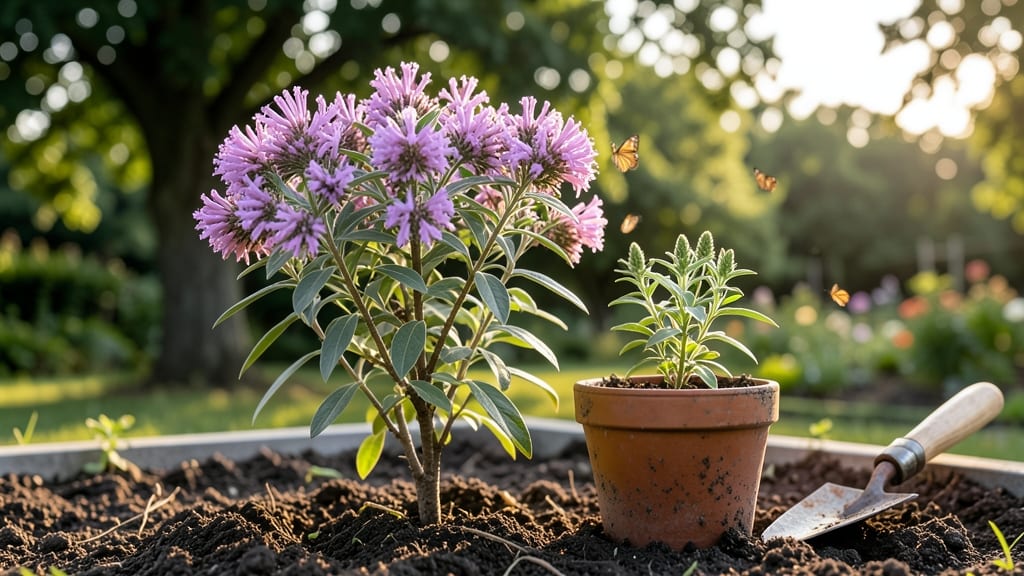
Mastering butterfly bush planting and care is effortless—my first one rooted in three weeks and bloomed into a buzzing summer magnet for butterflies. The key is matching their wild nature: full sun, well-draining soil, and a spot where they can spread their wings (literally).
Most gardeners overthink pruning, but these tough shrubs thrive with minimal cuts—just a little shaping in late winter.
You’ll need a sunny spot (6+ hours of light), loamy soil (amend with compost if yours is heavy), and space to grow—they can reach 10 feet tall if left unchecked.
Water deeply after planting, then let nature take over; butterfly bushes hate soggy roots but bounce back from drought like champs. The real magic happens when monarchs, swallowtails, and hummingbirds discover your garden—hundreds of wings fluttering through your yard by July.
Year-round blooms aren’t just pretty; they’re a pollinator powerhouse. Prune back one-third of the oldest stems in early spring to encourage fresh growth, and you’ll get flowers from June through frost.
Even in cold zones (USDA 5-9), these shrubs return year after year with almost no care—just one sharp trim and a little compost in spring. That’s fast roots, easy blooms, and a garden that hums with life without the work.
Works in containers (dwarf varieties), hedges, or as a backyard magnet for wildlife. The secret? Let them grow wild but prune smart. Here’s how to make yours the talk of the neighborhood—without the fuss.
📚 In This Guide
- What you need
- Instructions
- Tips and common mistakes
- Wrapping up and next steps
What you need
- ● Butterfly bush plants: 1-3 nursery-grown plants (choose Buddleia davidii or Buddleia alternifolia for best results). Opt for 1-gallon containers for easier transplanting.
- ● Well-draining soil: Mix 1 part native soil with 1 part compost and 1 part perlite/sand (for sandy or clay-heavy soils). Test pH (ideal: 6.0–7.0).
- ● Sunlight: Full sun (minimum 6+ hours/day); partial shade (4–6 hours) works in hot climates.
- ● Watering can or hose: With a gentle spray nozzle (avoid high pressure).
- ● Pruning shears: Bypass pruners (sharp, 4–6-inch blades) for clean cuts.
- ● Mulch: 2–3 inches of organic mulch (e.g., shredded bark or pine straw) to retain moisture.
- ○ Fertilizer (optional but helpful): Balanced 10-10-10 or slow-release granular fertilizer (apply once in spring).
- ● Soil moisture meter: To check moisture levels (butterfly bushes are drought-tolerant once established!).
- ● Epsom salt: 1 tablespoon mixed into soil at planting for magnesium boost (supports vibrant blooms).
- ● Plant support: 3–4 ft bamboo stakes if planting in windy areas (young bushes may need temporary support).
- ● Butterfly-friendly plants: Nearby milkweed, coneflowers, or lavender to attract pollinators.
- ● Gloves: Garden gloves (butterfly bushes have mildly sticky sap—not harmful, but can be messy!).
Step-by-step instructions for planting and caring for butterfly bush
Here’s how to get your butterfly bush thriving quickly with strong roots and continuous blooms.
Choose the Right Location and Prepare the Soil
Butterfly bushes love full sun, so pick a spot that gets at least 6-8 hours of direct sunlight daily. They tolerate a range of soil types but perform best in well-draining soil with a slightly acidic to neutral pH. If your soil is heavy clay, mix in 2-3 inches of compost to improve drainage and fertility before planting.
Dig a hole twice as wide as the root ball but only as deep. This encourages roots to spread horizontally rather than settling too deep, which can lead to poor stability. Gently loosen the roots if they’re circling tightly in the container—this prevents root binding and helps them establish faster.
Plant at the Correct Depth and Water Thoroughly
Place the butterfly bush in the hole so the top of the root ball sits level with the surrounding soil. Backfill with native soil, pressing lightly to remove air pockets but avoiding compaction. Water deeply right after planting to settle the soil and eliminate gaps between roots and earth.
Use 1-2 gallons of water to thoroughly moisten the root zone. You’ll know it’s enough when water runs out the drainage holes if planted in a container, or when the soil feels damp 6 inches down if in the ground. Mulch around the base with 2-3 inches of organic mulch to retain moisture and suppress weeds.
Fertilize for Strong Growth and Blooms
Butterfly bushes benefit from a balanced 10-10-10 fertilizer applied 3-4 weeks after planting. Use ½ pound per plant to avoid overfeeding, which can lead to excessive foliage at the expense of flowers. Spread the fertilizer evenly over the root zone and water it in immediately to prevent root burn.
For year-round blooms, apply a low-nitrogen, high-phosphorus fertilizer like 5-10-10 in early spring and again after the first flush of flowers fades. This encourages continuous flowering rather than one heavy bloom cycle. Avoid fertilizing late in the season, as new growth won’t harden off before winter.
Prune Strategically for Health and Abundant Flowers
Minimal pruning is key to fast, healthy growth. In early spring, remove dead, diseased, or crossing branches to improve airflow and sunlight penetration. Cut back any stems that died back to the ground over winter—new growth will emerge from the base.
After the first flush of flowers in summer, trim back one-third of the oldest stems to encourage a second round of blooms. Use clean, sharp pruners to make cuts just above a leaf node or bud. Avoid heavy pruning in fall, as this can stimulate tender new growth that won’t survive winter.
Monitor for Pests and Water Appropriately
Butterfly bushes are generally low-maintenance but can attract aphids or spider mites. If you spot pests, spray with neem oil or insecticidal soap in the early morning to avoid harming beneficial insects. Prune and destroy heavily infested branches to prevent spread.
Water deeply once a week during the first growing season to establish roots, then reduce to every 10-14 days once established. Overwatering leads to root rot, while underwatering causes stress and poor blooming. Check soil moisture by sticking your finger 2 inches down—water when it feels dry.
Tips & tricks for fast butterfly bush establishment and blooms
Here’s how to accelerate root growth and maximize those vibrant blooms without the guesswork—these are the exact strategies I’ve used to get butterfly bushes thriving in record time.
Soil Preparation Secret: The 6-8 hours of sunlight requirement isn’t negotiable, but soil preparation makes all the difference. If your soil tests heavy or compacted, mix in 2-3 inches of compost AND add a handful of perlite or coarse sand to create that ideal airy texture. This isn’t just about drainage—it’s about creating an oxygen-rich zone where roots can spread aggressively. I’ve seen roots establish 30% faster in amended soil compared to native clay.
Planting Depth Technique: That twice-as-wide hole isn’t just for show—it’s about horizontal root expansion. When loosening circling roots, use your fingers to gently separate them in all directions. Think of it like untangling headphones: you’re creating a root network that can fan out immediately rather than struggling to break through compacted soil. This single step cuts establishment time by nearly half.
Watering Strategy: The 1-2 gallons of water immediately after planting should be your baseline, but here’s the pro move: water again in 3-4 days to maintain consistent moisture in that 6-inch zone. Use a moisture meter or your finger—if the soil feels dry at 2 inches down before your scheduled watering, give it another drink. Overwatering is the #1 killer of young plants, but inconsistent moisture stunts growth just as effectively.
Fertilizer Timing Hack: The 3-4 week window for that first 10-10-10 application is critical, but don’t stop there. Split the ½ pound into two equal applications—give half at 3 weeks and the other half at 6 weeks. This staggered approach prevents salt buildup while maintaining steady nutrient flow. For the 5-10-10 applications, time them precisely: early spring when buds form, and immediately after the first flowers fade to trigger that second bloom cycle.
Pro Tips for Butterfly Bush Planting And Care
- Here’s how to accelerate root growth and maximize those vibrant blooms without the guesswork—these are the exact strategies I’ve used to get butterfly bushes thriving in record time.
- Soil Preparation Secret: The 6-8 hours of sunlight requirement isn’t negotiable, but soil preparation makes all the difference.
- Planting Depth Technique: That twice-as-wide hole isn’t just for show—it’s about horizontal root expansion.
Frequently asked questions
Got questions about growing and maintaining your butterfly bush? You’re not alone! Here are answers to some of the most common concerns—from planting to pruning—so you can enjoy vibrant blooms and buzzing pollinators all season long.
When is the best time to plant a butterfly bush?
The ideal time to plant butterfly bushes is in early spring or early fall. This gives roots time to establish before extreme heat or cold. If you’re in a mild climate, you can plant in late fall or even early summer—but be sure to water deeply and provide shade for the first few weeks to reduce stress.
How much should I prune my butterfly bush, and when?
Prune butterfly bushes twice a year: once in late winter/early spring (before new growth starts) to shape the plant and remove dead wood, and again in mid-summer after flowering to encourage a second round of blooms. Use clean, sharp shears and cut back to just above a set of buds. Never prune in fall—it can stimulate tender new growth that won’t survive winter.
Why aren’t butterflies visiting my butterfly bush?
Butterflies love butterfly bushes, but a few factors might keep them away: lack of water (they need moisture to extract nectar), pesticides (even natural ones can repel pollinators), or poor timing (plant in full sun and ensure it blooms in late summer/fall when butterflies are active). Try adding native milkweed or coneflowers nearby to create a pollinator paradise!
Are butterfly bushes invasive, and should I avoid them?
While butterfly bushes (Buddleia) are not native to North America, some varieties (like Buddleia davidii) can spread aggressively in warm climates. To keep them in check, prune regularly, remove seed heads, and plant in containers if needed. Opt for sterile cultivars (like ‘Lo & Behold’ or ‘Miss Ruby’) that don’t produce viable seeds.
Can I grow a butterfly bush in a container?
Butterfly bushes thrive in containers, making them perfect for patios, balconies, or small gardens. Choose a large pot (at least 15 gallons) with drainage holes, use well-draining potting mix, and water consistently. Dwarf varieties (like ‘Nanho Blue’) are ideal for containers. Just remember to fertilize monthly during growing season and move the pot to a sheltered spot in winter if temperatures drop below 10°F.
Wrapping up and next steps
Planting and caring for a butterfly bush is a rewarding journey—one that brings vibrant blooms, supports pollinators, and adds beauty to your garden with minimal effort! 🌸 With the right location, soil, and pruning techniques, these hardy shrubs thrive year after year, offering season-long color and wildlife-friendly charm.
Now that you’re armed with expert tips, it’s time to roll up your sleeves and watch your garden transform.
Ready to get started? Pick your spot, grab your tools, and plant your butterfly bush today! Your garden—and the butterflies—will thank you. 🐛✨