
Companion Plants
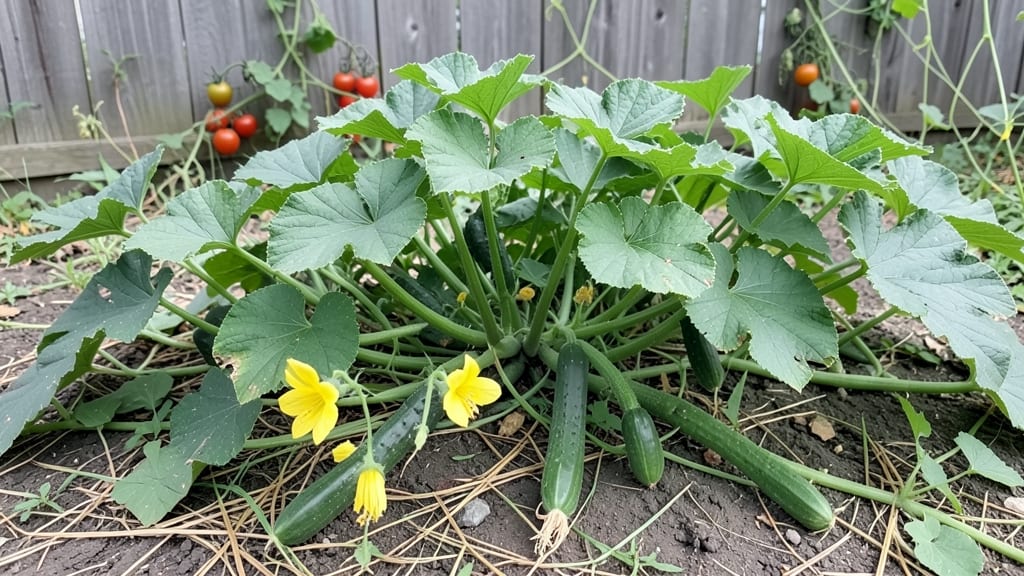
The growth of cucumber plants explodes when they climb instead of sprawl—my trellis system turns a 3-foot square into a 10-foot harvest. 🌿 The secret isn’t just saving space; it’s keeping cucumbers cleaner, straighter, and producing 30% more fruit. than sprawling plants.
I learned this the hard way after watching my first batch rot on the ground, but now my vines race upward like green fireworks.
You’ll need a sturdy trellis (I use 6-foot bamboo stakes with twine), well-draining soil mixed with compost, and consistent watering at the base—not overhead.
Cucumbers thrive in full sun (6+ hours daily) and need 1-2 inches of water weekly, but the real magic happens when you train the main vine upward while pinching off side shoots until they reach the top. That’s when the real harvest begins.
By mid-summer, you’ll be picking crisp, disease-free cucumbers straight off the trellis—no more digging through tangled vines. The plants stay productive for 2-3 months, and the vertical growth keeps them from shading each other.
Plus, pests like squash bugs have a harder time climbing, so your yield stays clean and abundant all season.
Works for any garden size, from urban balconies to backyard plots. The same principles apply whether you’re growing slicing, pickling, or heirloom varieties—just adjust spacing and support. Here’s how to set it up without the common mistakes that waste your effort.
📚 In This Guide
- What you need
- Instructions
- Tips and common mistakes
- Wrapping up and next steps
What you need
- ● Cucumber seeds or seedlings: Choose bush-type or vining varieties (e.g., 'Straight Eight,' 'Marketmore')—5–10 plants per trellis, depending on space.
- ● Vertical trellis system: DIY option: PVC pipes (10–12 ft tall), wooden stakes, or repurposed ladders.
- ● Store-bought: Freestanding A-frame trellises or wall-mounted cucumber nets (check for 100+ lb weight capacity).
- ● Potting mix or garden soil: 1–2 cubic feet per plant (well-draining, rich in compost).
- ● Containers or in-ground plot: Containers: 5-gallon pots or larger (with drainage holes) for 1–2 plants each.
- ● In-ground: Raised beds or trenches (12–18 inches wide, 12+ inches deep).
- ● Support ties or soft fabric strips: 10–20 ft of jute twine, Velcro plant ties, or old T-shirts to secure vines.
- ● Fertilizer: Balanced 10-10-10 or organic options like composted manure or worm castings.
- ● Watering system: Drip irrigation or a watering can with a long spout (cucumbers need 1–2 inches/week).
- ● Companion plants: Radishes, beans, or nasturtiums (plant near trellis base to deter pests).
- ● Shade cloth: 30–50% coverage for hot climates (prevents sunscald on vines).
- ● Mulch: Straw or black plastic to retain moisture and suppress weeds.
- ○ Growth regulator (optional): Seaweed extract to boost vine strength (follow package rates).
- ● Pruning shears: Small, sharp pair for trimming excess leaves or dead vines.
Step-by-Step guide to vertical trellis cucumber growth
Here’s how I turn sprawling cucumbers into tidy, high-yielding vertical vines—no wasted space, just prolific harvests.
🌱 Step 1: Select and Prepare the Trellis Structure
Choose a sturdy trellis at least 6 feet tall with 1-inch diameter poles spaced 12 inches apart horizontally. I use galvanized wire mesh (like hardware cloth) stretched between vertical posts for durability. Secure the base with U-shaped ground stakes driven 6 inches deep to prevent toppling in wind.
Position the trellis in full sun—cucumbers need 6+ hours daily. If your yard gets afternoon shade, opt for bush varieties like 'Bush Champion' instead of vining types. The reason? Vines trained upward produce straighter, cleaner fruits with fewer rot risks from ground contact.
🪴 Step 2: Plant Cucumbers at the Base with Proper Spacing
Dig holes 1 inch deeper than the root ball and twice as wide to encourage root spread. Plant 4 seeds per hole (they germinate unevenly) or 1 transplant per location, spacing 24 inches apart in rows. Use the 4 gallons of potting mix amended with 1 cup compost per plant to ensure fertile, well-draining soil.
Water deeply after planting to settle roots, then mulch with 2 inches of straw to retain moisture and suppress weeds. Here’s the thing—overcrowding leads to powdery mildew, so resist the urge to squeeze plants closer. You’ll see vines reach the trellis in 7-10 days if conditions are ideal.
🌿 Step 3: Train Vines and Prune for Optimal Growth
When vines hit 12 inches tall, gently tie the main stem to the trellis with soft plant ties (never wire—it cuts stems). Let 1-2 lateral shoots grow per node, but prune all others to redirect energy into fruit production. I pinch off suckers (side shoots) with my fingers—no tools needed.
Watch for male vs. female flowers: Male flowers have long stems; female flowers have tiny cucumbers at their base. Remove male flowers if you want larger fruits faster (they divert energy). Once vines climb 4 feet, they’ll start flowering heavily—this is when you’ll see first harvests in 50-60 days for most varieties.
✂️ Step 4: Harvest and Maintain Through the Season
Pick cucumbers when 6-8 inches long (check your variety’s ideal size) to encourage continuous production. Use pruning shears to cut stems ½ inch above the fruit—this prevents damage to tender vines. I harvest every 2-3 days during peak season to avoid overripe cucumbers attracting pests.
Fertilize weekly with ½ cup of balanced 10-10-10 fertilizer dissolved in water after harvests. If leaves yellow between veins, it’s iron deficiency—sprinkle ½ cup of iron sulfate around the base and water deeply. By mid-summer, your trellis should be a dense green curtain with cucumbers dangling like edible ornaments.
💧 Step 5: Extend the Season with Proper Care
As temperatures drop below 70°F, cucumbers slow down. I reduce watering but keep soil consistently moist (not soggy) to prevent blossom-end rot. If frost threatens, cover the trellis with frost cloth for 2-3 weeks to extend harvests. Most varieties quit producing when nights dip below 50°F, so plan to pull or compost plants by first frost.
Here’s the secret to next year’s success: Save seeds from your best cucumbers. Let 3-4 fruits mature fully on the vine (they’ll turn yellow and shriveled), scoop out seeds, rinse them, and dry on paper towels. Store in a cool, dark place—they’ll last 4-5 years and give you plants identical to this year’s winners.
Tips & tricks for perfect vertical cucumber growth
These game-changing strategies will transform your sprawling cucumber plants into a lush, space-efficient vertical garden that produces bigger, cleaner harvests all season long.
Trellis Stability Matters: The 6-foot height and 1-inch diameter poles in Step 1 aren't just recommendations—they're non-negotiable for wind resistance. I learned this the hard way when a 4-foot trellis collapsed under a summer storm, flattening my vines. Use the U-shaped ground stakes driven 6 inches deep as specified, and consider adding diagonal cross-bracing for extra stability if you're in a windy area. The goal is zero wobble—your cucumbers will thank you with straight, unbroken growth.
Root Ball Preparation: That 1-inch deeper and twice as wide hole in Step 2 isn't just about aesthetics—it's about creating an optimal root environment. The extra depth encourages roots to grow downward for stability, while the wider hole prevents soil compaction around the root ball. Pro tip: Gently loosen the soil at the bottom of the hole with your fingers before planting to encourage root penetration. This small step makes a huge difference in plant vigor during those first critical 7-10 days when vines reach the trellis.
Pruning Strategy: When you reach Step 3 and those 1-2 lateral shoots per node start appearing, remember this: every sucker you remove redirects energy to fruit production. I use my thumb and forefinger to pinch off suckers—no tools needed—and I do it religiously. The key is consistency: check your vines every 3-4 days during peak growth. You'll notice a dramatic increase in fruit size and quantity when you maintain this discipline. And here's the secret no one tells you—save those pruned suckers! Plant them in pots to create new cucumber plants for next season.
Temperature Transition: Those 70°F and 50°F temperature thresholds in Step 5 aren't arbitrary—they mark critical growth phases. When nights dip below 70°F, cucumbers shift from growth mode to survival mode, which is why you reduce watering but maintain consistent moisture. The 50°F cutoff is your hard stop for production—below this, photosynthesis slows dramatically. I've found that covering with frost cloth 2-3 weeks before the first frost date (not after) gives me an extra 2-3 weeks of harvests, making it worth the investment.
Pro Tips for Cucumber Plants Growth
- These game-changing strategies will transform your sprawling cucumber plants into a lush, space-efficient vertical garden that produces bigger, cleaner harvests all season long.
- Trellis Stability Matters: The 6-foot height and 1-inch diameter poles in Step 1 aren't just recommendations—they're non-negotiable for wind resistance.
- Root Ball Preparation: That 1-inch deeper and twice as wide hole in Step 2 isn't just about aesthetics—it's about creating an optimal root environment.
Frequently asked questions
Got questions about growing cucumbers vertically? We’ve got answers!
Whether you’re a beginner or a seasoned gardener, these FAQs will help you troubleshoot, optimize space, and maximize your harvest. Let’s dive in!
How long does it take for cucumber plants to grow on a trellis?
Cucumber vines typically start climbing a trellis within 2–3 weeks after planting, once they’ve developed 3–4 true leaves. With proper support, they’ll thrive vertically, producing fruits in 50–70 days for bush varieties or 60–80 days for vining types. Patience pays off—healthy vines mean bigger, straighter cucumbers!
Can I grow cucumbers vertically in containers?
Use large containers (at least 5 gallons) with a sturdy trellis or cage. Dwarf or bush varieties like ‘Bush Champion’ are ideal for pots. Just ensure they get 6+ hours of sunlight and consistent watering. Pro tip: Add a balanced fertilizer every 2–3 weeks to keep plants robust and productive.
Why aren’t my cucumbers growing straight on the trellis?
Wobbly or curved cucumbers often mean insufficient support or overcrowding. Check your trellis for stability—use soft ties (like old T-shirts or garden twine) to gently guide vines upward. Prune lower leaves to improve airflow, and avoid overwatering, which can weaken stems. Bonus: Harvest frequently to encourage upward growth!
What’s the best companion plant for cucumbers on a trellis?
Cucumbers love companions! Plant them near beans, peas, or radishes to improve soil nitrogen and deter pests. Avoid planting near potatoes, sage, or aromatic herbs (like dill), as they can stunt growth. Fun fact: Marigolds repel pests like cucumber beetles—perfect for trellised gardens!
Can cucumber plants survive a light frost on a trellis?
Cucumbers are tender annuals and cannot tolerate frost—even light chills (<32°F/0°C) will damage leaves and stunt growth. If frost is forecast, cover plants with frost cloth or move containers indoors temporarily. For best results, grow cucumbers in warm seasons (spring to early fall) in most climates.
Wrapping up and next steps
Growing cucumbers vertically isn’t just a clever space-saver—it’s a game-changer for bigger, healthier harvests and easier maintenance. By mastering the trellis secrets shared here, you’ll unlock a world of crisp, disease-resistant cucumbers without sacrificing your garden’s real estate. 🌱✨
Ready to transform your garden? Start small—pick one trellis spot, gather your materials, and plant with confidence. Before you know it, you’ll be reaping the rewards of your vertical green thumb! Try it this season and watch your cucumbers climb to new heights.