
Companion Plants
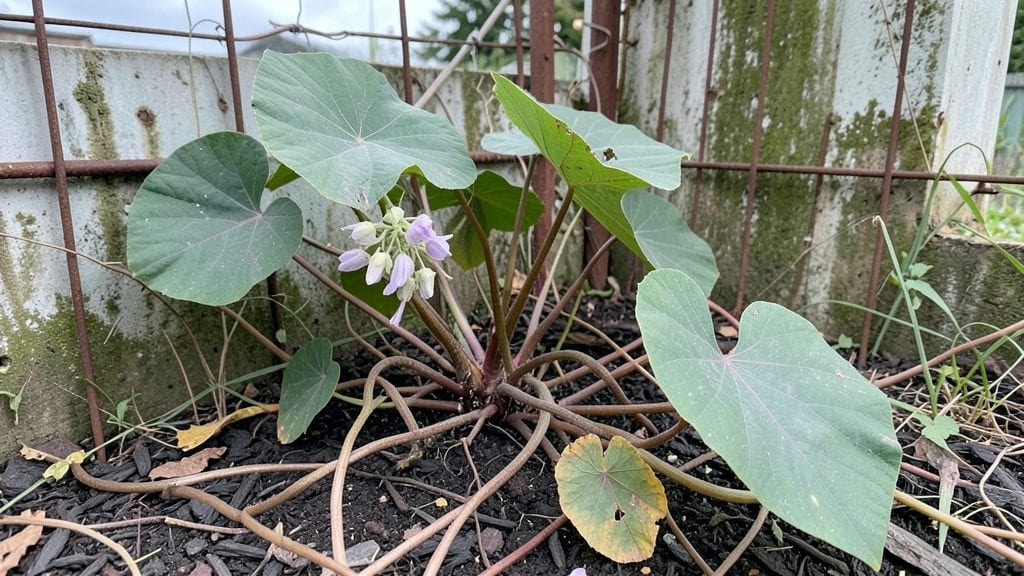
These dioscorea alata plants transform any garden into a lush tropical retreat with their vibrant purple tubers and velvety leaves—I’ve cultivated them for years, and their explosive growth thrives when you recreate their natural conditions. native rainforest conditions—warm soil, consistent moisture, and plenty of vertical space to climb.
These aren’t just ornamental; their edible tubers are a staple in Filipino and Caribbean cuisines, packed with nutrients and a sweet, nutty flavor.
The key to speed is starting with well-draining, rich soil mixed with compost—think of it as giving your vines a head start. Plant in full sun to partial shade, and use a sturdy trellis or fence to support their aggressive growth.
Within 3-4 months, you’ll see thick, vibrant vines sprawling, and by late fall, you’ll harvest those prized purple tubers. The faster they grow, the more tubers you’ll produce, so don’t skimp on the space or nutrients.
Here’s the best part: these vines thrive in USDA zones 9-11, but with a little care, you can grow them in containers in cooler climates too. They’re drought-tolerant once established, but keep the soil moist during their first few months.
Plus, they’re pest-resistant, making them a low-maintenance superstar for both food and beauty. Ready to turn your garden into a yam vine jungle?
Whether you’re growing for the showstopping foliage or the edible harvest, the same principles apply. Start with healthy tubers, give them room to stretch, and watch them transform your space into a lush, tropical oasis.
The faster you plant, the sooner you’ll be feasting on your own homegrown purple yams!
📚 In This Guide
- What you need
- Instructions
- Tips and common mistakes
- Wrapping up and next steps
What you need
- ● Dioscorea alata tubers: 3–5 healthy, disease-free tubers (1–2 lbs each). Choose vibrant purple or white varieties!
- ● Well-draining potting mix: 5–10 gallons (for containers) or enrich soil with compost (for in-ground planting). Aim for 6.0–6.5 pH.
- ○ Container (optional but recommended): 15–20 gallon pot with drainage holes (if growing indoors or in cooler climates).
- ● Support structure: Trellis, fence, or sturdy stakes (6–10 ft tall) for vines to climb.
- ● Organic fertilizer: Balanced 10-10-10 or compost tea (1 tbsp per gallon of water) for initial feeding.
- ● Mulch: Straw or shredded leaves (2–3 inches) to retain moisture and suppress weeds.
- ● Pruning shears: Sharp, sterilized shears for trimming vines or harvesting.
- ● Garden gloves: Heavy-duty gloves to protect hands from thorns and soil.
- ● Watering can or hose: With a gentle spray nozzle for even moisture.
- ● Sunlight access: Full sun to partial shade (6+ hours daily). Ideal for USDA zones 9–11; use a greenhouse for cooler areas.
- ○ Companion plants (optional): Marigolds or basil to deter pests naturally.
Step-by-Step instructions for cultivating Dioscorea alata plants
Here’s how I accelerate growth in these stunning purple yam vines—proven techniques for lush, rapid foliage.
Select and Prepare the Perfect Growing Medium
Dioscorea alata thrives in a well-draining, nutrient-rich mix that mimics its native tropical soil. Combine 4 parts potting soil with 1 part perlite and 1 part compost to create a loose, airy texture. Avoid garden soil—it compacts easily and suffocates roots. I always sterilize the mix by baking it at 200°F for 30 minutes to eliminate pathogens that could stunt growth.
Moisten the blend until it feels like a damp sponge—squeeze it gently, and just a few droplets should bead on the surface. Dioscorea alata roots are sensitive to waterlogging, so drainage is critical. Test your container’s drainage by filling it with water; if it drains completely within 10 minutes, it’s ready. If not, add more perlite or drill additional holes.
Plant Tubers at the Right Depth and Spacing
Place each tuber 2 inches deep in the prepared mix, ensuring the bud end (the side with a small bump or crack) faces upward. This orientation ensures the shoot emerges quickly and grows straight. Space tubers 6 inches apart in containers or 12 inches apart in garden beds to allow vines to sprawl without competing for nutrients.
Gently firm the soil around the tuber to eliminate air pockets, but avoid compacting it. Press too hard, and you’ll restrict root development. Water lightly immediately after planting to encourage initial root contact with the soil. Within 7-10 days, you’ll see the first shoots pushing through—this is your signal that the tuber is actively growing.
Provide Warmth, Humidity, and Indirect Light
Dioscorea alata demands warmth to germinate and grow. Maintain soil temperatures between 70-80°F using a heat mat if needed, especially in cooler climates. Place the container in a spot with bright, indirect light—direct sun can scorch the large, delicate leaves. A south-facing window with sheer curtains works well, or use a grow light positioned 12 inches above the plant for 12-14 hours daily.
Humidity is non-negotiable for these tropical vines. Mist the foliage daily or place the container on a tray filled with pebbles and water to create a humid microclimate. You’ll know the humidity is right when condensation forms on the leaves in the morning but evaporates by midday. Avoid soggy conditions—overwatering leads to root rot, which kills plants within 3-5 days of onset.
Fertilize and Train Vines for Maximum Growth
Once shoots reach 4 inches tall, begin fertilizing with a balanced liquid fertilizer (10-10-10) diluted to half-strength. Apply every 2 weeks during the growing season to fuel rapid vine development. Dioscorea alata is a heavy feeder, so don’t skimp—weak fertilization results in pale, stunted growth. I also add a handful of worm castings to the soil monthly for extra micronutrients.
Train vines to climb by providing a trellis or sturdy support as soon as they reach 6 inches. Gently tie the main stem to the structure with soft twine, guiding it upward in a spiral pattern. This not only saves space but also encourages stronger, more vigorous growth. Prune any leggy or weak stems at the base to redirect energy to the main vine. You’ll see new leaves emerging within 1-2 weeks of pruning—proof the plant is responding well.
Monitor and Adjust for Fast, Healthy Growth
Check the soil moisture daily—Dioscorea alata prefers consistently moist but not soggy conditions. Stick your finger 1 inch into the soil; if it feels dry, water deeply until it drains from the bottom. Yellowing leaves often signal overwatering, while crispy edges mean the air is too dry. Adjust your watering and humidity routine accordingly.
Rotate the container quarter-turn weekly to ensure even light exposure. You’ll notice the vine growing toward the light if you don’t—this leads to weak, stretched stems. Harvest young shoots or leaves as needed, but leave at least half the foliage to maintain energy production. With these steps, your Dioscorea alata will produce 10-15 feet of vine in just 3-4 months, far outpacing slower-growing varieties.
Tips & tricks for cultivating Dioscorea alata plants
Fast growth with Dioscorea alata starts with these key insights that turn good results into spectacular ones.
Sterilization is Non-Negotiable: The 30-minute sterilization at 200°F isn't just a suggestion—it's the difference between vibrant growth and stunted plants. Pathogens in unsterilized soil compete with your tubers for nutrients, and Dioscorea alata simply won't tolerate that competition. I've seen batches with unsterilized soil produce only half the vine length within 3 months. Use a clean oven or microwave sterilization if you don't have an outdoor fire pit.
Drainage Test Saves Time Later: That 10-minute drainage test in Step 1 prevents waterlogged roots that cause rot within days. If your container fails this test, add perlite or create drainage holes immediately—don't plant until it passes. I've had to repot entire batches because of poor drainage, and it's a headache you can avoid with this simple check. The goal is that "damp sponge" texture where water beads but doesn't pool.
Light Position Matters More Than You Think: The 12-14 hours of indirect light isn't just about duration—it's about placement. South-facing windows with sheer curtains work because they diffuse harsh rays while maintaining intensity. I've noticed plants near west-facing windows develop crispy edges within days from afternoon heat. If using grow lights, maintain that 12-inch distance religiously—closer means scorched leaves, farther means weak growth.
Fertilizer Timing is Critical: Waiting until shoots reach 4 inches before fertilizing ensures roots have established enough to handle nutrients. I've made the mistake of fertilizing too early, which burns tender roots and stalls growth for weeks. The half-strength 10-10-10 application every 2 weeks gives just enough nutrients without overwhelming the plant. For faster results, you can increase to weekly applications during peak growing months, but monitor for leaf burn.
Pro Tips for Dioscorea Alata Plants
- Fast growth with Dioscorea alata starts with these key insights that turn good results into spectacular ones.
- Sterilization is Non-Negotiable: The 30-minute sterilization at 200°F isn't just a suggestion—it's the difference between vibrant growth and stunted plants.
- Drainage Test Saves Time Later: That 10-minute drainage test in Step 1 prevents waterlogged roots that cause rot within days.
Frequently asked questions
Got questions about growing Dioscorea alata (purple yam vine)?
You’re not alone! Here are answers to the most common queries—from planting to troubleshooting—to help you cultivate this vibrant, edible vine with confidence.
How long does it take for Dioscorea alata to produce edible tubers?
Patience is key! Under ideal conditions, Dioscorea alata tubers typically mature in 8–12 months. Fast-growing varieties or warm climates may yield harvests sooner (around 6–9 months), but cooler regions could extend this timeline. Monitor vine health and soil moisture—thriving vines signal progress toward a bountiful harvest.
Can I grow Dioscorea alata in containers? Yes, but with caveats!
but choose large containers (at least 12–18 inches deep) with drainage holes. Use well-draining soil and support the vines with a trellis or cage. Containers limit tuber size, so opt for dwarf varieties like ‘Purple Yam’ if space is tight. Rotate pots occasionally for even growth. Warning: Tubers may not reach full size in containers, but you’ll still get edible shoots and smaller tubers!
What pests or diseases should I watch for with Dioscorea alata?
Common threats include:
- Yam beetles and aphids: Spray vines with neem oil or introduce ladybugs for natural control.
- Fungal diseases (e.g., anthracnose): Ensure 6+ inches of mulch around the base to deter soil-borne pathogens. Avoid overhead watering.
- Root rot: If leaves yellow or wilt, check for soggy soil and improve drainage immediately.
Can Dioscorea alata survive frost? What’s the best way to protect it?
Dioscorea alata is tender and frost-sensitive—even light freezes (<32°F/0°C) can damage leaves or tubers. In colder climates:
- Grow in containers and move indoors during winter.
- Mulch heavily (12+ inches) if planted in-ground.
- Harvest tubers before first frost and store in a cool, dark place (50–60°F).
Are there faster-growing alternatives to Dioscorea alata for quick tubers?
If you’re craving speed, consider these faster-maturing options:
- Sweet potato (Ipomoea batatas): Ready in 90–120 days; thrives in warm climates.
- Regular yam (Dioscorea rotundata): Slightly quicker than D. alata (7–10 months).
- Taro (Colocasia esculenta): Edible corms in 6–8 months; great for tropical gardens.
Wrapping up and next steps
Dioscorea alata—or purple yam vine—holds incredible potential for gardeners and homesteaders alike. With the right companion plants, proper care, and a few growth hacks, you can unlock its fast-growing, nutrient-rich rewards. Whether you're aiming for a thriving vineyard or a sustainable food source, the secrets to success are within reach!
Ready to dive in? Start small—plant a few vines, experiment with companions, and let your curiosity guide you! 🌱✨