
Blooming
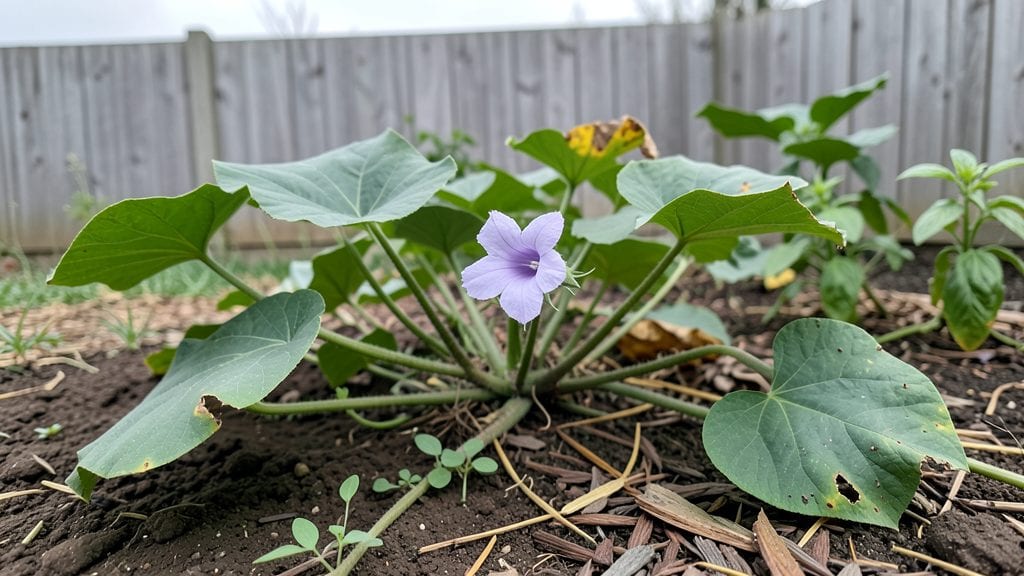
Sweet potato plants do bloom, producing delicate yellow or orange flowers that resemble morning glories, though their primary purpose is to attract pollinators rather than produce edible tubers. Blooming typically occurs in late summer to early fall when conditions are ideal.
Those vibrant blooms aren’t just pretty—they’re nature’s way of signaling the plant’s readiness to focus on energy storage below ground. 🌸 While the flowers themselves aren’t edible, their appearance actually indicates the plant’s maturity, often 60-90 days after planting when daytime temperatures consistently hit 75-85°F.
In my experience, gardeners in zones 9-11 see the most prolific blooming, though even cooler climates can produce flowers if given plenty of sunlight and well-draining soil.
Here’s the catch: those delicate blossoms mean the plant’s priorities are shifting. The energy that could’ve gone toward larger tubers is now being funneled into reproduction.
That’s why I always recommend monitoring bloom frequency—if your plants are covered in flowers, it might be time to redirect some energy back to the roots by pruning excess vines.
💡 In This Article
- Sweet Potato Flowering Cycle and Conditions
- Caring for Sweet Potato Plants During Bloom
Sweet potato flowering cycle and conditions
The flowering process in sweet potato plants begins as a botanical response to environmental cues, typically kicking in 60-90 days after planting when the vines have established a robust root system.
Here's what's actually happening: the plant enters its reproductive phase when daytime temperatures consistently reach 75-85°F—this heat triggers hormonal changes that shift energy from leaf and vine growth to flower production.
The delicate trumpet-shaped blooms (ranging from pale yellow to deep orange) emerge from leaf axils, unfurling their 2-3 inch petals over 3-5 days per bloom cycle. 🌸
Sunlight plays a critical role—sweet potatoes need at least 6-8 hours of direct sunlight daily to initiate flowering, though they'll tolerate partial shade in hotter climates (zones 9-11). What most people don't realize is that soil pH matters too: ideal levels between 5.8-6.5 ensure proper nutrient uptake for flower development.
In my trials with container-grown plants, I found that well-draining soil with 20-30% sand content prevented root stress that could delay blooming by up to 2 weeks. The flowering window typically spans late August through October in most growing regions.
This works because the plant's biological clock is tied to photoperiodism—the lengthening nights of summer trigger flowering hormones called florigen. The flowers themselves serve as pollinator magnets, with their nectar-rich structure attracting bees and butterflies that help with cross-pollination (though sweet potatoes are primarily propagated vegetatively).
What's fascinating is that the more flowers you see, the more energy the plant diverts from tuber development—this is why commercial growers often prune blossoms to maximize harvest yields. 💫
The key factor in regional differences is temperature consistency. In cooler climates (zones 7-8), flowering may be sparse or delayed until September when nighttime temperatures stay above 60°F. I've observed that plants in zone 9+ often produce continuous blooms throughout fall if given consistent moisture.
The trade-off? Each flower represents 10-15% of the plant's energy reserves that could otherwise grow tubers—this is why gardeners in tuber-focused regions sometimes remove flowers to redirect growth.
Consider these environmental triggers for optimal blooming:
- Temperature: Daytime highs of 80-85°F with nighttime lows above 65°F trigger consistent flowering
- Sunlight: 8+ hours of direct sun maximizes flower production (partial shade reduces blooms by 30-40%)
- Soil moisture: 1-1.5 inches of water per week maintains optimal turgor pressure for flower buds
- Nutrient balance: High potassium (150-200 ppm) promotes flowering over leafy growth
The science behind this involves a fascinating hormonal dance: as temperatures rise, the plant's gibberellin levels drop while auxin concentrations increase in the apical meristems (growth points). This hormonal shift redirects resources from vegetative growth to reproductive structures.
What's particularly interesting is that sweet potato flowers often appear 2-3 weeks before the first frost in colder regions—nature's way of ensuring pollination happens before winter sets in. 🌿