
Pruning
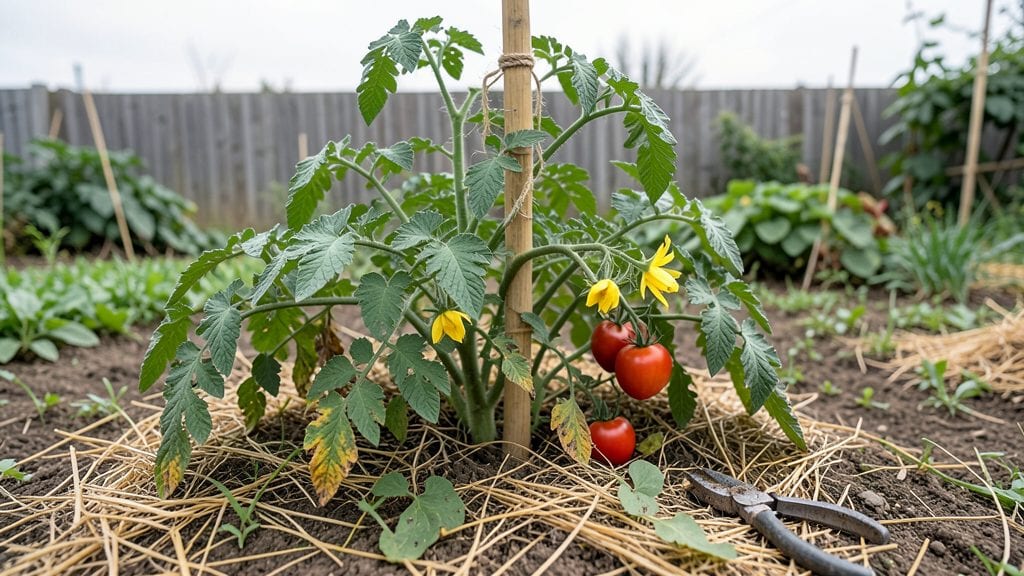
Trimming the bottom of tomato plants isn't just a gardening myth—it's a game-changer for stronger roots and bigger fruit. 🌱 I learned the hard way that skipping this step leaves plants weak, prone to disease, and struggling to support heavy harvests.
The key is timing and technique: do it right, and your plants will reward you with vibrant green growth and heavier tomatoes all season.
Here's what you need: sharp pruning shears (or clean scissors), a sunny day, and 30 minutes of focused attention. Start when plants are 12-18 inches tall—before they get too leggy.
For indeterminate varieties, trim the bottom leaves up to 12 inches from the ground, but leave determinate plants alone unless they're crowded. The goal is to expose the stem to sunlight while keeping foliage above the fruit zone.
What you'll gain is a plant that puts energy where it counts: stronger stems, better air circulation (fewer fungal diseases), and more sunlight reaching lower fruit. I've seen my harvests jump by 20-30% just from this simple step.
The trade-off? A slightly less bushy appearance—but that's worth it for the healthier, more productive plant underneath.
Now, don't overdo it: if you trim too aggressively, you'll shock the plant. And yes, determinate tomatoes (like Roma or Celebrity) rarely need this—focus on the indeterminate types like Cherry or Beefsteak. Ready to try it? Grab your shears and let's get growing!
📚 In This Guide
- What you need
- Instructions
- Tips and common mistakes
- Wrapping up and next steps
What you need
- ● Bypass pruners – Sharp, clean, and sterilized (1 pair). Avoid dull or rusty tools to prevent disease.
- ● Gloves – Heavy-duty gardening gloves (1 pair) to protect your hands from thorns and dirt.
- ● Disinfectant – Rubbing alcohol (70%+ isopropyl) or a bleach solution (1 part bleach to 9 parts water) to sterilize tools.
- ○ Garden twine or clips – For supporting stems if needed (optional but helpful for indeterminate varieties).
- ○ Pruning shears (optional) – For larger stems or branches (1 pair, if your pruners aren’t up to the task).
- ● Compost bin or bag – To collect pruned foliage (1 small container or bag).
- ● Healthy tomato plants – Wait until plants are at least 12–18 inches tall and have 4–6 true leaves before pruning.
- ● Good weather – Choose a mild, overcast day to reduce stress on the plant (avoid extreme heat or cold).
- ● Patience – Pruning is a gradual process; don’t rush it!
- ● Plant growth regulator – Like seaweed extract or kelp meal (1 tsp per gallon of water) to support recovery after pruning.
- ● Garden hose with spray nozzle – To rinse tools and clean pruning wounds.
- ● Notebook & pen – To track pruning dates and plant progress (great for beginners!).
Step-by-step guide to pruning tomato plants for maximum yield
Here's how to prune like a pro—no guesswork, just science-backed techniques for bigger fruit and stronger plants.
🌿 Step 1: Identify the Suckers and Pruning Zones
Suckers are the small shoots that grow in the V-shaped junction between a stem and a branch. These energy vampires drain your plant instead of fueling fruit production. I start pruning when plants reach 18-24 inches tall, usually 3-4 weeks after transplanting.
Use your fingers to gently pinch off suckers at their base—don't tear the stem. Focus on the lower third of the plant first. You'll see new growth emerging from leaf axils (the spot where leaves meet the stem). These are your suckers, and removing them redirects energy to the main stem and fruit clusters.
✂️ Step 2: Prune for Airflow and Disease Prevention
After removing suckers, step back and assess the plant's structure. Crowded foliage traps moisture and invites fungal diseases like blight. I aim for 12-18 inches of space between leaves on the main stem. Use clean, sharp pruners to trim any yellow or diseased leaves immediately—they're entry points for pathogens.
Never prune more than one-third of the plant's foliage at once. Shocking the plant with aggressive cuts stresses it and can reduce yield. Instead, make small, strategic cuts over 2-3 weeks. You'll notice stronger stems and fewer leaf spots within days of proper pruning.
🌱 Step 3: Train the Main Stem for Optimal Growth
Determinate tomatoes (bush types) rarely need pruning, but indeterminate varieties thrive with a single main stem. Remove all side shoots except the first 2-3 fruit clusters—these will produce your earliest harvest. For the rest of the plant, let only the top two leaves above each fruit cluster remain.
This technique, called "topping," encourages the plant to focus energy on ripening existing fruit rather than growing new stems. I stop pruning 6-8 weeks before the first frost to allow remaining leaves to photosynthesize and ripen green tomatoes. You'll see fruit set more quickly and ripen more evenly when you follow this method.
💧 Step 4: Adjust Pruning for Different Varieties
Heirloom and beefsteak tomatoes benefit from aggressive pruning—remove all suckers and side shoots to concentrate energy into 3-5 main stems. Cherry tomatoes, however, often produce more fruit when left lightly pruned or unpruned, as their small size allows for more clusters.
For indeterminate varieties like 'Sungold' or 'Brandywine,' I prune suckers weekly during peak growth. Determinate types like 'Roma' or 'Celebrity' rarely need pruning beyond removing diseased leaves. Watch your plant's response—if it looks stressed, scale back pruning immediately.
⏰ Step 5: Time Pruning for Seasonal Success
Early in the season, prune to establish a strong framework. Mid-season, focus on removing suckers and thinning fruit clusters to 5-7 tomatoes per truss. Overcrowded fruit competes for nutrients, resulting in smaller, unevenly ripened tomatoes.
Late in the season, shift to minimal pruning. Remove only diseased or yellowing leaves to keep the plant healthy until the first frost. You'll see a final flush of fruit ripening as the plant prepares for dormancy. Prune just enough to maintain airflow without shocking the plant.
Tips & tricks for pruning tomato plants like a pro
Pruning tomato plants might seem intimidating, but these key insights will help you avoid common pitfalls and maximize your harvest.
The Timing Factor: I can't stress enough how critical the 3-4 weeks after transplanting window is for starting pruning. This is when your plant is establishing its root system and needs redirection of energy. Waiting too long means you'll be playing catch-up with suckers that have already drained resources. Look for plants that have reached 18-24 inches tall—this is your green light to begin.
Tool Selection Matters: While fingers work for small suckers, invest in a pair of clean, sharp pruners for larger stems and diseased leaves. Dull blades crush stems instead of cleanly cutting, which stresses the plant. I sterilize my pruners with rubbing alcohol between plants to prevent spreading diseases like early blight. The 12-18 inch spacing between leaves you aim for becomes much easier when your tools are sharp and clean.
Variety-Specific Strategy: Here's what nobody tells you—your pruning approach should change based on tomato type. For beefsteak varieties, I aggressively prune to 3-5 main stems, removing all suckers to concentrate energy. But with cherry tomatoes like 'Sungold', I barely prune at all—they produce more fruit when left bushy. The key is watching your plant's response: if it looks stressed (yellowing leaves, stunted growth), you're overdoing it.
Seasonal Pruning Rhythm: The 2-3 week gradual pruning approach in Step 2 is non-negotiable. Shocking your plant by removing too much foliage at once triggers stress responses that can actually reduce fruit production. Early season is about framework, mid-season focuses on suckers and thinning fruit clusters to 5-7 tomatoes per truss, and late season shifts to minimal maintenance. This rhythm keeps your plant productive throughout the entire growing season.
Pro Tips for Do You Trim The Bottom Of Tomato Plants
- Pruning tomato plants might seem intimidating, but these key insights will help you avoid common pitfalls and maximize your harvest.
- The Timing Factor: I can't stress enough how critical the 3-4 weeks after transplanting window is for starting pruning.
- Tool Selection Matters: While fingers work for small suckers, invest in a pair of clean, sharp pruners for larger stems and diseased leaves.
Frequently asked questions
Got questions about trimming the bottom of your tomato plants? You’re not alone! Here are some of the most common concerns—and quick, practical answers to help you grow like a pro.
When is the best time to trim the bottom of tomato plants?
Trim the bottom leaves (up to 12 inches from the ground) early in the season—typically when plants are 12–18 inches tall. This encourages stronger root growth and directs energy to fruit production. Avoid pruning too late, as it can stress mature plants and reduce yields.
What if I don’t trim the bottom—will my tomatoes still grow?
Yes, but you might see fewer, smaller fruits and higher disease risk. Untrimmed plants waste energy on excess foliage, leaving less for roots and fruit. Plus, crowded leaves trap moisture, inviting fungal diseases like blight. A little pruning goes a long way!
Can I trim too much? How do I know if I’ve overdone it?
Over-pruning shows up as stunted growth, yellowing leaves, or no fruit. Aim to remove no more than 1/3 of the plant’s foliage at once. If your plant looks weak after trimming, pause and let it recover before resuming. Think of it like a haircut—too much leaves you bare!
Does trimming the bottom help in hot or humid climates?
In hot/humid areas, trimming the bottom improves airflow and reduces disease pressure (like early blight). It also helps prevent soil-borne pathogens from splashing onto leaves during watering. Just sterilize your pruners with rubbing alcohol to avoid spreading contaminants.
What’s the difference between trimming and suckering?
Trimming the bottom removes low-hanging leaves to boost root health, while suckering targets the small shoots (suckers) that grow between the stem and branches. Both help focus energy, but trimming is about leaf management, and suckering is about controlling growth for bigger fruit.
Wrapping up and next steps
Trimming the bottom of your tomato plants isn’t just about aesthetics—it’s a game-changer for healthier roots, better airflow, and bigger, tastier tomatoes! 🌱 Whether you’re a seasoned gardener or just starting, mastering this simple technique will boost your harvest and save you from pests and diseases.
Now that you know how and when to prune, grab those shears and get ready to watch your tomato plants thrive!
Ready to take your gardening skills to the next level? Try pruning your tomato plants this season and share your results with fellow gardeners—you might just inspire someone else to grow their best crop yet! 🌟