
Watering
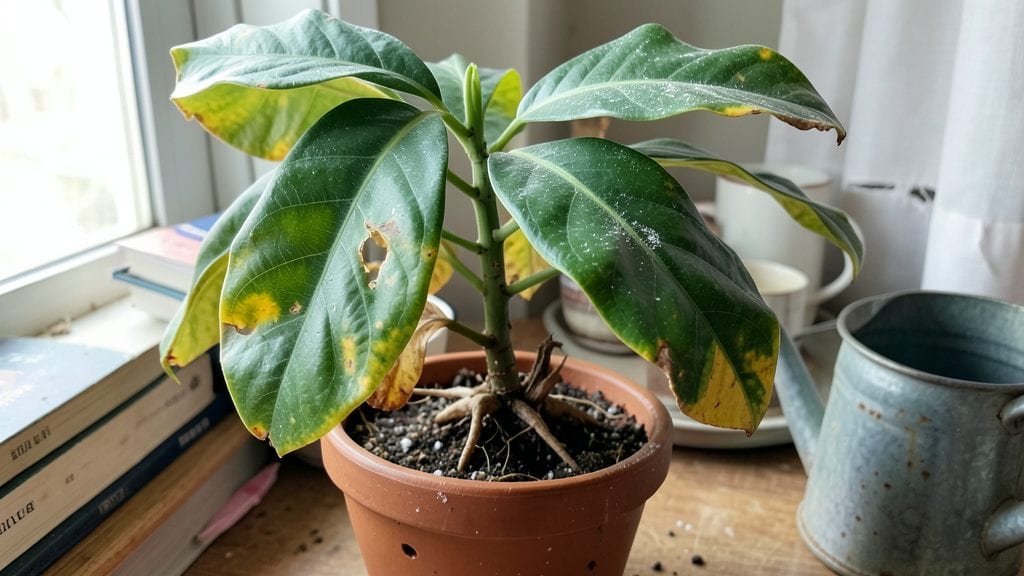
If you’re struggling to fix an overwatered plant whose leaves turn yellow and droop despite your care, you’re not alone—here’s how to revive it. I've saved more soggy plants than I'd like to admit by using hydrogen peroxide—it's the secret weapon that stops root rot in its tracks.
The first time I saw a plant I'd written off for dead perk up after just one treatment, I knew this was the fix everyone needs.
Root rot starts when roots sit in waterlogged soil, cutting off oxygen and inviting fungus. You'll spot it by mushy, dark roots that smell foul—completely different from the firm, white roots of a healthy plant.
Hydrogen peroxide acts like a disinfectant, breaking down the gunk and giving roots a chance to recover. It's not magic; it's science, and it works fast when you act early.
After treating the roots, you'll repot in fresh, well-draining mix and adjust your watering habits. Within days, you'll see new growth pushing through, and those sad yellow leaves will start converting to vibrant green.
The key is catching it before the plant collapses—once you know the signs, you'll spot them faster than you think.
This method works for houseplants, containers, and even backyard gardens where drainage might be lacking. The same principles apply whether you're dealing with a single pot or a raised bed. Let's get those roots breathing again—your plants will thank you with stronger stems and better blooms all season.
Root Causes Of Overwatering
Overwatering isn’t just a gardening mistake—it’s a scientific imbalance that disrupts your plant’s delicate ecosystem. When roots drown, they suffocate, inviting fungal infections, nutrient starvation, and even death. But why does this happen in the first place? Let’s break down the real culprits behind soggy soil and wilting plants.
Most overwatering starts with container or soil structure. If your pots lack drainage holes, water pools at the bottom instead of escaping. Even in garden beds, compacted or clay-heavy soil acts like a sponge, trapping moisture and cutting off oxygen to roots.
- Science behind it: Roots need aeration—when soil stays saturated, oxygen levels drop below 10%, suffocating roots and promoting anaerobic bacteria that release toxic compounds like ethanol and methane.
- Actionable fix: Test your soil’s drainage by filling a pot with water—if it doesn’t drain within 10 minutes, it’s a red flag. Amend clay soil with perlite or sand (20-30% mix).
Not all plants are created equal. A succulent left in soggy soil for a week will rot, while a fern might thrive—until you suddenly switch to desert-watering habits. Misjudging a plant’s native environment (e.g., tropical vs. arid) leads to chronic overwatering.
- Science behind it: Plants evolved in water-scarce or humid climates have different root structures. Succulents store water in fleshy leaves, while tropical plants rely on frequent, shallow watering to mimic rainfall.
- Actionable fix: Group plants by water needs (e.g., "drought-tolerant" vs. "thirsty") and research their native rainfall patterns. A quick Google search for "plant name watering schedule" saves guesswork.
Generic advice like "water every 7 days" is a one-size-fits-none trap. Factors like humidity, season, pot size, and even your home’s temperature swing can turn a "safe" watering routine into a death sentence.
| Factor | How It Affects Water Needs |
|---|---|
| Humidity | High humidity (e.g., 70%+) slows evaporation—plants need less water. Low humidity (e.g., 30%+) means soil dries faster. |
| Season | Winter = dormancy = cut water by 50%. Summer = rapid growth = increase frequency. |
| Pot Material | Terracotta dries out faster than plastic. Self-watering pots hide moisture levels—check soil before adding water! |
Pro tip: Stick your finger 1-2 inches into the soil. If it’s damp, wait. If it’s bone-dry, you’ve likely been underwatering (not over!). 🌡️
Smart pots, self-watering globes, and drip irrigation sound convenient—but they’re not foolproof. Malfunctions, clogged emitters, or incorrect settings can turn your high-tech setup into a root rot factory.
- Science behind it: Automated systems often rely on timers or moisture sensors that don’t account for real-time changes (e.g., a sudden rainstorm or a plant’s growth phase). Over time, roots adapt to constant moisture, becoming weak and dependent.
- Actionable fix: Monitor manually at least weekly. If using a self-watering pot, empty the reservoir when soil is moist. For drip systems, audit emitters every 3 months for clogs.
When you repot or move a plant, its roots are stressed. In response, many gardeners overcompensate by watering heavily—thinking it helps recovery. But this can drown already vulnerable roots.
- Science behind it: Transplant shock triggers ethylene gas production in roots, slowing growth. Waterlogged soil amplifies stress by blocking oxygen and inviting Pythium (a deadly root fungus).
- Actionable fix: After repotting, water lightly and wait 3-5 days before normal watering. Use a rooting hormone to speed recovery.
Revive Your Drowning Plants Now
Overwatering can feel like a death sentence for your green friends, but don’t toss those soggy leaves just yet! With the right steps, you can nurse your plants back to health—even if their roots are screaming for help.
Below are targeted solutions based on the most common causes of overwatering, from yellowing leaves to mushy stems. Let’s get your plants breathing easy again!
Cause: Continuous moisture without drying periods Fix: Hit the pause button on watering right now. Let the soil dry out completely before touching it again. This gives roots a chance to recover and prevents further rot.
- For potted plants: Lift the pot—if it’s heavier than usual, it’s still too wet.
Wait until the top 1–2 inches of soil feel dry to the touch. - For garden beds: Skip watering for 3–5 days (depending on climate) and monitor for improvement. - Pro Tip: 💡 If your plant is in a decorative pot with no drainage holes, repot it ASAP into a container with holes or a cache pot (a saucer with gravel to wick away excess water).
Cause: Compacted, waterlogged soil Fix: If the soil is bone-dry but the roots are still suffering, they may be suffocating. Loosen the soil and improve drainage.
- For potted plants:
- Turn the pot upside down and gently tap the sides to loosen soil.
- Mix in perlite, vermiculite, or coarse sand (10–20%) to boost aeration.
- If the roots are circling the pot, trim the worst-looking ones with sterilized scissors and repot in fresh, well-draining soil.
- For garden plants:
- Use a fork or trowel to aerate the soil around the base (be careful not to damage roots).
- Add compost or organic matter to improve structure.
Cause: Root rot from fungal/bacterial overgrowth Fix: Hydrogen peroxide (H₂O₂) is a natural antimicrobial that oxygenates roots and kills harmful microbes. Dilute 3% food-grade H₂O₂ (never undiluted!) and use it like this:
| Plant Type | Treatment Method | Frequency |
|---|---|---|
| Potted Plants | Mix 1 part H₂O₂ + 4 parts water. Pour over soil until it drains from the bottom. | Every 3–4 days for 2 weeks. |
| Garden Plants | Water the soil slowly with the diluted solution (avoid leaf spray). | Once a week until recovery. |
| Severely Rotten Roots | Soak roots in 1 part H₂O₂ + 9 parts water for 10–15 minutes before repotting. | One-time deep cleanse. |
- Pro Tip: 🌡️ Test the soil pH after treatment—overwatering often lowers pH. Add a lime-based amendment if your soil tests acidic (pH <6).
Cause: Stunted growth or dead foliage from stress Fix: Snip away only the worst-affected leaves and stems—healthy green parts can still recover. Use these cues:
- Yellow leaves? Pull or trim them (they’re done for).
- Mushy stems? Cut back to firm, green tissue (sterilize scissors with rubbing alcohol first).
- Black or brown roots? Trim them off—only white/light brown roots should stay.
- Pro Tip: ✨ Don’t fertilize yet! Wait until new growth appears (2–4 weeks). Overwatered plants are starving for oxygen, not nutrients.
Prevention is key—here’s how to avoid repeat offenses:
- 📊 Check soil moisture smarter:
- Stick your finger 1–2 inches deep—if it’s damp, wait.
- Use a moisture meter for precision (especially for fussy plants like ferns or calatheas).
- 🕒 Water at the right time:
- Morning watering = less evaporation, more root absorption.
- Avoid watering at night (promotes fungal growth).
- 🚰 Upgrade your pots:
- Terracotta pots dry faster than plastic.
- Self-watering pots? Drain excess water immediately after use.
- 🌱 Choose the right plant:
- Succulents/houseplants like snake plant or zZ plant = drought-tolerant.
- Tropicals like pothos or peace lilies = thirstier (but still need drainage!).
- Mild cases (yellowing leaves): 1–2 weeks of dry care.
- Moderate rot (some mushy stems): 3–4 weeks with H₂O₂ treatments.
- Severe root rot (black mushy roots): May take 6+ weeks or require repotting.
Signs of success? New growth, perky leaves, and soil that dries out between waterings. If your plant isn’t improving after 30 days, it might be beyond saving—but don’t give up! Try propagating healthy cuttings to clone a new plant. 🌱
Frequently asked questions
How do I know if my plant is overwatered vs. underwatered?
Check the soil first—stick your finger 1-2 inches deep. If it's damp, you're likely overwatering. Overwatered plants show yellowing leaves (especially lower ones), mushy stems, and foul-smelling soil, while underwatered plants have crispy brown edges and dry, pulling soil. Weigh your pot too: soggy pots feel heavier than normal.
Can I save a plant with completely black, mushy roots?
It depends! If only the tips are black, trim those and repot in fresh soil. For fully black roots, you'll need to cut back to healthy white roots—if there aren't any, the plant is likely beyond saving. Always sterilize your tools with rubbing alcohol before trimming to prevent infection.
How often should I treat my plant with hydrogen peroxide?
For mild cases, use diluted 3% hydrogen peroxide (1 part peroxide to 4 parts water) every 3-4 days for 2 weeks. For severe rot, soak roots in a stronger mix (1:9 ratio) once, then repot. Stop treatments once new growth appears—overdoing it can stress healthy roots.
What's the best soil mix to prevent future overwatering?
Use a blend of 60% potting soil, 20% perlite or pumice, and 20% compost. This improves drainage while retaining moisture. For succulents, increase the perlite to 40%. Always choose pots with drainage holes—even decorative ones can be fitted with cache pots underneath.
Will my plant ever fully recover from root rot?
Many plants make full recoveries if you catch it early! With proper care—drying out the soil, repotting in fresh mix, and hydrogen peroxide treatments—you'll often see new growth within 2-4 weeks. Even severely affected plants can bounce back if you've saved enough healthy roots. Patience is key!