
Picking
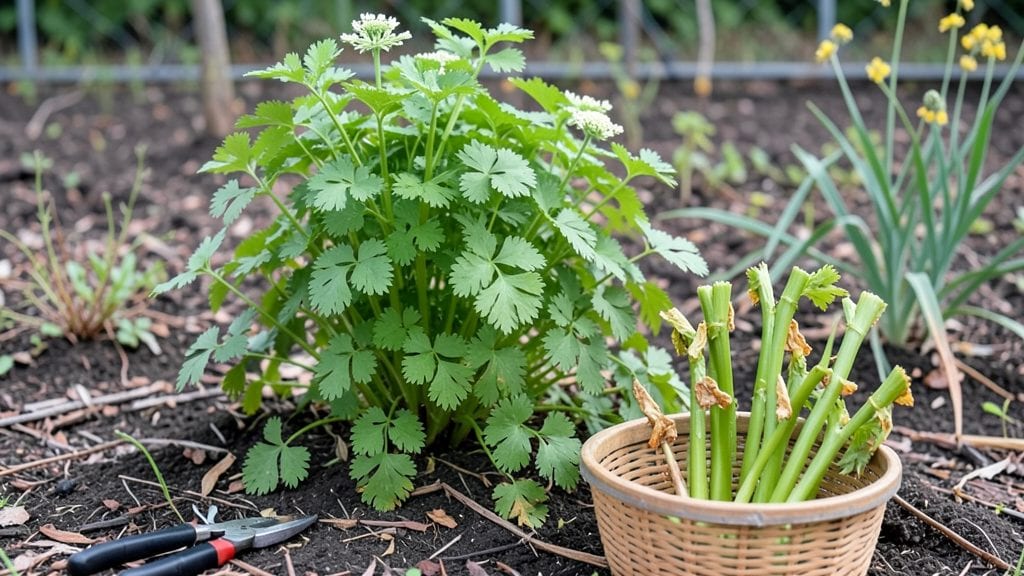
Harvesting cilantro plants at the right time turns your garden into a fragrant, leafy treasure trove. I used to pull the whole plant when it bolted, but now I snip stems regularly and get weeks of fresh harvests instead.
The secret is cutting just above a leaf pair when stems reach 6-8 inches tall—this keeps the plant bushy and productive.
You’ll need sharp scissors or clean pruners to avoid tearing leaves, plus a small container for storing your harvest. Most people worry about damaging the plant, but cilantro’s resilient—just avoid cutting more than one-third of the plant at once.
For best flavor, harvest in the morning when oils are concentrated, and always rinse leaves gently before using.
With proper harvesting, your cilantro will keep producing for 6-8 weeks or longer, especially if you keep soil consistently moist. The leaves stay bright green and packed with that bright, citrusy punch you crave in salsas and soups.
Plus, the more you harvest, the bushier the plant grows—it’s like cilantro on demand.
If your cilantro bolts too quickly, try succession planting every 2 weeks for a continuous supply. Store harvested bunches wrapped in a damp paper towel in the fridge, or freeze in ice cube trays with water for easy cooking additions.
The key is consistency—harvest often, and your cilantro will reward you all season long.
📚 In This Guide
- What you need
- Instructions
- Tips and common mistakes
- Wrapping up and next steps
What you need
- ● Fresh cilantro plants: Mature plants (4–6 weeks old) with visible stems and leaves for optimal flavor.
- ● Sharp pruning shears or scissors: Clean, sterilized tools to avoid damaging the plant (avoid dull blades!).
- ○ Cutting board or tray: A clean, flat surface to place harvested stems (optional but handy for organization).
- ● Glass jars or airtight containers: For storing fresh cilantro (1–2 quart-sized jars per batch).
- ● Paper towels or clean kitchen towel: To pat dry stems before storage (prevents mold!).
- ● Plastic wrap or reusable produce bags: For short-term storage (1–2 days) if refrigerating.
- ● Food-safe spray bottle: Lightly mist cilantro to keep it fresh longer.
- ● Small bowl of water: For rinsing stems before storage (if soil is present).
- ● Labeling markers: To tag jars with harvest dates (great for tracking freshness!).
- ● Gloves (nitrile or cotton): If your cilantro is dusty or you prefer hygiene during handling.
Step-by-Step instructions for harvesting cilantro plants
Here's how to keep your cilantro thriving and producing flavorful leaves all season long.
Identify the Right Time to Harvest
Harvest cilantro when the plants reach about 6 inches tall, typically 3-4 weeks after sowing. Look for 3-4 sets of true leaves—these are the larger, mature leaves that pack the most flavor. Early harvesting encourages bushier growth, so don’t wait until the plant bolts (sends up a tall flower stalk). The leaves should feel firm and vibrant, not wilted or yellowing.
I like to harvest in the morning after the dew has dried but before the sun gets too intense. This ensures the leaves are crisp and full of moisture, which makes them taste fresher. Avoid harvesting after rain or when the soil is waterlogged, as the leaves can become soggy and spoil quickly.
Choose the Best Leaves to Pick
Start by selecting the outer leaves first—they’re the largest and most mature. These leaves have had the longest time to develop flavor, while the inner leaves are still growing. Use clean, sharp scissors or pruning shears (from your supplies) to snip the stems just above a set of leaves or where the leaf meets the main stem. This encourages new growth from the same spot.
If you’re harvesting for cooking, you can also pluck individual leaves by pinching them off at the base. This method is gentler on the plant but may slow down regrowth slightly. Avoid cutting into the central stem unless you’re harvesting the entire plant, as this can stress the cilantro and reduce future yields.
Harvest Stem-by-Stem for Continuous Growth
For maximum yield, focus on harvesting stems rather than individual leaves. Use your scissors to cut the entire stem down to about 1 inch above the soil line. This might sound drastic, but cilantro regrows quickly from the base. Within 7-10 days, you’ll see new shoots emerging from the same spot, and the plant will look fuller than before.
Here’s the trick: never remove more than one-third of the plant at a time. If you harvest too aggressively, the cilantro can become stressed and bolt prematurely. After each harvest, give the plant a light watering to help it recover. You’ll notice the new growth is tender and flavorful, perfect for salads or garnishes.
Store or Use Harvested Cilantro Immediately
Cilantro loses flavor and freshness quickly after harvesting, so use it within 2-3 days for the best taste. Rinse the leaves gently under cold water to remove dirt, then pat them dry with a clean towel or paper towels. Store them in a sealed container lined with a paper towel in the refrigerator. This keeps them crisp for up to a week, though they’ll start to lose their bright green color and snap over time.
If you can’t use the cilantro right away, consider freezing it. Chop the leaves finely and spread them on a baking sheet to freeze solid, then transfer to a freezer bag. Frozen cilantro works well in soups, sauces, and cooked dishes where texture isn’t as important as flavor. For fresh use, always harvest just before cooking—fresh cilantro makes all the difference.
Monitor for Bolting and Adjust Harvesting
Watch for signs of bolting, like tall flower stalks or bitter-tasting leaves. If this happens, harvest the entire plant immediately—cilantro’s flavor declines sharply once it bolts. To delay bolting, keep the soil consistently moist but not soggy, and avoid letting the plant dry out completely. If you’re growing cilantro in hot weather, consider planting a second crop in partial shade to extend your harvest season.
I’ve found that harvesting cilantro every 2-3 weeks keeps the plant productive and prevents it from going to seed too quickly. With this method, you can enjoy fresh cilantro for 8-10 weeks from a single planting. If you love cilantro as much as I do, you’ll want to succession plant every 3-4 weeks for a continuous supply all summer long.
Tips & tricks for perfect cilantro harvesting
These practical tips will help you maximize your cilantro yield without stressing the plants or sacrificing flavor.
The Right Time Matters: In Step 1, when you notice the plants reaching about 6 inches tall with 3-4 sets of true leaves, that's your cue. I've learned the hard way that waiting too long leads to bolting—those tall flower stalks mean bitter-tasting leaves. The morning after dew dries but before intense sun is ideal for harvesting crisp leaves packed with moisture.
Harvesting Technique: For continuous growth in Step 3, focus on cutting stems down to 1 inch above soil level rather than plucking individual leaves. This might seem drastic, but cilantro regrows quickly from the base. Remember the one-third rule: never remove more than one-third of the plant at once. I've seen cilantro plants recover beautifully after this method, producing new shoots within 7-10 days that are often more flavorful than the original growth.
Storage Wisdom: After harvesting, use cilantro within 2-3 days for peak flavor as mentioned in Step 4. For longer storage, freeze chopped leaves on a baking sheet first before transferring to a bag. This prevents clumping and preserves flavor better than direct freezing. When you're ready to use frozen cilantro, thaw it in the fridge overnight for best texture in cooked dishes.
Pro Tips for Harvesting Cilantro Plant
- These practical tips will help you maximize your cilantro yield without stressing the plants or sacrificing flavor.
- The Right Time Matters: In Step 1, when you notice the plants reaching about 6 inches tall with 3-4 sets of true leaves, that's your cue.
- Harvesting Technique: For continuous growth in Step 3, focus on cutting stems down to 1 inch above soil level rather than plucking individual leaves.
Frequently asked questions
Got questions about harvesting cilantro? You’re not alone—this herb can be tricky! Here are answers to the most common queries to help you master the harvest like a pro.
When is the best time to harvest cilantro?
Harvest cilantro when the plants are 3–6 inches tall and just before they bolt (flower). For leafy greens, snip the outer stems first. For seeds (coriander), wait until the flowers fade and turn brown. Morning harvests yield fresher, more flavorful leaves since moisture levels are higher.
How often should I harvest cilantro?
Regular harvesting keeps cilantro productive! Trim outer stems every 2–3 weeks to encourage bushier growth. Avoid cutting more than ⅓ of the plant at once—this prevents stress. If you notice bolting (tall flower stalks), harvest immediately to use the remaining leaves before bitterness sets in.
Do I cut cilantro at the base or leave stems?
Leave 1–2 inches of stem above the soil to regrow. Cutting too close can damage the plant. For a gentler approach, pinch off individual leaves instead of stems. If you’re harvesting for seeds, let the plant flower and dry completely before collecting.
Why does my cilantro taste bitter or soapy?
Bitterness or a soapy flavor usually means the plant is bolting (stressed by heat or age). Harvest early and often to avoid this. If grown in hot weather, provide shade or opt for slow-bolting varieties like ‘Santo.’ Overwatering can also dull flavor—let soil dry slightly between waterings.
Can I regrow cilantro after harvesting?
Yes! Cilantro is a cut-and-come-again herb. After harvesting, keep soil moist and fertilize lightly (use a balanced 10-10-10). If the plant bolts, snip the flowers to redirect energy to leaf growth. For a second harvest, replant seeds 6–8 weeks later—cilantro thrives in cool seasons.
Wrapping up and next steps
Harvesting cilantro is a rewarding experience—whether you’re growing it for fresh flavors, vibrant garnishes, or homegrown meals! 🌱 By following the right techniques, you’ll enjoy a bountiful yield and keep your plants thriving.
Now that you’re armed with the knowledge, grab those shears and start harvesting—your kitchen (and taste buds) will thank you!
Ready for more? Experiment with drying or freezing your harvest to extend its shelf life, or explore creative ways to use cilantro in soups, salsas, or marinades. Happy growing!