
Diseases
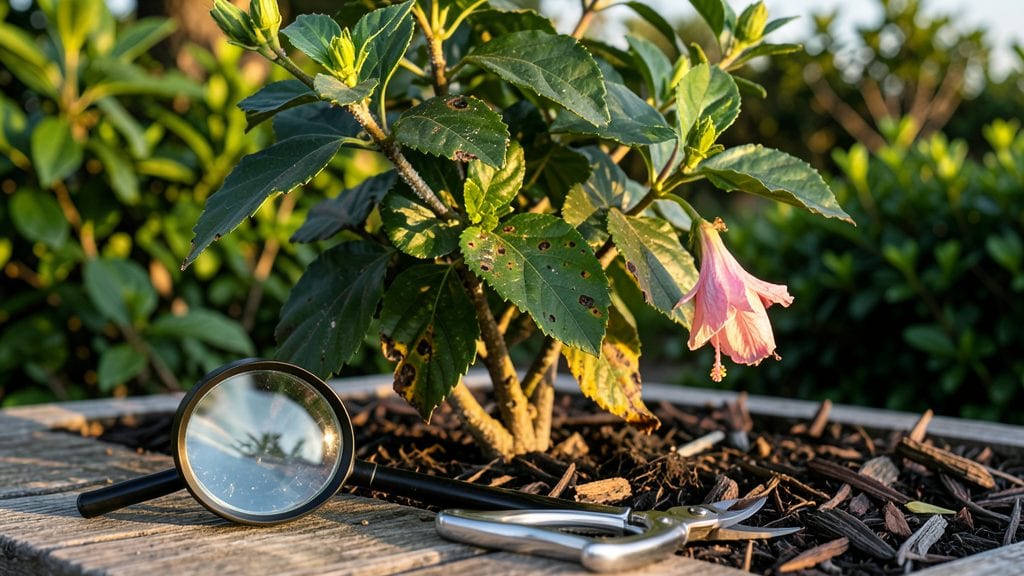
Hibiscus plant diseases like leaf spot and bud rot can turn vibrant blooms into sad, spotted messes—fast. 🌿 I’ve watched my own hibiscus go from showstopper to sad sack in just a few weeks, and the key to saving it?
Spotting the problem early and acting fast. The good news? Most fungal issues respond to simple fixes if you catch them before they spread.
Leaf spot shows up as dark, greasy-looking splotches on leaves, while bud rot makes buds turn mushy and black before they even open. Aphids? Those tiny green pests cluster on new growth, sucking out sap and leaving behind sticky residue.
The worst part? These problems thrive in humid, crowded conditions—exactly the kind of environment hibiscus love. But with the right care, you can turn things around.
You’ll learn to prune infected foliage, apply organic fungicides like neem oil or copper spray, and adjust watering habits to stop the cycle. Within weeks, your hibiscus can bounce back with fresh leaves and blooms—no more sad, wilted branches.
The secret is acting before the disease takes over, and I’ll show you exactly how.
Works for both tropical hibiscus in pots and hardy varieties in the ground, no matter your climate. Let’s get those plants healthy again—before the next bloom season starts!
Root Causes Of Hibiscus Troubles
Hibiscus plants, with their vibrant blooms and lush foliage, can quickly become a gardener’s pride—until disease strikes. Understanding why these issues arise is the first step to protecting your plants. Below, we break down the science behind the most common culprits, from microscopic invaders to environmental missteps.
Fungi thrive in moist, warm conditions, making hibiscus plants prime targets. The most notorious offenders include:
- Botrytis Blight (Gray Mold): This fungus spreads via spores, often entering through damaged leaves or flowers. Why it happens: Poor air circulation, overhead watering, or crowded plants create the perfect humid microclimate for spores to germinate. Once established, the fungus releases enzymes that break down plant cell walls, leading to wilting and grayish-brown lesions.
- Powdery Mildew: A superficial fungal infection that forms a white, powdery coating on leaves. Why it happens: High humidity (above 75%) and temperatures between 60–80°F (15–27°C) trigger spore germination. The fungus feeds on leaf surfaces, weakening photosynthesis and causing yellowing or premature leaf drop.
- Root Rot (Phytophthora, Pythium): Soil-borne fungi attack roots when oxygen levels drop. Why it happens: Overwatering, compacted or waterlogged soil, and poor drainage create anaerobic conditions. The fungi block water and nutrient uptake, leading to stunted growth, yellowing leaves, and mushy roots.
💡 Pro Tip: Fungal spores are often already present in soil or air—they only become problematic when conditions favor their growth. Reducing humidity, improving airflow, and avoiding wet foliage can disrupt their lifecycle.
Unlike fungi, bacteria multiply rapidly and can spread within days. The two most destructive hibiscus bacterial diseases are:
- Bacterial Leaf Spot (Xanthomonas campestris): Causes dark, water-soaked spots with yellow halos. Why it happens: Bacteria enter through wounds (e.g., from pruning, hail, or insect damage) or via contaminated water. Rain splashes or overhead irrigation spread the bacteria to healthy leaves, where they multiply in warm, wet conditions (75–85°F / 24–29°C).
- Bacterial Blight (Pseudomonas syringae): Leads to wilting, leaf curling, and oozing lesions. Why it happens: This bacterium thrives in cool, wet weather and invades through natural openings (stomata) or injuries. It produces toxins that disrupt plant cell function, causing vascular blockages and systemic collapse.
⚠️ Warning: Bacteria can persist in plant debris, soil, and even garden tools. Sterilizing pruners with rubbing alcohol and removing infected plants immediately can prevent outbreaks.
Hibiscus plants are resilient, but extreme or inconsistent conditions leave them vulnerable to disease. Key triggers include:
| Factor | Why It Causes Problems | Ideal Range for Hibiscus |
|---|---|---|
| Temperature | Cold snaps (<50°F / 10°C) shock plants, reducing their ability to fight pathogens. Heat stress (>95°F / 35°C) also weakens cell walls, making them easier targets. | 65–85°F (18–29°C) for growth; tolerates brief dips to 40°F (4°C). |
| Humidity | Low humidity (<40%) increases transpiration, stressing plants. High humidity (>80%) prolongs leaf wetness, giving fungi and bacteria more time to infect. | 40–60% for optimal health; avoid stagnant air. |
| Watering Practices | Overwatering saturates soil, promoting root rot. Underwatering causes drought stress, making leaves crispy and prone to fungal entry points. | 1–1.5 inches of water weekly; let top 2 inches of soil dry between waterings. |
| Poor Airflow | Crowded plants or dense foliage trap moisture, creating microclimates where spores thrive. Stagnant air also reduces evaporation, keeping leaves damp longer. | Space plants 3–5 feet apart; prune to improve circulation. |
🎯 Key Insight: Hibiscus diseases rarely appear in perfectly balanced conditions. Even one stressor—like a sudden heatwave or a clogged drainage hole—can tip the scales toward infection.
Insects don’t cause diseases directly, but their feeding habits create entry points for pathogens. Common hibiscus pests include:
- Spider Mites: Pierce leaves to feed on sap, leaving stippled, yellowed foliage. Why it matters: Their saliva weakens cell membranes, making leaves more susceptible to fungal infections like powdery mildew.
- Aphids: Cluster on new growth, excreting honeydew—a sticky residue that attracts sooty mold (a secondary fungal infection). Why it matters: Honeydew alters leaf chemistry, reducing the plant’s natural defenses.
- Scale Insects: Form hard, waxy shells on stems and leaves. Why it matters: Their feeding disrupts nutrient flow, stunting growth and making plants more vulnerable to stress-related diseases.
🔥 Quick Fix: Regularly inspect undersides of leaves and stems. Neem oil or insecticidal soap can deter pests before they compromise your hibiscus’ health.
Quick Fixes for Common Hibiscus Ailments
When your hibiscus plant shows signs of distress, acting fast can save its life—and your garden’s beauty. Below are practical, step-by-step solutions tailored to the most common fungal and bacterial issues, plus prevention tips to keep your hibiscus thriving. Think of this as your hibiscus first-aid kit!
Cause: Cercospora or Alternaria spores thrive in damp, humid conditions, creating dark spots with yellow halos.
How to Fix It:
- 🔥 Prune the Problem Areas
- Use sterilized pruning shears (wipe with rubbing alcohol) to remove infected leaves immediately. Dispose of them in the trash—not the compost—to prevent reinfection.
- 🍳 Fungicide Spray (DIY or Store-Bought) - Neem oil spray (1 tsp neem oil + 1 tsp mild soap + 1 quart water): Spray early morning or late evening to avoid burning leaves.
Reapply every 7–10 days until new growth appears. - Copper fungicide (like Bordeaux mixture): Follow label instructions for preventative weekly sprays during rainy seasons.
- 🌡️ Improve Airflow & Drainage
- Space plants 3–4 feet apart to reduce humidity buildup.
- Raise pots on feet or use gravel trays to prevent waterlogging.
💡 Prevention Tip:
- Water at the base (not overhead) to keep foliage dry.
- Avoid wetting leaves when irrigating—use a soaker hose or drip system.
Cause: Overwatering or poor drainage leads to Phytophthora or Pythium fungi, causing mushy stems and yellowing leaves.
How to Fix It:
- ⏰ Stop Watering Immediately
- Let the soil dry out completely before watering again. Stick your finger 2 inches deep—if it’s damp, wait.
- 👨🍳 Repot in Fresh, Dry Soil
- Remove the plant gently from its pot and trim away black, mushy roots with sterilized scissors.
- Repot in a container with drainage holes using a well-draining mix (60% potting soil, 30% perlite, 10% sand).
- Water lightly only after the roots show signs of recovery (firm, white roots).
- 🔪 Apply a Fungicide (Optional but Helpful)
- Hydrogen peroxide (3%): Mix 1 tbsp per gallon of water and water the soil to kill remaining fungi.
- Systemic fungicide (like Myclobutanil) for severe cases—follow package directions.
💡 Prevention Tip:
- Use self-watering pots with caution—they can keep soil too wet.
- Add orchid bark or coconut coir to soil for better aeration.
Cause: Colletotrichum fungus causes dark, sunken lesions on leaves and stems, often after heavy rain or overhead watering.
How to Fix It:
- 🍳 Baking Soda Spray (Mild but Effective)
- Mix 1 tsp baking soda + 1 quart water + a few drops of dish soap (as a surfactant).
- Spray every 7–10 days until symptoms fade.
- 🌡️ Adjust Watering Habits
- Water in the morning so leaves dry quickly.
- Avoid mulching too close to the stem—keep it 3–4 inches away.
- 🔥 Prune & Sterilize Tools
- Cut off all infected leaves and stems down to healthy tissue.
- Sterilize tools between cuts to prevent spreading spores.
💡 Prevention Tip:
- Space plants for airflow—crowding = fungus paradise.
- Use a fungicide preventative spray (like copper fungicide) before rainy seasons.
Cause: Xanthomonas bacteria cause water-soaked spots that turn brown and ooze. Often spreads via contaminated tools or rain splash.
How to Fix It:
- 🔪 Remove & Destroy Infected Parts
- Burn or trash all diseased leaves/stems—do not compost.
- Isolate the plant until you’re sure it’s clear.
- 🌡️ Copper Bactericide Spray
- Use copper hydroxide or copper sulfate (like Kocide 3000) every 7–10 days for 3–4 weeks.
- Avoid spraying in direct sunlight (can burn leaves).
- 💡 Prevention Tip:
- Sterilize pruners with 70% isopropyl alcohol between plants.
- Water at the base only—never overhead.
Even after treating diseases, boost your hibiscus’s immunity with these proactive steps:
- 📊 Feed with balanced fertilizer (10-10-10) every 4–6 weeks during growing season.
- 💪 Prune regularly to improve airflow—remove weak or crossing branches.
- ✨ Quarantine new plants for 2–3 weeks before adding to your garden.
Final Thought: Most hibiscus diseases are preventable with good hygiene and smart watering. Once you spot trouble, act fast—your plant’s recovery depends on it! 🌺💪
Frequently asked questions
What are the first signs my hibiscus plant might have a fungal disease?
Watch for dark, greasy-looking spots on leaves or buds turning mushy and black. Powdery mildew appears as white, dusty patches, while leaf spot shows up as brown or black marks with yellow borders. If you see wilting or grayish-brown lesions, it’s likely botrytis blight.
Can I save my hibiscus if it already has root rot?
Yes, but act fast! Remove the plant, trim away black, mushy roots, and repot in fresh, well-draining soil. Let the soil dry completely between waterings and avoid overwatering. Hydrogen peroxide (3%) mixed with water can help kill remaining fungi in the soil.
How often should I spray neem oil to prevent hibiscus diseases?
Apply neem oil spray every 7–10 days during humid seasons or when you notice early signs of stress. Mix 1 teaspoon neem oil + 1 teaspoon mild soap + 1 quart water and spray in the early morning or evening to avoid leaf burn.
Why does my hibiscus get diseases even though I water it properly?
Diseases often spread due to poor airflow or contaminated tools. Crowded plants or dense foliage trap moisture, creating ideal conditions for fungi. Always sterilize pruning shears with rubbing alcohol, and space plants 3–5 feet apart to improve circulation.
Is it safe to use baking soda spray for hibiscus diseases?
Yes! A baking soda spray (1 tsp baking soda + 1 quart water + a few drops of dish soap) works well for mild fungal issues like anthracnose. Spray every 7–10 days until symptoms fade, but avoid overusing it—rotate with other treatments for best results.