Pests
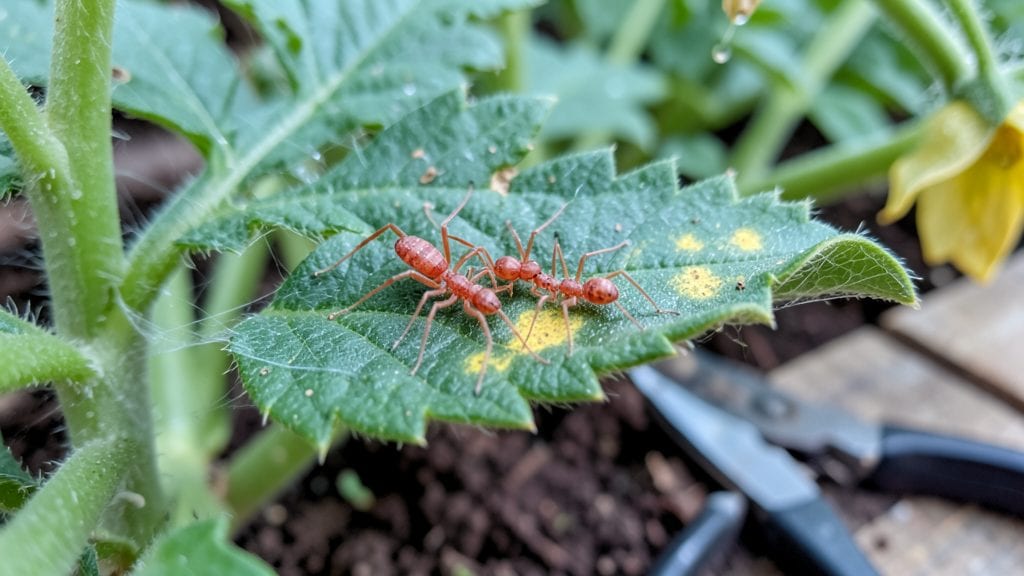
Spider mites on tomato plants treatment starts with a simple spray that works faster than you'd think. 🌱 I've seen these tiny pests turn lush tomato leaves into skeletonized messes, but insecticidal soap cuts them down in just 24 hours—no harsh chemicals needed.
The key is acting fast before they spin webs and suck the life out of your plants.
Most gardeners miss the early signs: tiny yellow specks on leaves, fine webbing, and leaves that look dusty even after wiping. I learned the hard way—by the time you notice the damage, the mites have already built a population.
But once you spot them, a mix of 2 tablespoons of insecticidal soap per quart of water sprayed directly on the undersides of leaves does the trick.
You'll see results within a day: leaves stop yellowing, new growth stays vibrant, and those pesky webs disappear. The secret is reapplying every 5-7 days until the plants are completely clear, usually about two weeks. This method works on other veggies too—peppers, cucumbers, you name it.
For stubborn cases, add a neem oil spray to the mix, but avoid it if temperatures are above 90°F. If the problem keeps coming back, check for hidden pests or overwatering—those are the real culprits behind repeat infestations. Now let's get those tomatoes thriving again!
Root Causes of Tomato Plant Infestations
Spider mites don’t just show up—they’re drawn to specific conditions that make your tomato plants a buffet. Understanding these triggers helps you break the cycle before they spin webs on your harvest. Here’s why these tiny pests target your plants:
Spider mites thrive in hot, dry environments—think summer afternoons where temperatures soar above 85°F (29°C). Here’s why:
- Water Stress Weakens Plants: When soil dries out, tomato plants close stomata (tiny pores) to conserve moisture. This reduces humidity around the leaves, creating a desert-like microclimate that spider mites love.
Their bodies lose less water in dry air, while your plants struggle to defend themselves. - Rapid Reproduction: Heat accelerates their lifecycle. A single female can lay 20–30 eggs daily in ideal conditions, hatching in just 3–5 days.
Compare that to cooler weather, where development slows to 2–3 weeks per generation. - Dust and Debris Act as Shelters: Dry conditions allow dust, pollen, and dead plant material to cling to leaves. Spider mites hide in these layers, safe from predators like ladybugs or lacewings.
Actionable Insight: Mulch heavily to retain moisture, and water deeply in the morning to boost humidity without promoting fungal diseases.
Tomato plants under stress emit volatile organic compounds (VOCs) that signal distress to spider mites. Common stressors include:
- Poor Airflow: Dense foliage or crowded plants create shady, humid pockets—perfect for mites. Poor circulation also traps heat, worsening the problem. - Nutrient Deficiencies: Lack of phosphorus or potassium weakens cell walls, making leaves easier to pierce.
Mites detect these deficiencies and target vulnerable spots first. - Physical Damage: Pruning, hail, or pests (like aphids) create open wounds that emit chemicals attracting mites. Even over-fertilizing with nitrogen can lead to soft, sappy growth they adore.
Pro Tip: Prune plants to open the canopy, and use balanced fertilizer (e.g., 10-10-10) to avoid nutrient imbalances.
Spider mites are not the strongest fighters—they rely on stealth and numbers. When their predators vanish, they explode in population. Key predators include:
| Predator | Role | Why They Disappear |
|---|---|---|
| Ladybugs | Eat 50+ mites/day as adults; larvae devour even more. | Pesticide use (even some "organic" sprays). |
| Lacewings | Larvae inject digestive enzymes into mites to liquefy them. | Habitat loss (e.g., removing leaf litter). |
| Predatory Mites | Amblyseius species hunt spider mites without harming plants. | Overwatering or synthetic fungicides. |
| Birds/Spiders | Snatch adults/eggs during patrol. | Loss of garden biodiversity. |
💡 Quick Fix: Plant dill, fennel, or marigolds nearby to attract predators. Avoid broad-spectrum insecticides (like malathion) that kill beneficials.
Mites hitchhike on:
- New Plants: Even "healthy-looking" seedlings can carry mites in leaf axils or stems.
- Garden Tools: Pruners, trellises, or pots may harbor eggs from previous crops.
- Wind/Dust: Mites balloon on silk threads to disperse up to 1 mile (1.6 km) in dry conditions.
Prevention Checklist:
- Inspect all new plants under a magnifying glass (look for tiny yellow dots or fine webbing).
- Disinfect tools with 70% isopropyl alcohol between uses.
- Quarantine new additions for 2 weeks before planting near tomatoes.
Ironically, pesticides can make mites worse by:
- Killing Predators First: Many sprays (e.g., neonicotinoids) wipe out ladybugs and lacewings before touching mites.
- Creating Resistant Strains: Overuse leads to pesticide-resistant mites (some develop immunity in 1–2 seasons).
- Disrupting Plant Chemistry: Synthetic chemicals alter leaf chemistry, making plants more attractive to mites.
Safer Alternative: Rotate treatments like neem oil, insecticidal soap, or horticultural oil—these disrupt mite molting and feeding without breeding resistance.
Unhealthy soil weakens tomato plants, making them more susceptible to mites.
Key issues: - Low Organic Matter: Soil lacking compost or worm castings reduces microbial activity, which helps plants fend off pests. - High pH (>7.0): Alkaline soil locks out nutrients like iron and manganese, causing yellowing leaves—a mite magnet. - Compacted Soil: Poor drainage stresses roots, leading to stunted growth and thinner leaves (easier for mites to penetrate).
Soil Fix: Amend with compost, sulfur (to lower pH), and mycorrhizal fungi to boost plant resilience.
Spider mites exploit weakness, heat, and isolation. By addressing dryness, stress, predator loss, and chemical overuse, you remove their competitive edge. The good news? Healthy plants + timely intervention (like insecticidal soap) can reverse infestations fast. 🚀
How to Fix Spider Mite Infestations
Now that you know the why behind spider mites on your tomato plants, let’s tackle the how—with fast, effective, and garden-friendly solutions. Whether your plants are lightly dusted with webbing or heavily infested, these targeted fixes will help you reclaim your tomato harvest.
Start with the cause, then apply the cure, and finish with prevention to keep these tiny pests from crashing your garden party again.
Before diving into treatments, contain the problem to prevent spider mites from spreading to other plants.
- 👨🍳 Move infested plants to a shaded, isolated area (like a garage or patio) if possible.
- 🔍 Check for webbing under leaves, along stems, and in leaf axils—this is their hideout.
- 🌡️ Assess the severity:
- Light: Few mites, minimal webbing, no visible damage.
- Moderate: Visible webbing, stippled leaves, slow growth.
- Severe: Heavy webbing, curled/brown leaves, stunted plants.
> 💡 Pro Tip: If your garden has multiple plants, quarantine the worst offenders first to avoid cross-contamination.
Spider mites hate water pressure and oily solutions. Here’s how to smother them:
🔥 Immediate Relief: Water Blasts
- 💦 Use a strong hose or spray nozzle to blast both sides of leaves (mites love the undersides!).
- 🌧️ Do this daily for 3–5 days—water disrupts their life cycle and washes away eggs.
- ⏰ Best time: Early morning or late evening (avoid midday sun burning wet leaves).
🧼 Insecticidal Soap (Fastest Fix)
- 🛒 DIY recipe: Mix 1 tbsp mild liquid soap (like Castile) + 1 quart water + 1 tsp vegetable oil (or neem oil for extra power).
- 👨🍳 Spray thoroughly (cover all leaf surfaces) until dripping.
- ⏰ Reapply every 5–7 days or after rain.
- ⚠️ Warning: Test on a small leaf first—some plants (like peppers) are sensitive to soap.
> ✨ Power Move: Add 1 tsp neem oil to the soap mix for a 24-hour knockdown (as mentioned in our title!). Neem disrupts their feeding and reproduction.
🌿 Organic Alternatives
| Treatment | How to Use | Frequency |
|---|---|---|
| Neem Oil Spray | Mix 1 tbsp neem oil + 1 tsp soap + 1 quart water. Spray until leaves glisten. | Every 7–10 days |
| Horticultural Oil | Apply when temps are above 50°F (kills eggs too). | Every 5–7 days |
| Pyrethrin Spray | Derived from chrysanthemums—use sparingly (toxic to bees). | Every 3–5 days (last resort) |
| Predatory Mites | Release Phytoseiulus persimilis (sold online)—they eat spider mites! | One-time release (follow instructions) |
If your plants are severely damaged (brown, curled leaves, heavy webbing):
- 🗑️ Prune affected leaves with sterilized scissors (dip in rubbing alcohol).
- 🔥 Burn or trash (don’t compost!) heavily infested foliage to kill eggs.
- 🌱 For stunted plants: Trim back 1/3 of the plant to redirect energy to new growth.
> 💡 Pro Tip: If more than 50% of leaves are gone, consider replacing the plant—tomatoes are resilient, but recovery takes time.
Spider mites love stressed plants.
Strengthen your tomatoes to make them less appealing: - 💧 Water deeply at the base (avoid overhead watering—mites hate humidity on leaves). - 🌿 Mulch with straw or grass clippings to retain moisture and deter mites. - 🍅 Feed with compost tea or fish emulsion (1x/month) for phosphorus-rich growth. - 🌿 Interplant with mites’ enemies: Basil, marigolds, or dill repel spider mites naturally.
Once your tomatoes are mite-free, keep them that way with these habits: ✅ 🌡️ Monitor weekly: Check undersides of leaves with a magnifying glass (early detection = easy fixes). ✅ 🚿 Shower your plants: Hose down leaves every 7–10 days as a preventive measure. ✅ 🐝 Support beneficial insects:
- Ladybugs, lacewings, and predatory mites are natural allies—plant dill, fennel, or yarrow to attract them.
✅ 🌿 Rotate crops: Avoid planting tomatoes in the same spot yearly (mites overwinter in soil). ✅ 🧼 Clean your tools: Wipe pruners and gloves with rubbing alcohol between uses.
Final Thought: Spider mites are a nuisance, not a death sentence. With consistent action (sprays + prevention), your tomato plants will bounce back—and next season, you’ll be one step ahead. 🚀
> 🔥 Hot Tip: Keep a spray bottle of neem oil in your gardening shed for quick mite emergencies—it’s your secret weapon!
Frequently asked questions
How do I know if my tomato plants have spider mites?
Look for tiny yellow specks on leaves (mite feeding marks), fine webbing between leaves, and leaves that appear dusty even after wiping. Use a magnifying glass to spot the mites themselves—tiny red or yellow dots moving quickly. Check the undersides of leaves first, as that's where they hide.
Can I use regular dish soap to kill spider mites?
No, never use regular dish soap—it can damage plant leaves. Instead, use mild liquid castile soap (like Dr. Bronner's) mixed with water and a tiny bit of vegetable oil. This gentle formula kills mites without harming your tomato plants when applied correctly.
Why do spider mites keep coming back after treatment?
Mites often return if you miss eggs hidden in leaf crevices or don't treat long enough. Apply treatments every 5-7 days for at least 2 weeks, and check for hidden webs. Also ensure you're not overwatering—dry conditions actually attract more mites.
Are spider mites harmful to humans or pets?
No, spider mites are plant pests only and pose no direct threat to humans or pets. However, their bites can cause mild skin irritation in some people, though this is extremely rare when handling tomato plants. Focus on protecting your plants rather than worrying about personal exposure.
What's the best time of day to spray for spider mites?
Spray in the early morning or late evening when temperatures are cooler. Avoid midday spraying—direct sunlight can burn wet leaves and reduce the effectiveness of your treatment. This timing also helps prevent mites from drying out before the spray takes full effect.