
Companion Plants
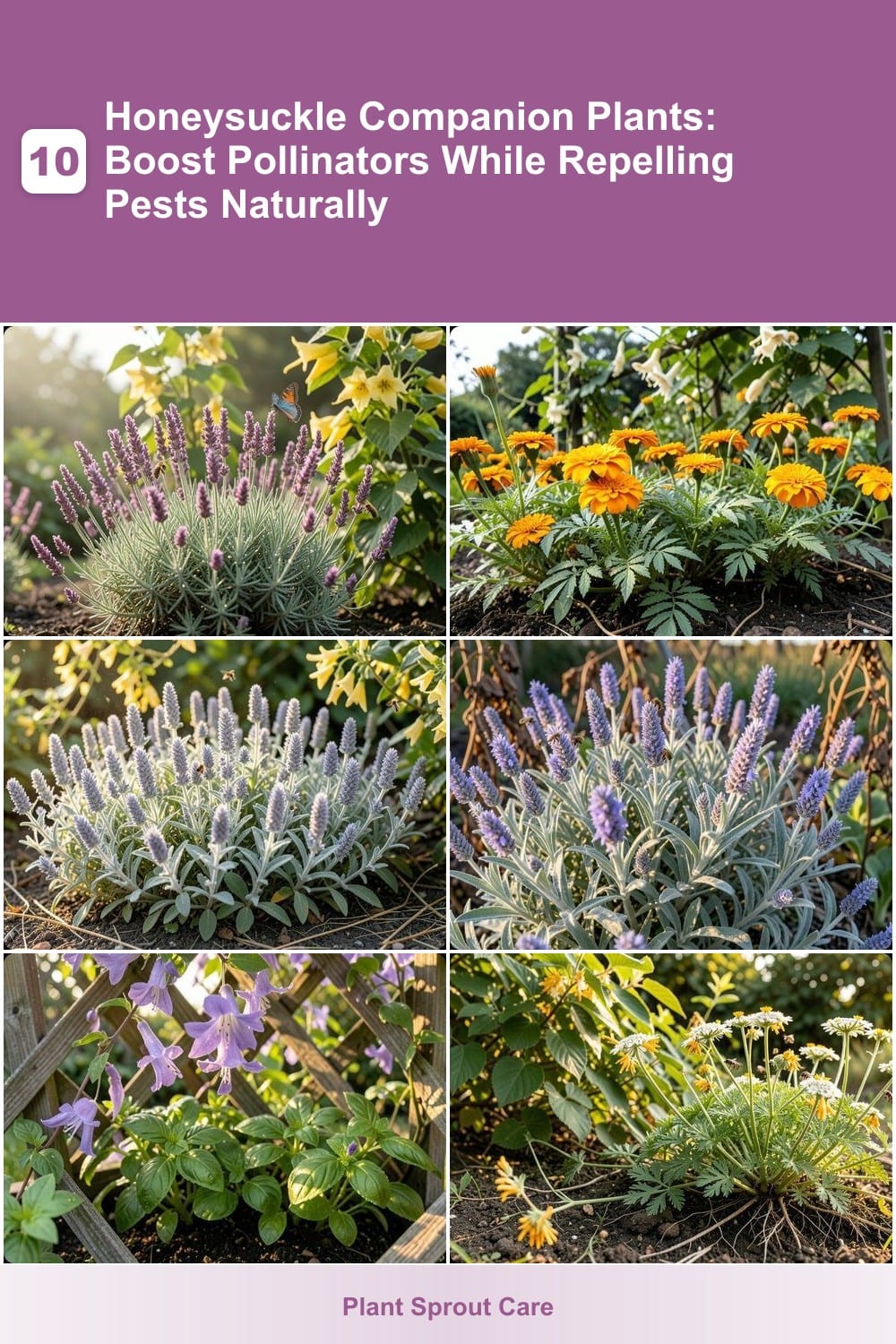
Struggling to keep honeysuckle thriving while attracting pollinators and warding off pests? These 10 strategic companion plants create a balanced ecosystem that supports honeysuckle growth, enhances your garden’s biodiversity, and reduces chemical reliance naturally.
Lavender Plants for Pest Control
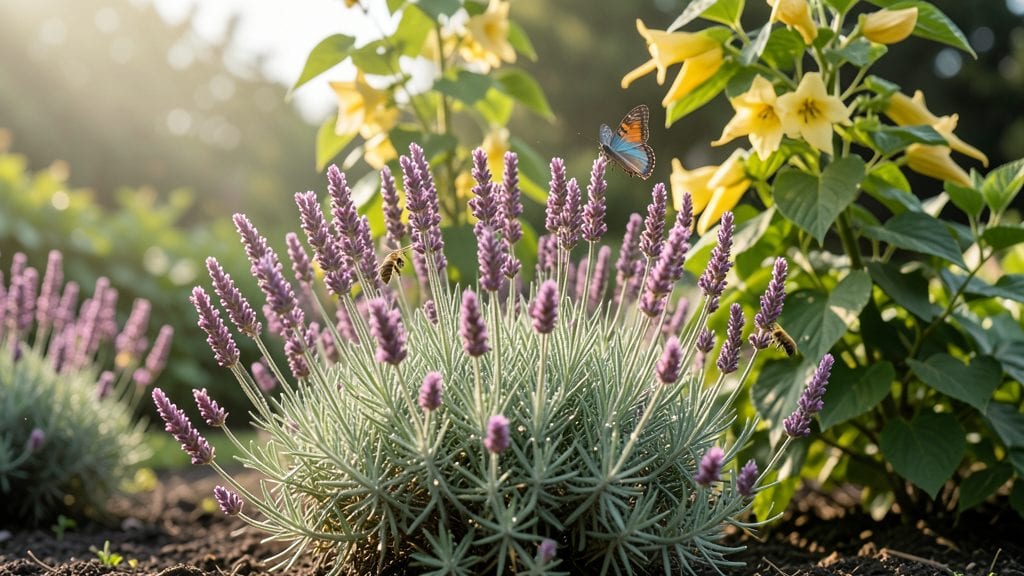
Looking for a low-maintenance way to protect your honeysuckle from pests while boosting pollinators? Lavender is the ultimate multi-tasker, repelling aphids, deer, and even rabbits with its potent fragrance—all while luring in bees and butterflies that adore its nectar.
Plant lavender just 1–2 feet away from your honeysuckle trellis to create a natural pest barrier. This drought-tolerant perennial thrives in full sun and well-drained soil, making it perfect for dry climates or cottage gardens where moisture is scarce. Its silvery foliage and purple blooms also add a soothing contrast to honeysuckle’s vibrant green vines.
Whether you’re battling garden pests or simply want a fragrant, bee-friendly addition, lavender is a must-have for any honeysuckle companion planting scheme. 🌿
Marigolds to Deter Nematodes
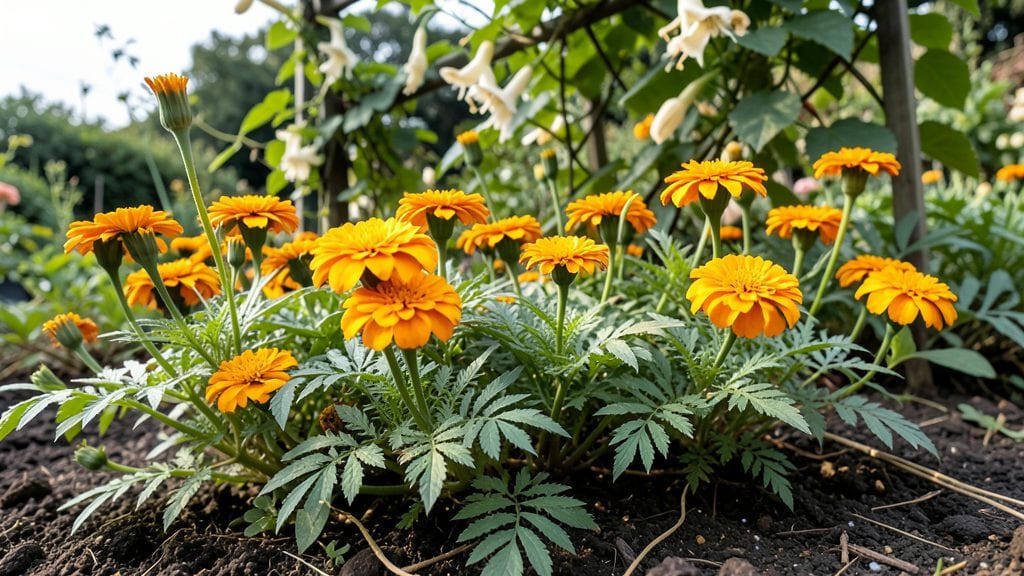
If your honeysuckle’s roots are under siege from nematodes, marigolds are the unsung heroes you need. Their strong scent masks soil-borne pests while releasing natural compounds that disrupt nematode life cycles—all without harsh chemicals. This makes them a perfect, low-maintenance partner for honeysuckle’s sprawling vines.
What sets marigolds apart is their partial-shade tolerance, thriving where other pest-repelling plants might struggle. Plant them 6–12 inches away from honeysuckle roots for maximum protection, and enjoy their vibrant orange or yellow blooms that brighten borders and containers. Bonus: They’re easy to grow from seed and self-seed prolifically, reducing your workload.
Urban gardeners and shade-loving plant parents will love marigolds—they’re the secret weapon for nematode-prone gardens while adding a pop of color. 🌻
Catmint for Long-Lasting Pollinator Support
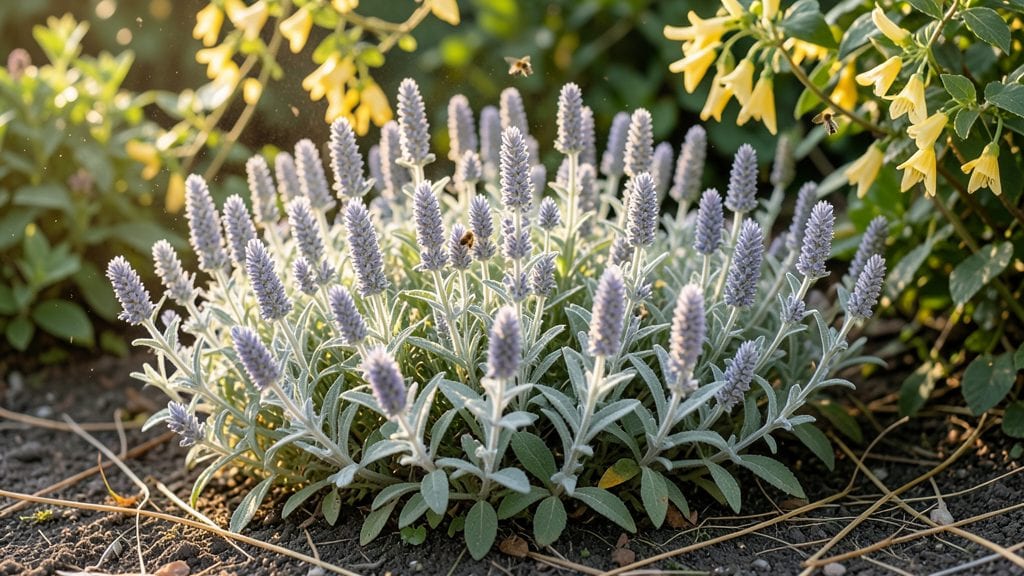
Want a pollinator magnet that thrives on neglect and keeps weeds at bay? Catmint is the drought-tolerant superstar that pairs perfectly with honeysuckle while working harder than you do. Unlike seasonal bloomers, catmint produces continuous flowers from early summer to frost, giving bees and butterflies a nonstop buffet.
This perennial workhorse suppresses weeds with its dense foliage and deters deer with its minty scent—no pesticides required. Plant it 1–2 feet away from honeysuckle trellises to create a vertical pollinator highway, where catmint’s upright spikes contrast beautifully with honeysuckle’s cascading vines. Bonus: It’s deer-resistant and thrives in poor soil, making it ideal for neglected garden corners.
Perfect for low-water gardens and beginner-friendly landscapes, catmint turns honeysuckle beds into buzzing ecosystems with minimal effort. 🌱
Russian Sage for Deer Resistance
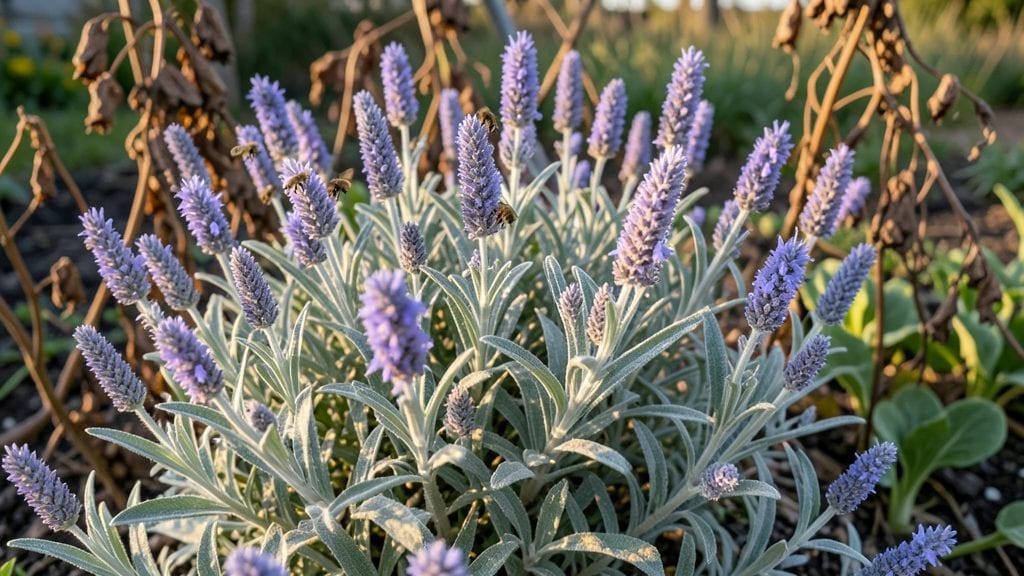
When deer and rabbits are ravaging your garden, Russian sage steps in as the rugged, aromatic guardian your honeysuckle needs. This hardy shrub’s strong scent repels browsing animals while its late-summer blooms provide crucial nectar for bees and butterflies when honeysuckle’s flowers fade.
Unlike fussy perennials, Russian sage thrives in poor, dry soil and full sun, making it perfect for neglected corners where other plants struggle. Plant it 2–3 feet away from honeysuckle to create a protective barrier without competing for space. Its silvery foliage and lavender-blue flowers add texture and color to borders while keeping critters at bay.
Ideal for urban gardeners or those with rocky, sandy soil, Russian sage turns problem areas into pollinator magnets—no extra work required. 🌿
Basil for Mosquito Repellent
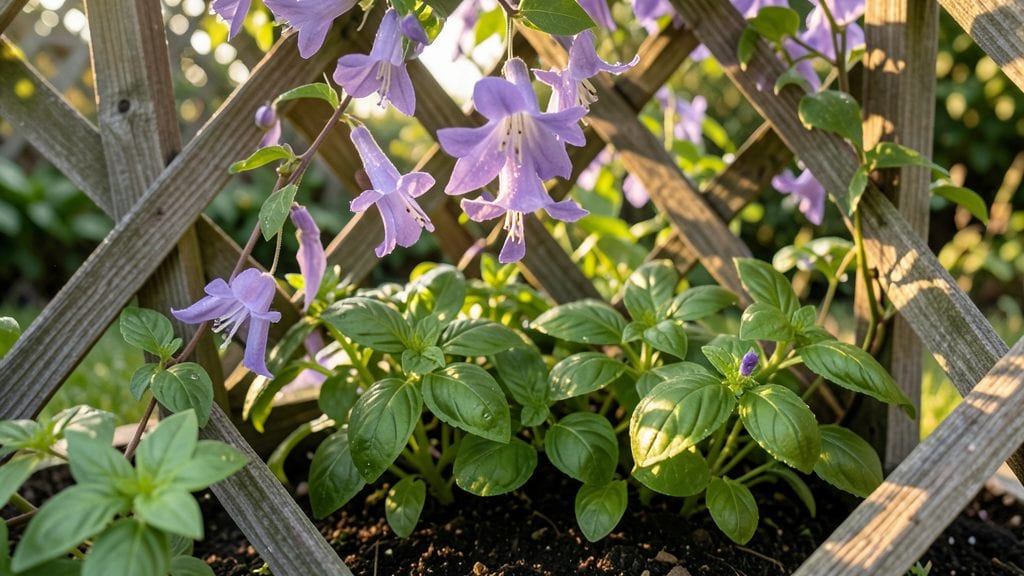
Tired of mosquitoes ruining your outdoor time near honeysuckle? Basil isn’t just a kitchen staple—it’s a natural mosquito repellent that works wonders when planted near your trellises. Its strong scent confuses mosquitoes while adding a fresh, aromatic touch that actually enhances honeysuckle’s natural fragrance, creating a double-layered defense.
For maximum benefits, plant Genovese or Thai basil varieties (their strong scents are most effective) 6–12 inches away from your honeysuckle base. This annual thrives in full sun to partial shade and well-drained soil, making it perfect for containers or garden beds. Bonus: You’ll have fresh herbs for cooking while keeping pests at bay—no chemicals needed!
Urban gardeners and herb enthusiasts will love this dual-purpose plant. It’s the secret weapon for mosquito-free evenings and a kitchen garden that works as hard as you do. 🌱
Yarrow Flowers for Soil Health
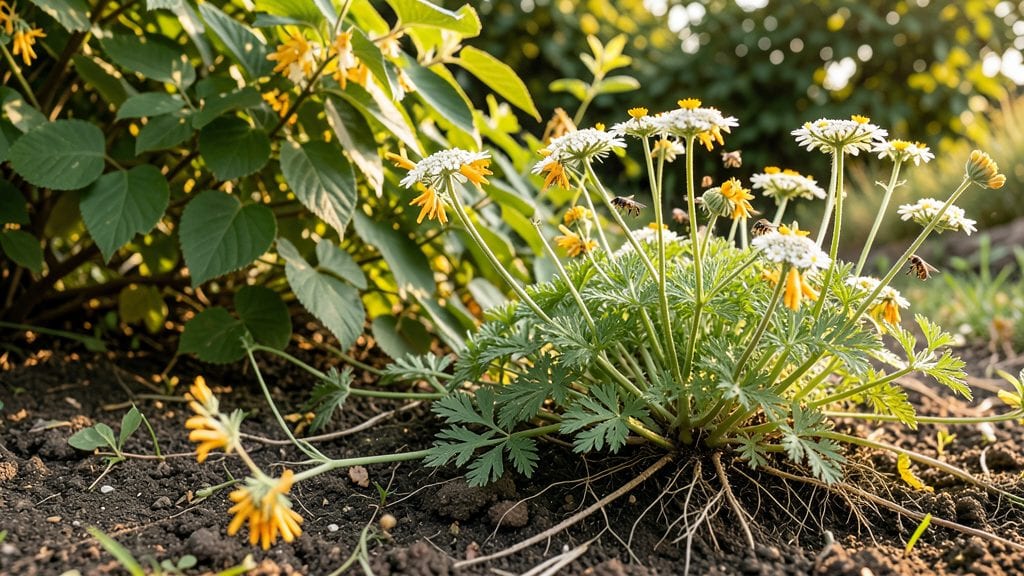
Want a low-maintenance way to improve your honeysuckle’s soil while keeping aphids in check? Yarrow is the deep-rooted perennial that works underground to loosen compacted soil and attract predatory wasps—nature’s aphid hunters. Its feathery, flat-topped blooms also create a striking visual contrast to honeysuckle’s tubular flowers, adding texture and color to your garden beds.
Plant yarrow in full sun to partial shade and let it spread naturally—its 1–3 foot height makes it perfect for borders or meadow-style plantings. The key to its pest-control magic? Its roots release compounds that deter soil-borne pests while its flowers lure beneficial insects. Shear back spent blooms in late summer to encourage a second flush of flowers and keep the plant tidy.
Perfect for eco-conscious gardeners and those with heavy or clay-heavy soil, yarrow transforms struggling garden spots into thriving ecosystems—all while adding beauty and biodiversity. 🌿
Dill Plants for Beneficial Insects
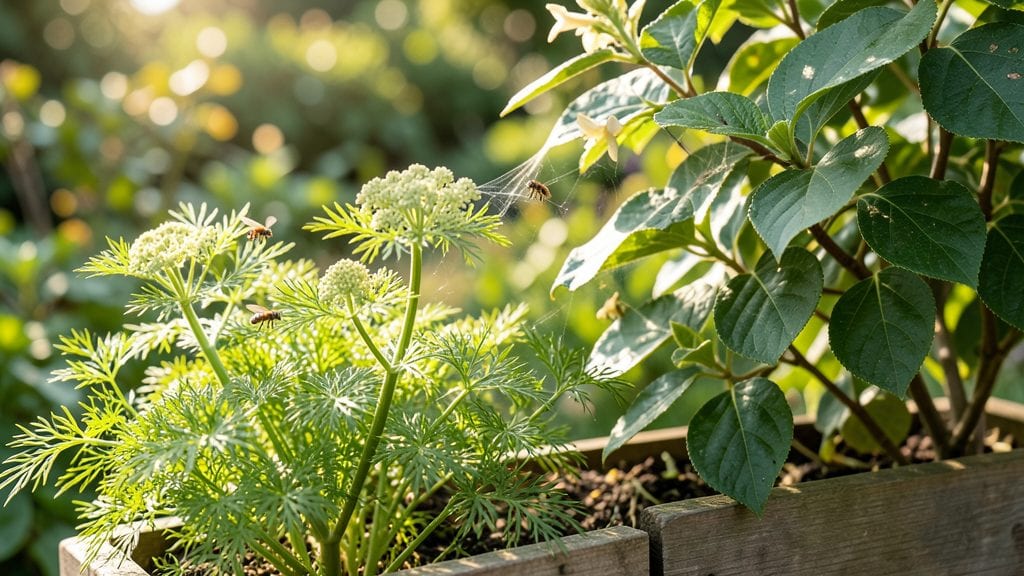
If you’ve noticed spider mites creeping onto your honeysuckle leaves, dill is the fast-acting ally you need—without chemicals. This feathery annual doesn’t just attract bees; it lures parasitic wasps that hunt spider mites, turning your honeysuckle into a pest-free haven within weeks.
Plant dill in full sun to partial shade just 1–2 feet from your honeysuckle trellis, and watch as its self-seeding habit ensures new plants pop up year after year. The bonus? Its lacy foliage and tiny yellow flowers add texture to containers or garden beds, making it a dual-purpose pollinator magnet. For maximum impact, harvest seeds in late summer to replant or share—no green thumb required!
Container gardeners and small-space growers will love dill’s compact size and zero-maintenance nature. It’s the secret weapon for organic pest control that even busy gardeners can enjoy. 🌿
Salvia for Hummingbird Magnet
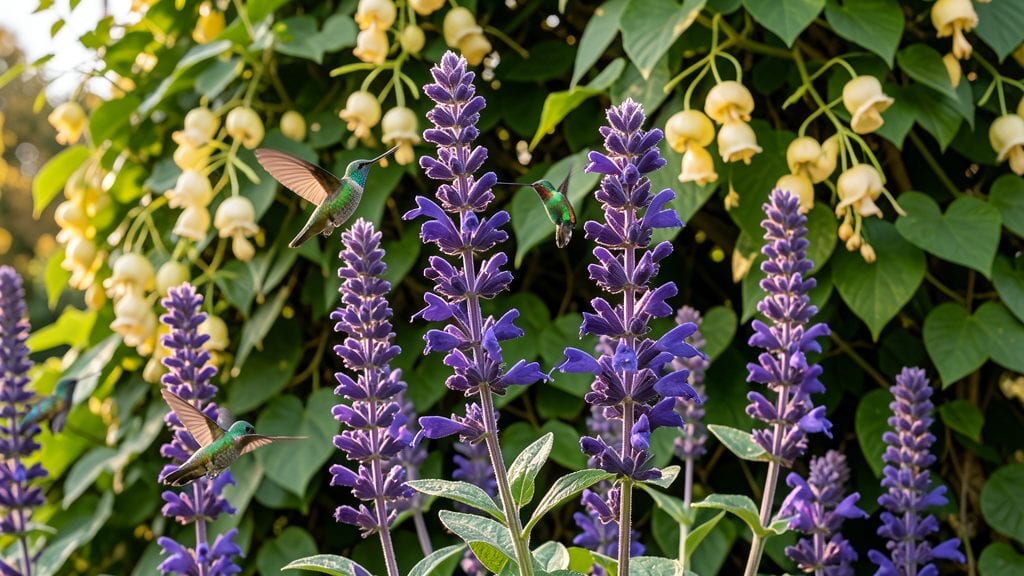
If you want to turn your honeysuckle garden into a hummingbird hotspot, salvia is the secret weapon you’ve been missing. Its tall, tubular blooms closely resemble honeysuckle’s shape, creating a visual and nutritional feast that keeps these iridescent visitors hovering all season long. Unlike other pollinator plants, salvia’s deep red or purple flowers are specifically designed to attract hummingbirds with their nectar-rich structure.
This drought-resistant perennial thrives in full sun and well-drained soil, making it perfect for sunny garden beds where honeysuckle already grows. Plant it 1–2 feet away from your honeysuckle trellis to create a continuous nectar source—hummingbirds will zip between the two plants effortlessly. Bonus: Salvia is deer-proof, so you won’t have to worry about browsing animals ruining your pollinator haven.
Gardeners in arid climates or those with limited water will love salvia—it’s the ultimate low-maintenance pollinator powerhouse that pairs beautifully with honeysuckle’s cascading vines. 🌟
Chives for Fungal Prevention
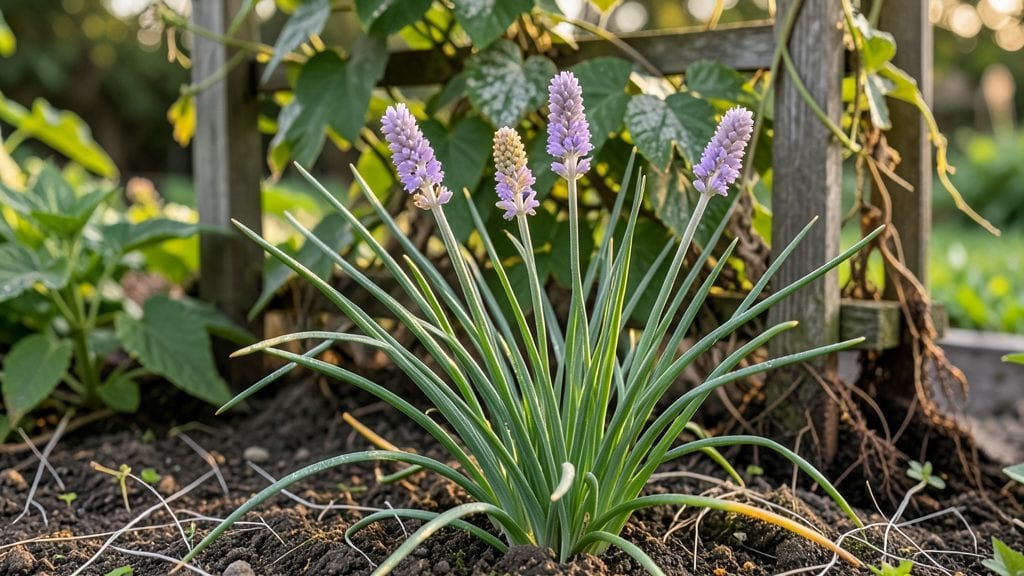
If your honeysuckle struggles with soil-borne fungal diseases like powdery mildew or root rot, chives are the edible solution you’ve been missing. This hardy perennial doesn’t just repel pests—it actively suppresses fungal growth with natural compounds released through its roots, creating a protective zone around your honeysuckle’s base.
Plant chives in partial shade (where honeysuckle’s roots often struggle) about 12–18 inches away from your trellis. Their purple flower spikes and slender, onion-like leaves add delicate texture to understory plantings while harvesting fresh chives for cooking. The best part? They’re perennial, so once established, they’ll keep working year after year without replanting.
This is the perfect companion for shade-loving gardeners or those with fungal-prone soil—giving you both pest protection and a kitchen herb with minimal effort. 🌱
Goldenrod for Late-Season Support
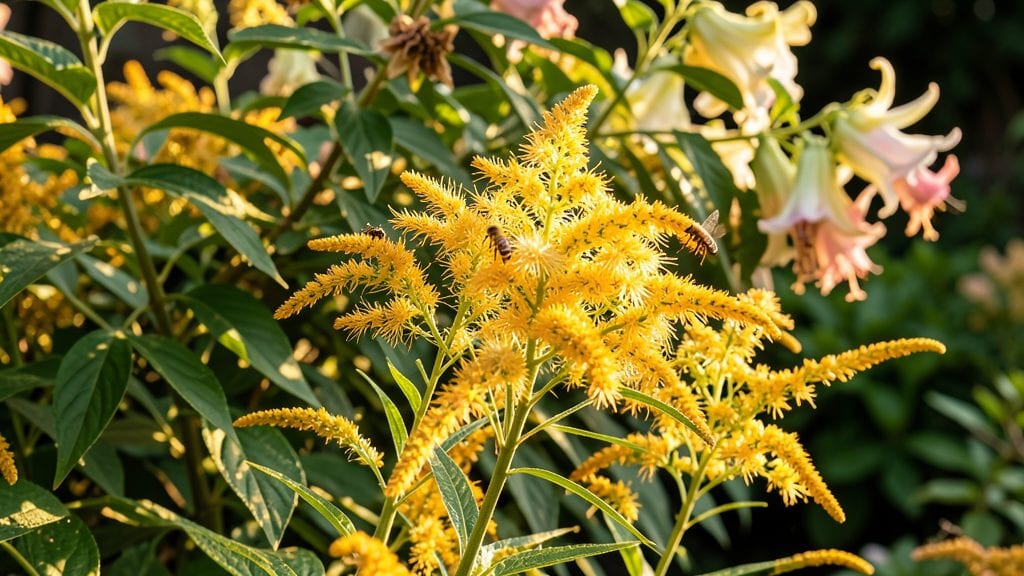
When your honeysuckle's blooms begin to fade in late summer, goldenrod steps in as the unsung hero of your garden, offering a late-season nectar feast for pollinators like bees and butterflies. Unlike its reputation as an allergen, this cheerful perennial is a biodiversity booster, attracting beneficial insects while providing essential food sources when other flowers have stopped blooming.
Plant goldenrod in clusters of 3-5 plants near your honeysuckle trellis to create a pollinator magnet that extends your garden's productivity. It thrives in full sun to partial shade and tolerates poor soil, making it perfect for neglected corners or meadow-style plantings. The key to maximizing its benefits? Let the seed heads stand through winter—they provide food for birds and shelter for beneficial insects.
Perfect for eco-conscious gardeners and those with native plant gardens, goldenrod transforms late-season gardens into buzzing ecosystems while debunking the myth that it's just a weed. 🌻