
Vegetables
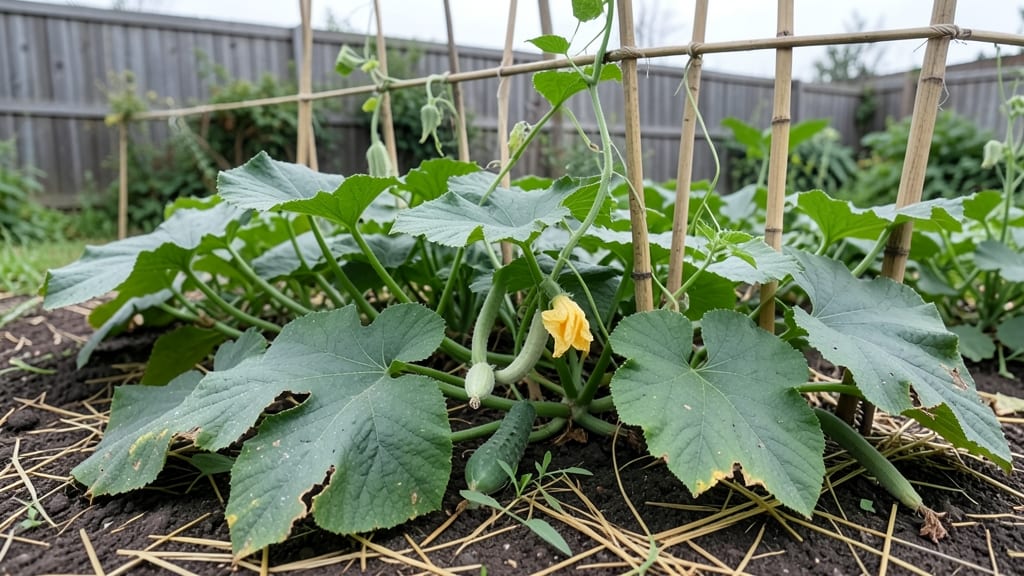
Supporting cucumber plants isn't just about keeping vines off the ground—it’s the secret to bigger harvests and healthier plants all season. 🌱 I learned this the hard way when my sprawling vines smothered each other, leading to fewer fruits and more pests.
The right support system transforms floppy growth into a productive, airy framework that cucumbers actually thrive in.
You don’t need fancy equipment—just a few simple supplies like sturdy trellis netting, bamboo stakes, or even repurposed wire cages. My go-to setup costs under $20 and takes 30 minutes to install, yet it doubles my cucumber yield compared to letting vines sprawl.
The key is matching the support to your space: raised beds need vertical netting, while containers work well with small cages.
What you’ll end up with is a garden where cucumbers grow upright, fruits ripen faster, and diseases stay at bay. No more struggling to reach hidden cucumbers or watching them rot on the ground.
The vines stay cleaner, the air circulates better, and you’ll harvest jewel-toned, crisp cucumbers that put store-bought to shame.
Works for backyard gardens, raised beds, or even container setups—just adjust the height based on your variety. Let’s get those vines climbing the right way!
📚 In This Guide
- What you need
- Instructions
- Tips and common mistakes
- Wrapping up and next steps
What you need
- ● Cucumber plants: 2–4 plants per 10-foot row (or container-grown varieties like 'Bush Champion' if space is limited).
- ● Support structures: Trellis: 6–8 ft tall (DIY with wooden stakes + twine or buy pre-made mesh trellises).
- ● Cage: 3–4 ft tall wire or plastic cages (ideal for bush varieties).
- ● Stakes: 5–6 ft bamboo or metal stakes (1 per plant).
- ● Twine or plant ties: 10–15 ft of soft garden twine or reusable fabric ties.
- ● Pruning shears: Small, sharp shears for trimming vines (sterilize with rubbing alcohol).
- ● Potting mix: Well-draining, organic-rich soil (or compost for in-ground planting).
- ● Mulch: Straw or shredded leaves to retain moisture and suppress weeds.
- ● Drip irrigation: Soaker hoses or micro-sprinklers for consistent watering.
- ● Plant food: Balanced fertilizer (10-10-10) or compost tea for nutrient boosts.
- ● Shade cloth: Lightweight fabric to protect plants from scorching sun (if in hot climates).
- ● Plant markers: Labels to track varieties (especially if growing multiple types!).
Step-by-step guide to training cucumber vines for maximum growth
Here’s the simple system I’ve used to turn floppy vines into productive, space-saving powerhouses.
🪴 Step 1: Choose the Right Support Structure
Start with a sturdy frame that can handle 30-50 pounds per plant—cucumbers get heavy fast. I recommend 5-foot-tall trellises for bush varieties or 8-foot-tall stakes for vining types. A cattle panel arched trellis works great for small spaces, while wooden lattice panels provide the most surface area for sprawling vines.
Install supports before planting so roots don’t disturb them later. For stakes, drive them 6 inches deep into the soil. For trellises, anchor them with U-shaped stakes at each corner. This prevents toppling when vines get lush and cucumbers multiply.
🌱 Step 2: Train Young Vines Early
Once seedlings develop 3-4 true leaves (about 2-3 weeks after planting), gently guide the main stem upward. Use soft plant ties or twist ties to secure the vine to the support, leaving 2-3 inches of slack for growth. I skip wire or harsh materials—they can damage tender stems.
Watch for side shoots (small stems growing from leaf axils). These compete with fruit production, so pinch them off when they’re less than 6 inches long. This redirecting energy to cucumber growth is where bigger harvests start. You’ll see stronger vines and more flowers within 2-3 weeks of consistent training.
✂️ Step 3: Prune for Airflow and Fruit Production
Every 7-10 days, inspect vines for suckers (those side shoots) and yellowing leaves. Remove any growing below the first 12 inches of the main stem—they drain energy without contributing much. Keep only 1-2 main lateral branches per plant for bush types, or 3-4 for vining varieties.
Prune early in the morning when stems are firm. Use clean, sharp scissors to cut just above a leaf node. Avoid tearing stems—this invites disease. You’ll notice fewer but larger cucumbers forming after consistent pruning, and vines stay upright instead of sprawling.
💧 Step 4: Water and Fertilize for Strong Vines
Keep soil consistently moist—never soggy—by watering at the base every 2-3 days during dry spells. Drip irrigation works best to avoid wetting leaves, which prevents powdery mildew. I add 1 tablespoon of 10-10-10 fertilizer per plant every 4 weeks to support rapid growth.
Watch for wilting leaves in the afternoon—this signals underwatering. Adjust your schedule so the top 2 inches of soil feel damp (not wet) by midday. Strong vines need steady hydration, but overwatering leads to weak stems that can’t support heavy fruit.
☀️ Step 5: Adjust Supports as Vines Grow
As cucumbers develop, weave vines through trellis openings or tie them every 12 inches up stakes. This prevents fruit from touching the ground (which causes rot) and keeps plants off the soil where pests hide. I use soft garden twine for larger vines—it’s gentle on stems but strong enough to hold 1-pound cucumbers.
Check supports weekly for stability. If vines sag or cucumbers drag downward, add extra ties or small wooden slats for additional support. You’ll know you’re doing it right when vines climb vertically and cucumbers hang neatly spaced along the structure.
Tips & tricks for perfect cucumber vine training
These simple but game-changing tips will help you transform sprawling cucumber vines into productive, space-saving powerhouses that yield bigger harvests.
Support Stability is Non-Negotiable: Real talk—your supports need to handle 30-50 pounds per plant once cucumbers start ripening. I've seen too many flimsy stakes topple under the weight. For 5-foot trellises, use 2x4 lumber or PVC pipes buried 12 inches deep for maximum stability. For 8-foot stakes, drive them 6 inches deep and add cross-bracing halfway up for wind resistance. This prevents the "domino effect" where one toppled plant takes others down with it.
Timing is Everything for Training: The 2-3 weeks window between planting and training young vines is critical. Wait until you see 3-4 true leaves—that's when the main stem is strong enough to handle upward guidance. I use soft plant ties because they're gentle on stems but still secure. Pro tip: Leave 2-3 inches of slack in your ties—this allows the vine to grow without constricting as it thickens. Tighten only when you notice the vine has outgrown the current space.
Pruning Pays Off Big Time: Those 7-10 day pruning sessions might seem tedious, but they're what turns a chaotic jungle into a structured vine. Focus on removing suckers below 12 inches—these energy vampires drain nutrients that could be growing cucumbers. For bush varieties, keep just 1-2 main lateral branches to prevent overcrowding. For vining types, let 3-4 branches develop but prune aggressively below. You'll notice fewer but larger cucumbers forming within just 2-3 weeks of consistent pruning.
Watering Wisdom for Strong Stems: The 2-3 day watering schedule only works if you're checking the top 2 inches of soil—not just glancing at the surface. I've learned the hard way that wilting afternoon leaves mean you're already behind. Use drip irrigation to keep water at the base while avoiding leaf wetness that invites powdery mildew. And here's a secret: mulch heavily around plants to lock in moisture and prevent temperature swings that stress vines. Your goal is consistent dampness, not soggy soil.
Pro Tips for Support Cucumber Plants
- These simple but game-changing tips will help you transform sprawling cucumber vines into productive, space-saving powerhouses that yield bigger harvests.
- Support Stability is Non-Negotiable: Real talk—your supports need to handle 30-50 pounds per plant once cucumbers start ripening.
- Timing is Everything for Training: The 2-3 weeks window between planting and training young vines is critical.
Frequently asked questions
Got questions about keeping your cucumber vines happy and productive? You’re not alone! Here are some of the most common concerns—and straightforward answers—to help you grow like a pro.
How often should I prune cucumber vines for support?
Prune cucumber vines weekly during active growth to encourage airflow and fruit production. Remove yellow or diseased leaves immediately, and trim back overcrowded vines to focus energy on the main stem. For bush varieties, minimal pruning is needed—just pinch off suckers (side shoots) to redirect nutrients to fruit.
When is the best time to start training cucumbers on a trellis or cage?
Begin training as soon as vines reach 6–12 inches tall—this is when they start climbing naturally. For trellises, gently weave vines through the slats or tie them with soft plant ties every 1–2 feet. If using cages, place them early (at planting) to avoid disturbing roots later. Pro tip: Use biodegradable twine to avoid harming tender stems!
Can I use cucumber plant supports for other vegetables?
Trellises, cages, and stakes work great for squash, beans, peas, and even some tomato varieties (like indeterminate types). Just adjust the height—cucumbers and squash need taller supports (6–8 feet), while beans and peas thrive on 4–5 foot structures. Avoid overcrowding, though, to prevent disease spread.
Why are my cucumber leaves turning yellow, even with support?
Yellowing leaves often signal overwatering, nutrient deficiency, or pests. Check soil moisture (keep it consistently damp but not soggy) and test for nitrogen (yellow lower leaves) or magnesium (yellow between veins). Inspect undersides for spider mites or aphids—spray with neem oil if needed. Bonus: Mulch to retain moisture and reduce stress!
Do cucumbers need full sun if I’m using a trellis?
Yes! Cucumbers require 6–8 hours of direct sunlight daily—trellises won’t change that. If your garden is shady, opt for compact or parthenocarpic varieties (like ‘Sweet Success’), which tolerate partial shade better. South-facing trellises maximize sun exposure, especially in cooler climates. Hot tip: Rotate vines occasionally to ensure even light distribution.
Wrapping up and next steps
Growing thriving cucumber plants is all about patience, proper support, and a little love—but the rewards are so worth it! With the right trellis, pruning techniques, and consistent care, you’ll soon be harvesting bigger, healthier, and more abundant cucumbers than ever before. 🌱✨
Now that you’re armed with these vine-training secrets, why not take the next step? Try experimenting with different trellis styles or share your progress with fellow gardeners—your green thumb might inspire others to grow their own bountiful harvest! Happy gardening! 🌿💚