
Pruning
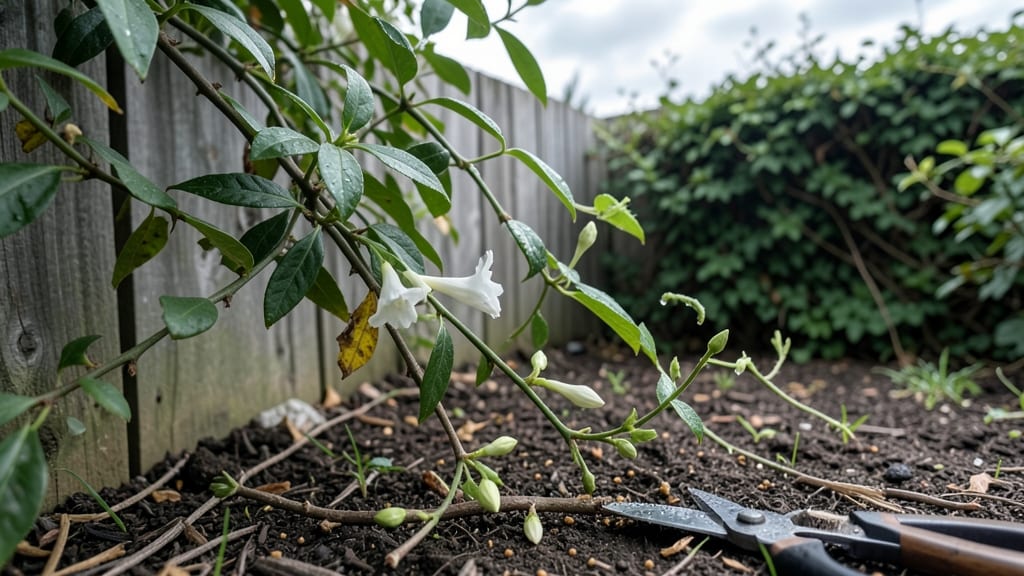
Trimming jasmine plants isn’t just about keeping them tidy—it’s the secret to year-round fragrance and lush, vigorous growth. 🌿 I’ve learned that skipping this step means fewer blooms and leggy stems, but with the right cuts, your plant will reward you with thick foliage and intoxicating scent from spring through fall.
The best time to trim is right after blooming, usually in late spring or early summer, but you can also do a light shaping in late winter.
You’ll need sharp pruning shears, gloves (jasmine thorns are no joke), and a clear morning to work—bright light helps you spot the best cuts. For climbing varieties, focus on training the main stems, while bush types benefit from cutting back about a third of the oldest growth each year.
What you’ll end up with is a plant that looks fuller and produces more blooms than ever before. The fragrance becomes richer, and the shape stays compact whether you’re growing it against a trellis or letting it sprawl as a bush.
Just avoid cutting into old wood in winter, or you’ll risk losing next year’s flowers entirely.
This method works for both star jasmine and common jasmine, and the same principles apply whether you’re dealing with a mature plant or a young one. The key is patience—jasmine responds well to gradual shaping over time, so don’t rush it.
With each trim, you’re not just pruning; you’re shaping the future of your plant’s beauty and scent.
📚 In This Guide
- What you need
- Instructions
- Tips and common mistakes
- Wrapping up and next steps
What you need
- ● Sharp pruning shears or bypass pruners: Choose a pair with clean, stainless steel blades (4-6 inch blades work best for most jasmine varieties). Disinfect with rubbing alcohol before and after use to prevent disease spread. 🔪
- ● Garden gloves: A pair of nitrile or leather gloves to protect your hands from thorns (common in Jasminum officinale and Jasminum polyanthum) and sharp edges.
- ● Rubbing alcohol (70% isopropyl) or bleach solution: For sterilizing tools and cuts. Mix 1 part bleach to 9 parts water if using bleach.
- ○ Pruning saw (optional but helpful): For thicker stems over ½ inch in diameter. A folding pruning saw with a fine-tooth blade is ideal.
- ● Small container or bucket: To collect trimmings and fallen debris.
- ○ Horticultural oil or fungicide (optional but recommended): For treating larger cuts to prevent infection (e.g., copper fungicide or neem oil).
- ● Hand lens or magnifying glass: To inspect buds and cuts closely for pests or disease.
- ● Pruning sealant: Like tree wound pruning paste for sealing larger cuts (though jasmine typically heals well without it).
- ● Spray bottle with water: To mist cuts and encourage faster healing.
- ● Notebook and pen: To jot down notes on your plant’s growth patterns or pruning schedule.
- ● Know your jasmine type: Research whether your plant is climbing (e.g., star jasmine) or bush-type (e.g., Arabian jasmine)—pruning techniques vary!
- ● Check the weather: Trim on a dry, overcast day or in the early morning to reduce stress on the plant.
- ● Identify healthy vs. diseased growth: Look for yellowing leaves, black spots, or mushy stems—these should be removed first.
Step-by-Step instructions for trimming jasmine plant
Here's how I keep my jasmine thriving with fragrant blooms all season long.
✂️ Step 1: Choose the Right Time for Trimming
Jasmine plants bloom best when pruned right after their main flowering season ends—typically late spring or early summer for most varieties. This gives the plant time to recover and set new buds for the next round of blooms. I always wait until I see at least 50% of the flowers fade before touching the shears. Early spring trimming can remove potential blooms, while late summer cuts may not allow enough time for new growth to harden off before winter.
If you're growing jasmine in a warmer climate, you can trim lightly after each major bloom cycle. Just avoid heavy pruning during active flowering—this stresses the plant and reduces fragrance output. You'll know you've timed it right when the plant starts sending out fresh green growth after trimming.
✂️ Step 2: Gather Tools and Prepare the Plant
You'll need only two things: a pair of clean, sharp pruning shears and a bucket of soapy water for disinfecting. I sterilize my shears before and after trimming to prevent spreading disease between cuts. Choose a bright, dry day for trimming—jasmine plants handle stress better when they're well-hydrated but not soaking wet.
Examine the plant for any dead, diseased, or crossing branches. These take priority over shaping cuts. Remove any branches that rub against each other, as constant friction weakens the plant and creates entry points for pests. I like to start at the bottom and work my way up to avoid missing any problem areas.
✂️ Step 3: Make Precision Cuts for Shape and Health
For shaping, cut just above a leaf node where new growth emerges—this encourages bushier growth. Make your cuts at a 45-degree angle about ¼ inch above the node. This angled cut helps water run off the stem instead of pooling and rotting the wound. Never leave stubs—always cut cleanly at the node to prevent dieback.
To encourage more blooms, I trim back about ⅓ of the plant's height during the main pruning session. Focus on removing older wood first, as this stimulates new growth from the base. Jasmine plants bloom on both old and new wood, so don't be afraid to cut back branches that haven't flowered recently—they'll often produce even more abundant blooms the following season.
✂️ Step 4: Lighten the Canopy for Airflow
Jasmine plants need good airflow to stay healthy and prevent fungal diseases. After shaping, I step back and look for areas where branches are too dense. Thin out some of the inner growth to let light and air circulate freely. You're aiming for an open, airy structure rather than a thick, bushy one.
Pay special attention to the center of the plant—this is where problems often hide. Remove any branches growing straight inward. You'll know you've done enough when you can see light filtering through the plant's center. This also makes it easier to spot pests early, before they become a major issue.
💧 Step 5: Post-Trimming Care for Recovery
After trimming, give your jasmine a deep watering to help it recover from the shock of pruning. I water at the base rather than overhead to prevent fungal spores from splashing onto fresh cuts. Follow up with a balanced fertilizer to support new growth. I use a 10-10-10 formula diluted to half strength every two weeks until new shoots appear.
Watch the plant closely for the first week after trimming. You should see new growth emerging from the nodes within 7-10 days. If you don't see any signs of new shoots after two weeks, the cut may have been too severe. In that case, reduce watering slightly and wait for the plant to recover before fertilizing again.
Tips & tricks for perfect jasmine plant trimming
These precision-focused tips will help you transform your jasmine into a fragrant, bushy powerhouse without sacrificing next year's blooms.
Timing is Everything: The 50% flower fade rule in Step 1 is non-negotiable for most varieties. I learned this the hard way—pruning too early removed potential blooms, while waiting too long meant less vibrant regrowth. In warmer climates, you can do light maintenance trims after each bloom cycle, but never during active flowering. The plant's natural growth signals (new shoots appearing) are your best guide.
The 45-Degree Angle Secret: When making cuts in Step 3, that quarter-inch above the node matters more than you'd think. The angled cut creates a natural water runoff path, preventing those nasty fungal infections that can creep in. I've seen jasmine plants develop dieback from improper cuts—always make it clean and precise. Use a ruler or angle guide if your shears don't have built-in markers.
One-Third Rule for Blooms: Trimming back about one-third of the plant's height in Step 3 might sound drastic, but it's what stimulates those lush, fragrant blooms. Focus on older wood first—this is where the magic happens. I've seen jasmine plants go from sparse bloomers to fragrance machines after their first proper pruning. The key is patience: new growth takes 7-10 days to appear, so resist the urge to over-trim.
Airflow Check: In Step 4, when you can see light filtering through the plant's center, you've achieved perfect airflow. This isn't just about looks—proper circulation prevents fungal diseases like powdery mildew, which can turn your fragrant blooms into a sad, dusty mess. I always do a final walkthrough with a flashlight to spot any hidden dense areas I might have missed.
Pro Tips for Trim Jasmine Plant
- These precision-focused tips will help you transform your jasmine into a fragrant, bushy powerhouse without sacrificing next year's blooms.
- Timing is Everything: The 50% flower fade rule in Step 1 is non-negotiable for most varieties.
- The 45-Degree Angle Secret: When making cuts in Step 3, that quarter-inch above the node matters more than you'd think.
Frequently asked questions
Got questions about trimming your jasmine plant? You’re not alone!
Whether you're a beginner or just need a quick refresher, these answers will help you keep your fragrant beauty thriving.
When is the best time to trim a jasmine plant?
Trim your jasmine plant right after flowering (late spring or early summer) to encourage new growth and more blooms. For winter jasmine, prune in early spring before new buds form. Avoid heavy trimming in fall, as it can stunt growth before winter dormancy.
How much should I cut back my jasmine plant?
For most varieties, trim back one-third of the plant’s height to maintain shape and encourage bushiness. Cut just above a leaf node (where leaves grow) to promote new shoots. Over-trimming can stress the plant, while under-trimming may lead to leggy growth.
Why isn’t my jasmine blooming after pruning?
Jasmine needs 6+ hours of sunlight daily and well-draining soil to bloom. If it’s not flowering, check for:
- Insufficient light (move to a sunnier spot)
- Over-fertilizing (use a balanced fertilizer sparingly)
- Pruning at the wrong time (avoid trimming in fall/winter)
Can I trim jasmine indoors, or is it only for outdoor plants?
Yes! Indoor jasmine (like Jasminum polyanthum) thrives with regular trimming to control size and shape. Use the same techniques as outdoor plants, but avoid cold drafts afterward, as indoor jasmine is sensitive to temperature drops. Prune lightly every 3–4 months for best results.
What do I do if my jasmine plant looks leggy after pruning?
Leggy growth often means it needs more light or less frequent pruning. To fix it:
- Rotate the plant weekly for even sunlight exposure
- Pinch back new growth tips to encourage bushiness
- Fertilize lightly with a high-phosphorus formula to boost blooms
Pro Tip:
Always sterilize your pruning shears with rubbing alcohol before and after trimming to prevent disease. And if your jasmine is climbing, train new shoots along a trellis to keep it contained—this also encourages more flowers!
Wrapping up and next steps
Trimming your jasmine plant doesn’t have to be intimidating—it’s all about timing, technique, and a little love! 🌿 By following these steps, you’ll encourage lush growth, vibrant blooms, and that intoxicating fragrance year-round.
Whether you’re a seasoned gardener or a beginner, every snip brings you closer to a thriving, fragrant retreat.
Ready to take the next step? Experiment with different pruning styles—like shaping for trellises or encouraging bushier growth—and watch your jasmine transform. Happy trimming, and may your garden always smell like summer! 🌸