
Companion Plants
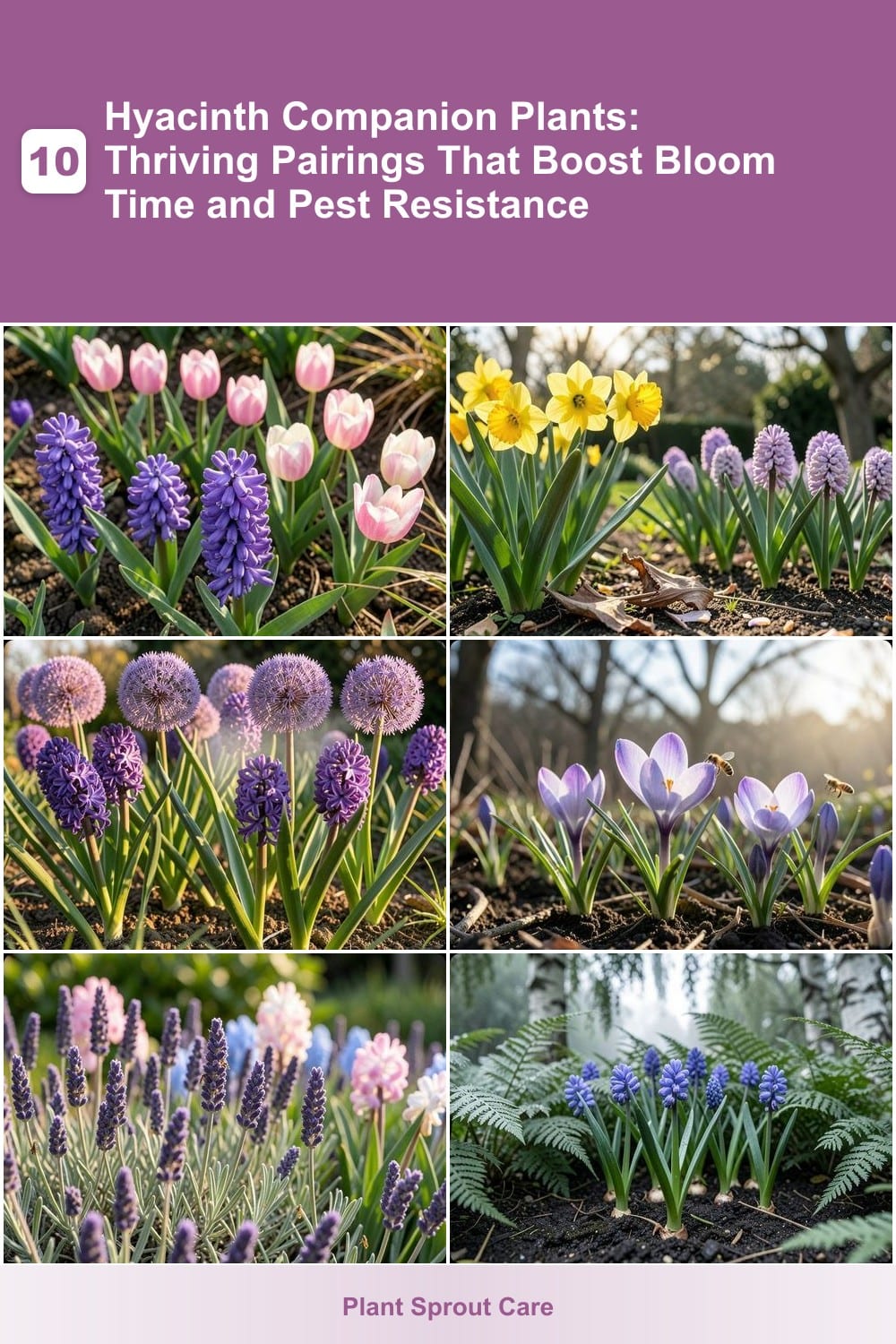
Hyacinths bring vibrant color and fragrance to spring gardens, but pairing them with the right companions can extend their bloom time, deter pests, and create a thriving garden ecosystem. These 10 scientifically-backed companion plants maximize hyacinth performance while minimizing common gardening challenges.
Tulip Bulbs for Colorful Spring Symmetry
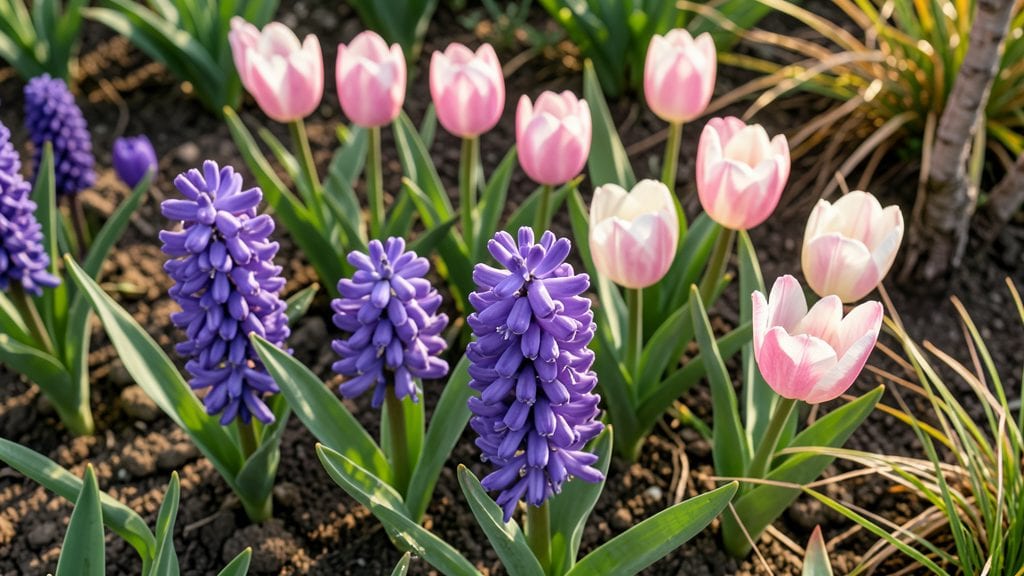
Want a spring garden that looks like a perfectly staged photo shoot? Pairing tulips with hyacinths creates a staggered bloom effect that keeps color popping from early to late spring. Both bulbs thrive in the same conditions—full sun to partial shade and well-draining soil—so you can plant them together without worrying about competing needs.
Tulips typically bloom 2-3 weeks after hyacinths, extending your seasonal display naturally. Since they’re both bulbs, you’ll only disturb the soil once in fall, saving time and effort. Choose complementary colors like purple hyacinths with red tulips or white tulips with pink hyacinths for a polished, high-impact look with minimal effort.
This pairing is ideal for beginner gardeners or anyone short on time—just plant, water, and enjoy the show. The shared bulb structure also means fewer pests target both plants, making maintenance even easier. 🌻
Daffodils to Repel Bulb-Eating Pests
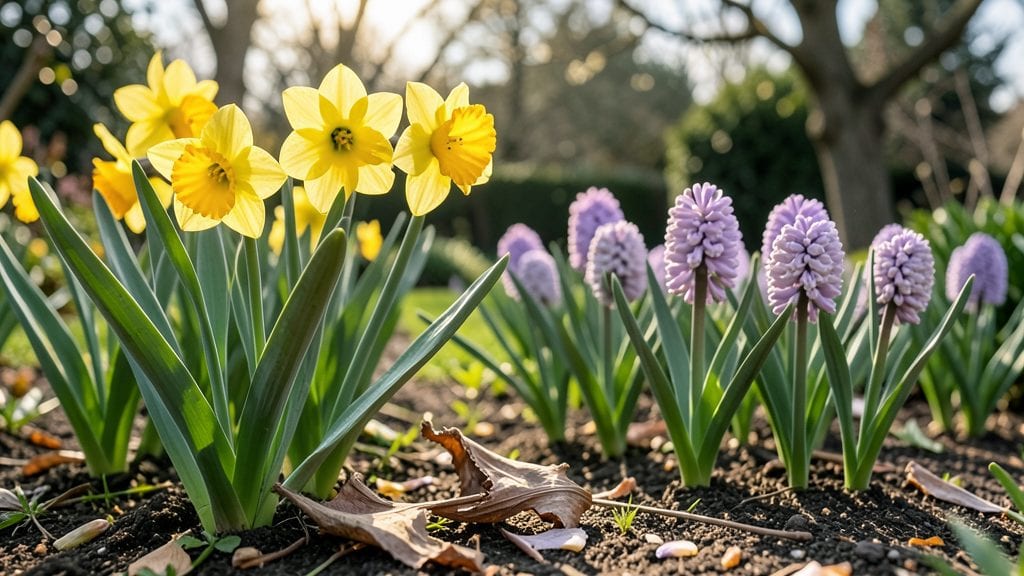
Tired of waking up to chewed-up hyacinths? Daffodils are the secret weapon your spring garden needs—nature’s built-in pest repellent. Their toxic alkaloids (like lycorine) make them unappetizing to squirrels, rabbits, and deer, while their cheerful blooms arrive even earlier than hyacinths, giving you an extended spring show.
Plant them just 6-12 inches away from hyacinths for maximum protection, and enjoy the bonus of two-tone color contrast—imagine bright yellow daffodils popping against deep purple hyacinths. Bonus: Their deep roots won’t compete with hyacinths for nutrients, making them a low-maintenance, high-reward pairing.
Perfect for gardeners who hate losing bulbs to critters or want an early burst of color. With daffodils on guard, your hyacinths will thrive without a fight. 🌱
Alliums for Aromatic Height Contrast
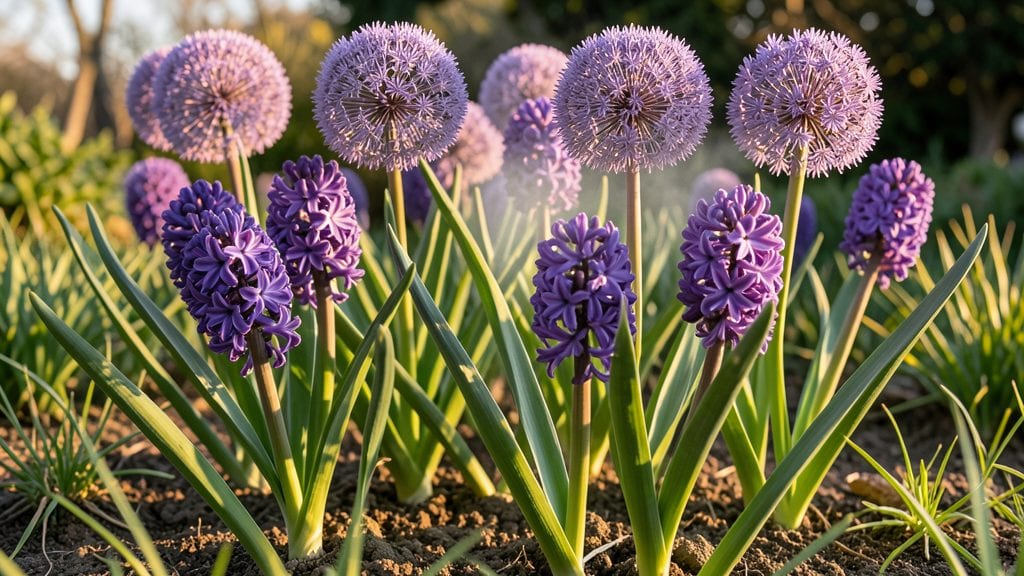
Need a way to make your hyacinths stand out and protect them from pests? Alliums are the unsung heroes of spring gardens—towering over hyacinths with their globe-shaped blooms while masking their scent to deter aphids and slugs. Their strong onion-like aroma confuses pests that might otherwise target your fragrant hyacinths, creating a natural defense system.
Plant alliums like Allium giganteum or Allium schubertii (3-5 feet tall) just 12-18 inches away from hyacinths for maximum effect. The vertical contrast adds drama to your garden beds while their late spring/early summer blooms extend your seasonal interest. Plus, their spherical flowers attract pollinators like bees and butterflies, turning your garden into a thriving ecosystem.
This pairing is perfect for gardeners who love height and texture—alliums provide striking vertical lines that draw the eye upward, making hyacinths appear even more vibrant by comparison. 🌟
Crocus for Early Season Pollinator Support
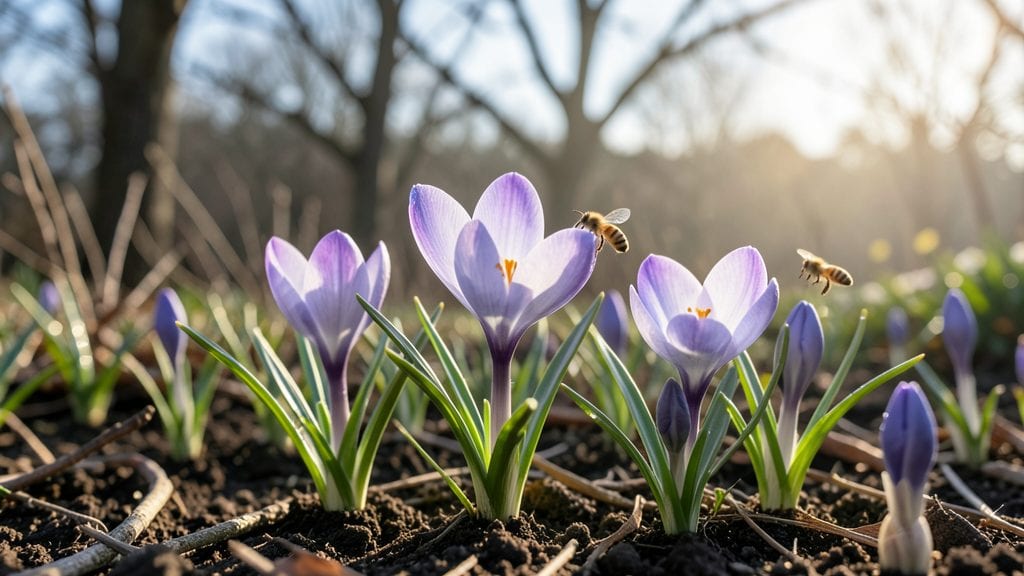
Want to give your local bees an early spring buffet while keeping your garden thriving? Crocus blooms 2-4 weeks before hyacinths, offering the first nectar source of the season when pollinators are just waking up from winter. Their delicate flowers create a stunning visual transition from winter to spring, with colors ranging from white to deep purple that complement hyacinths beautifully.
Unlike deeper-rooted bulbs, crocus has shallow roots that don't compete with hyacinths for nutrients, making them the perfect non-competitive neighbor. Plant them in clusters around hyacinth bulbs for a natural, layered look that extends your garden's pollinator-friendly season. The sequential bloom pattern ensures your garden stays vibrant from early March through May, with crocus fading just as hyacinths reach their peak.
This pairing is especially valuable for urban gardeners with limited space or eco-conscious gardeners focused on supporting early pollinators. The low-maintenance crocus will multiply over time, creating a self-sustaining ground cover that protects soil while feeding hungry bees. 🌿
Lavender for Pest Control and Fragrance
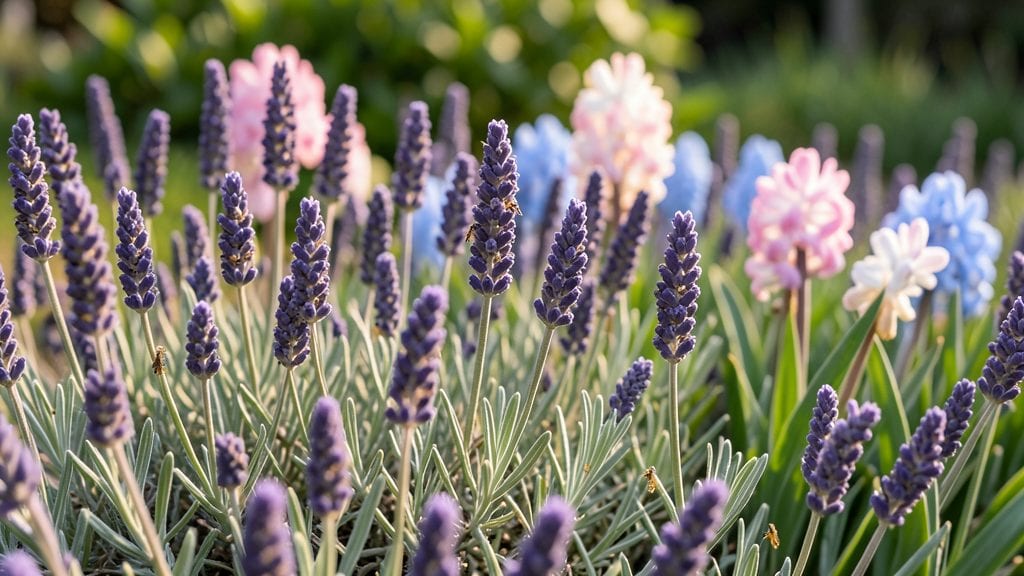
Struggling with aphids or slugs ruining your hyacinths? Lavender is the unsung hero that creates a dual-layered pest defense while adding intoxicating fragrance to your garden. Its strong, woody scent naturally repels soft-bodied pests like aphids, spider mites, and even some beetles—making it a perfect partner for hyacinths that might otherwise attract these nuisances.
Plant English lavender or French lavender (both drought-tolerant) just 12-18 inches away from hyacinths for maximum effect. The lavender’s silvery foliage and purple blooms will complement hyacinths’ vibrant colors while its scent masks the hyacinths’ fragrance, confusing pests that might otherwise target them. Bonus: Lavender’s flowers attract bees and hoverflies, which help pollinate your garden while keeping pest populations in check.
This pairing is ideal for sunny garden borders or rock gardens where both plants thrive in well-draining soil. The lavender’s long bloom season (late spring through summer) also extends your garden’s seasonal interest long after hyacinths fade. 💚
Ferns for Shaded Garden Beds
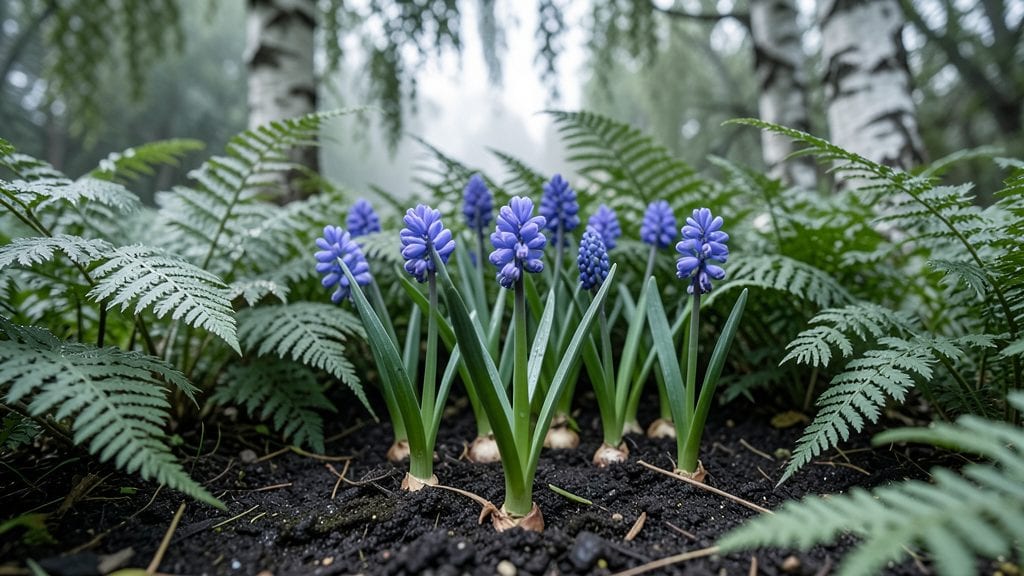
Struggling to keep your hyacinths thriving in shady spots where they often wilt? Ferns are the secret to creating a lush, moisture-rich backdrop that makes your hyacinths pop while keeping soil hydrated. Their dense, feathery fronds soften harsh edges and extend the visibility of hyacinth blooms by creating a vibrant green contrast that draws the eye.
Ferns like maidenhair fern or ostrich fern thrive in partial to full shade, matching hyacinths' preferred conditions. Their moisture-retentive root systems help prevent soil from drying out—critical for hyacinths that struggle in dry shade. Plant ferns just 6-12 inches away from hyacinths to create a natural, layered look that feels like a woodland garden retreat.
This pairing is perfect for woodland gardeners or anyone with shaded beds where hyacinths often underperform. The ferns' year-round greenery also adds structure to your garden long after hyacinths fade. 🌿
Marigolds to Deter Nematodes Naturally
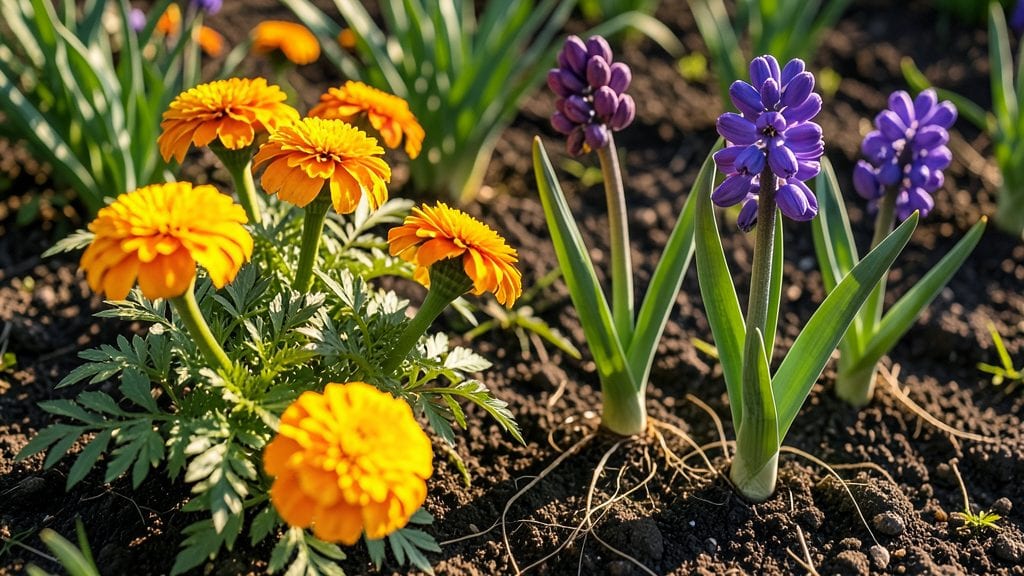
Want to protect your hyacinths from nematodes—those microscopic soil pests that can stunt growth and reduce blooms? Marigolds are the secret weapon you’ve been missing. These bright, cheerful flowers release natural compounds called alpha-terthienyl through their roots, which disrupt nematode life cycles and suppress their populations without harsh chemicals.
Plant French marigolds (like 'Bonanza' or 'Tangerine') just 12-18 inches away from hyacinths in early spring, and let them grow until mid-summer. Their vibrant orange and yellow blooms will also fill the gap after hyacinths fade, extending your garden’s seasonal interest. The best part? Marigolds thrive in the same full sun to partial shade conditions as hyacinths, making them an effortless, low-maintenance pairing.
This dynamic duo is perfect for gardeners who want chemical-free pest control or struggle with nematode issues in their soil. With marigolds on guard, your hyacinths will grow stronger and bloom more abundantly. 🌻
Salvia for Late Season Bloom Extension
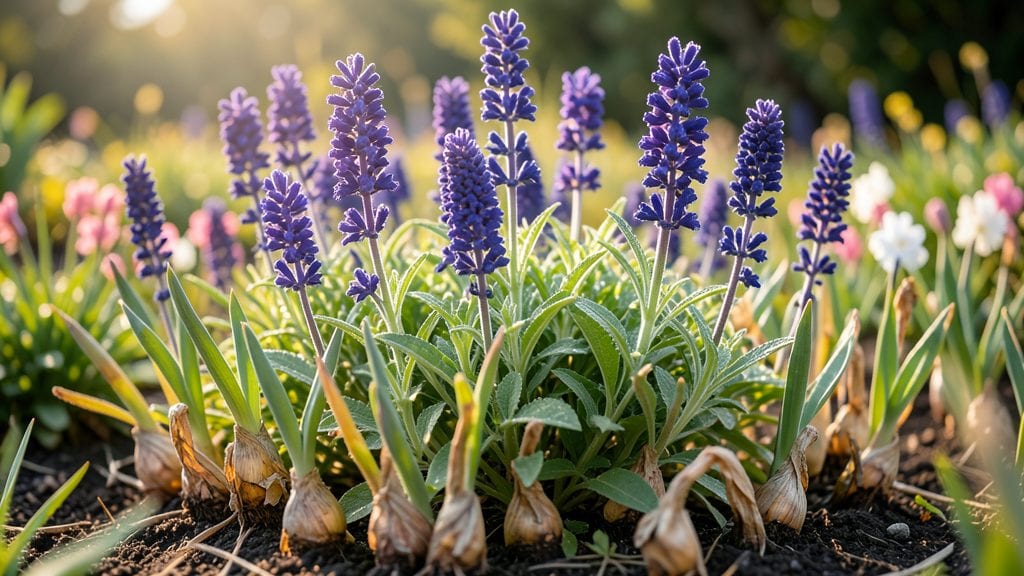
Miss the vibrant burst of hyacinths after their spring blooms fade? Salvia bridges that gap with its long-lasting flowers that thrive from late spring through summer, keeping your garden lively when hyacinths retreat underground. Varieties like Salvia nemorosa or Salvia officinalis produce striking blue, purple, and white blooms that complement hyacinths' fading hues while attracting pollinators like bees and butterflies.
This drought-tolerant perennial thrives in full sun and well-draining soil—ideal conditions for hyacinths—making it a low-maintenance companion. Plant salvia 12-18 inches away from hyacinths to create a seamless transition from spring to summer color. The upright growth habit of salvia also adds vertical interest, drawing the eye upward while its fragrant foliage deters pests like aphids.
Perfect for water-wise gardeners or those seeking seasonal interest without extra effort, salvia's long bloom season ensures your garden stays vibrant long after hyacinths fade. 💚
Hostas for Moisture-Retentive Garden Spots
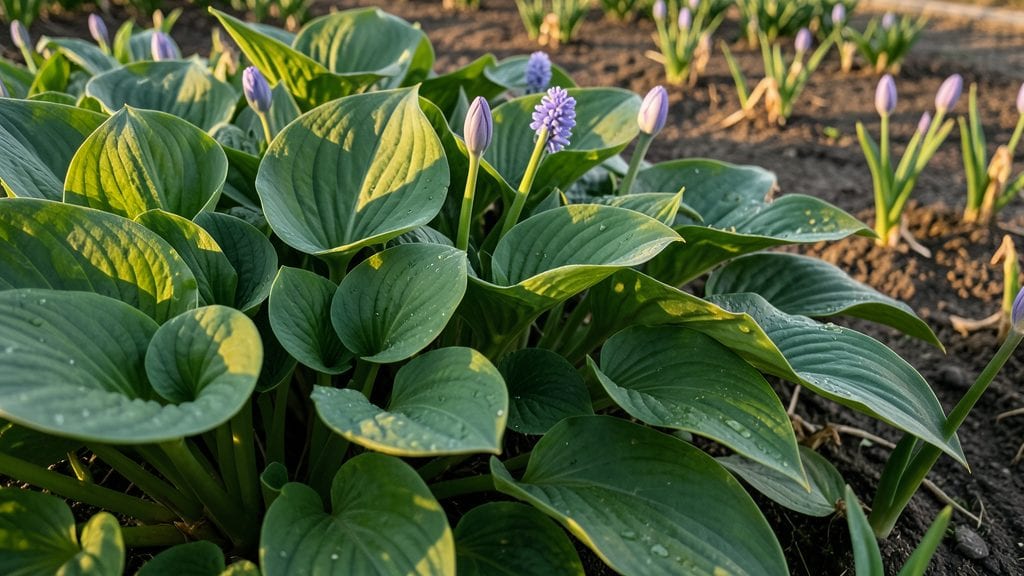
Living in a hotter climate where hyacinths wilt before they bloom? Hostas are the game-changer you’ve been missing. Their broad, lush foliage creates a cool, moisture-retentive microclimate that shields hyacinth roots from drying out, while their deep green leaves act as a stunning backdrop that makes hyacinth blooms pop like never before.
Plant hostas with blue-green or variegated varieties (like 'Blue Angel' or 'Francee') just 6-12 inches away from hyacinths for maximum effect. Their shallow roots won’t compete for nutrients, and their dense foliage helps suppress weeds. In regions with intense afternoon sun, hostas act as natural shade providers, keeping hyacinths from bolting too quickly.
This pairing is ideal for gardeners in Zone 5-8 who struggle with heat stress or want to extend hyacinth bloom time. The contrast between hostas’ velvety leaves and hyacinths’ vibrant spikes creates a high-impact visual effect that feels luxurious yet low-maintenance. 💚
Chives for Edible Companion Benefits
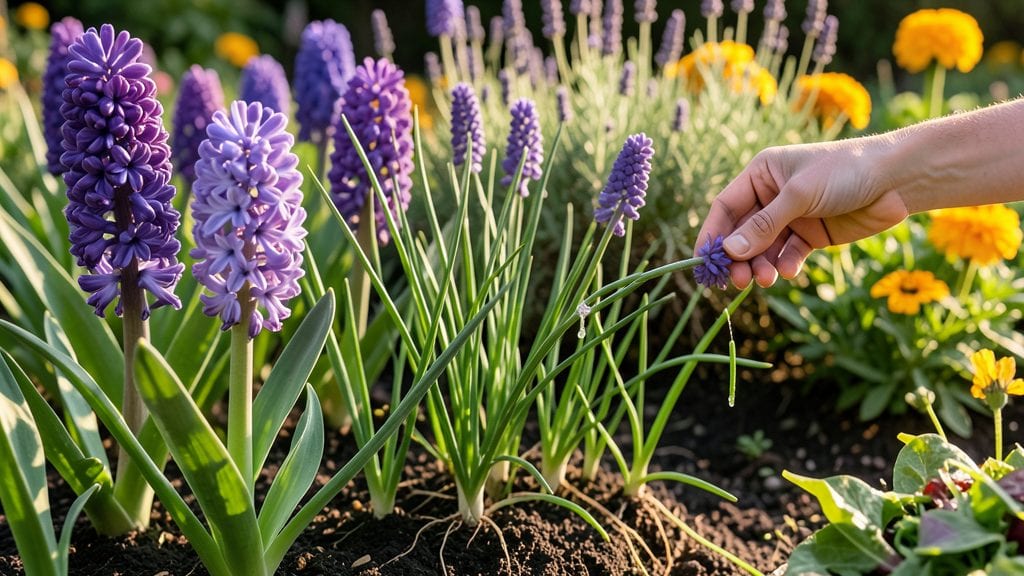
Ready to turn your garden into a dual-purpose powerhouse? Chives are the ultimate multi-tasker—repelling aphids with their mild onion scent while improving soil health through natural nitrogen fixation. Their delicate purple flowers even add a subtle edible pop to salads after hyacinths fade, turning your garden into a culinary extension.
Plant chives just 6-12 inches away from hyacinths for maximum pest protection, as their scent confuses aphids that might otherwise target your fragrant blooms. The plants thrive in the same full sun to partial shade conditions, making them effortless neighbors. Harvest the flowers in late spring for garnishes, then let the foliage regrow for another harvest cycle—no replanting needed!
This pairing is perfect for urban gardeners with small spaces or anyone who wants a garden that works as hard as they do. With chives on guard, your hyacinths will bloom healthier while giving you a fresh, homegrown ingredient to boot. 🌱