
Companion Plants
Struggling with pests or low pollinator activity in your garden? Lavender isn’t just fragrant—it’s a powerhouse companion plant that repels insects, attracts beneficial wildlife, and enhances growth. These seven proven lavender pairings will transform your garden into a thriving, self-sustaining ecosystem.
French Lavender with Rosemary
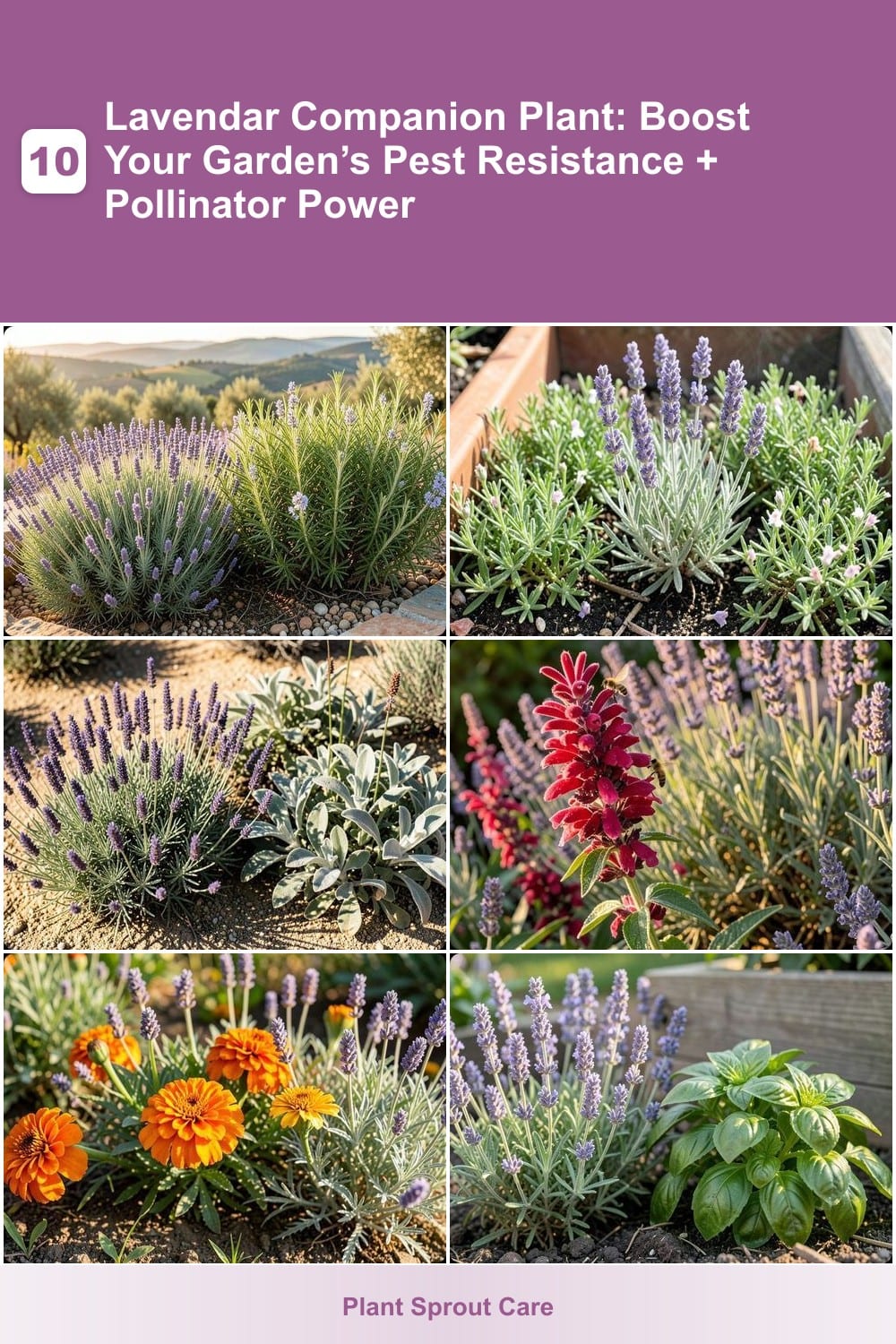
Want a low-maintenance, drought-proof garden that smells like a Tuscan hillside? Pair French lavender with rosemary for a powerhouse duo that deters pests and thrives in poor soil. The rosemary’s piney fragrance strengthens lavender’s natural insect-repelling properties, creating a dual defense against aphids, flea beetles, and even mosquitoes.
Plant them 12-18 inches apart in full sun, where their contrasting textures and colors—lavender’s silvery foliage and rosemary’s needle-like leaves—create visual appeal. Both are perennial, so they’ll reward you with year-round fragrance and pollinator visits. Use this combo in culinary gardens (rosemary’s leaves are edible!) or as a fragrant border.
This pairing is perfect for urban gardeners with limited water or beginner herb growers who want a self-sustaining Mediterranean oasis. 🌿
English Lavender with Thyme
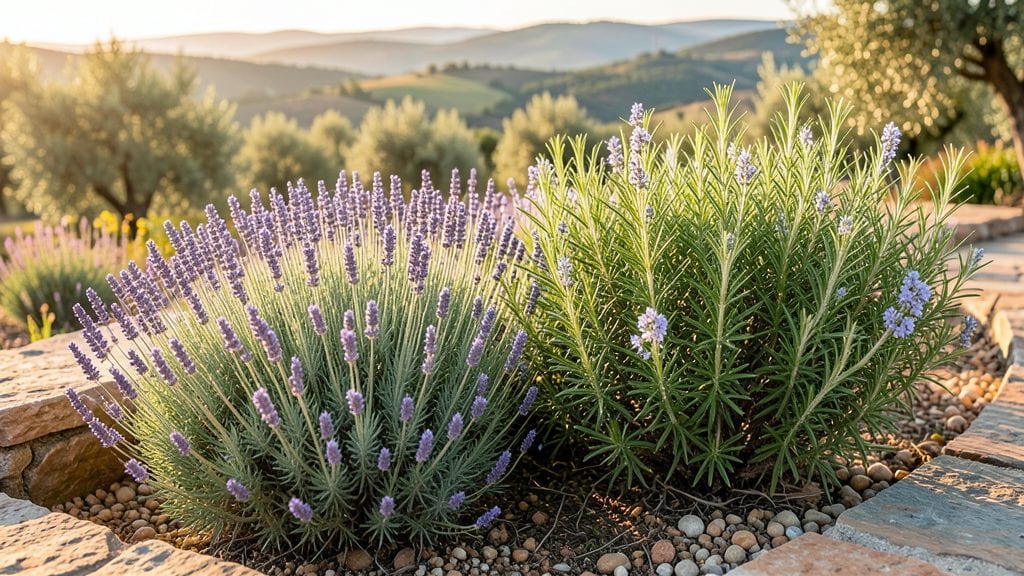
If you’re working with tight spaces but still want to maximize pest control, English lavender paired with thyme is your secret weapon. This duo thrives in small vegetable gardens, rockeries, or even container edges where every inch counts.
The low-growing thyme acts as a living mulch, shielding lavender roots from excess moisture while its strong, earthy scent naturally deters cabbage moths and carrot flies. Plant thyme just 6 inches from lavender stems to create a protective barrier without competing for sunlight. Both plants love well-draining soil and full sun, making them ideal for rock gardens or sunny borders.
This pairing is especially valuable for urban gardeners or those with limited space, offering dual benefits without sacrificing aesthetics. 🌿
Spanish Lavender with Sage
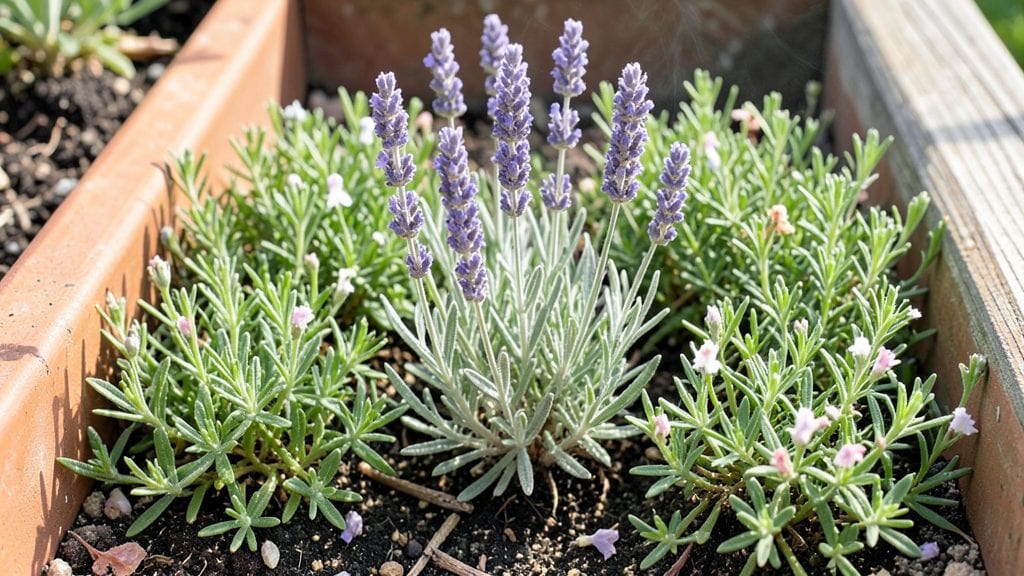
If you live in a hot, dry climate and want a low-maintenance yet stunning lavender combo, Spanish lavender with sage delivers both beauty and function. This pairing thrives in full sun and sandy, well-draining soil—perfect for xeriscaping or container gardens where water conservation is key.
The silver-gray foliage of sage creates a striking contrast against Spanish lavender’s deep purple blooms, while both plants work together to repel flea beetles and whiteflies. Sage’s strong scent also deters rabbits, making this duo ideal for gardens where pests are a persistent issue. Plant them 12–18 inches apart for optimal airflow and pest control.
This heat-tolerant combination is especially great for urban gardeners or those with limited water resources. The fragrant, drought-resistant duo will keep your garden looking polished while warding off common pests. 💚
Lavender with Bee Balm
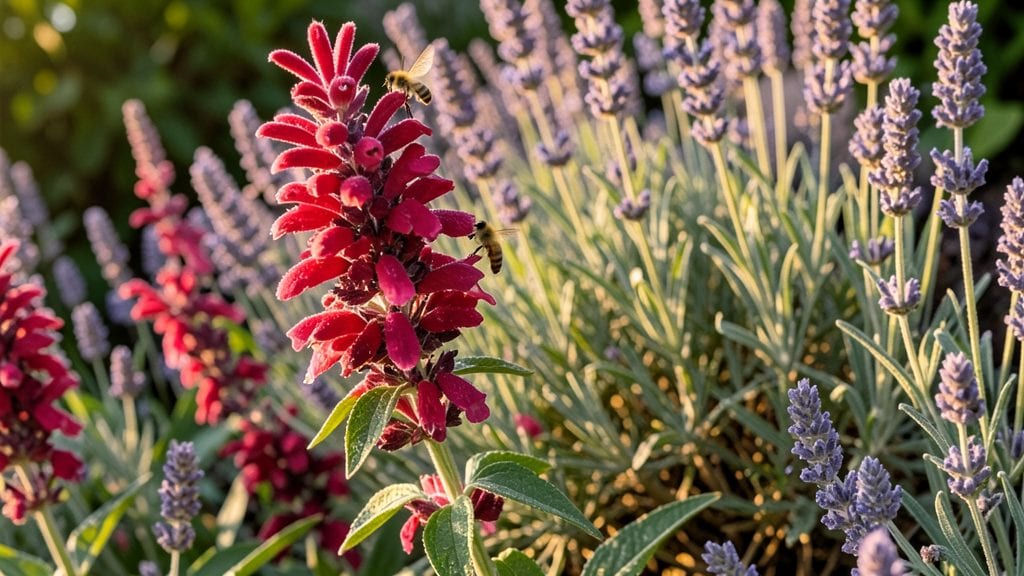
Watch your pollinator garden come alive with this unexpected duo: bee balm and lavender. While bee balm’s bright red or pink blooms lure in bees and butterflies with their nectar, lavender’s signature fragrance acts as a natural shield, repelling Japanese beetles that would otherwise devour bee balm leaves.
Plant bee balm (Monarda spp.) in full sun to partial shade with well-drained soil, spacing them 18-24 inches apart. Position lavender slightly behind or beside bee balm to maximize the beetle-deterring effect. Deadhead spent bee balm flowers to encourage continuous blooming, and prune lavender lightly after flowering to maintain its shape.
This pairing is ideal for gardeners creating native plant landscapes or pollinator-friendly meadows. The contrast of lavender’s silvery foliage against bee balm’s vibrant flowers adds visual appeal while boosting biodiversity. 🌻
Lavender with Marigolds
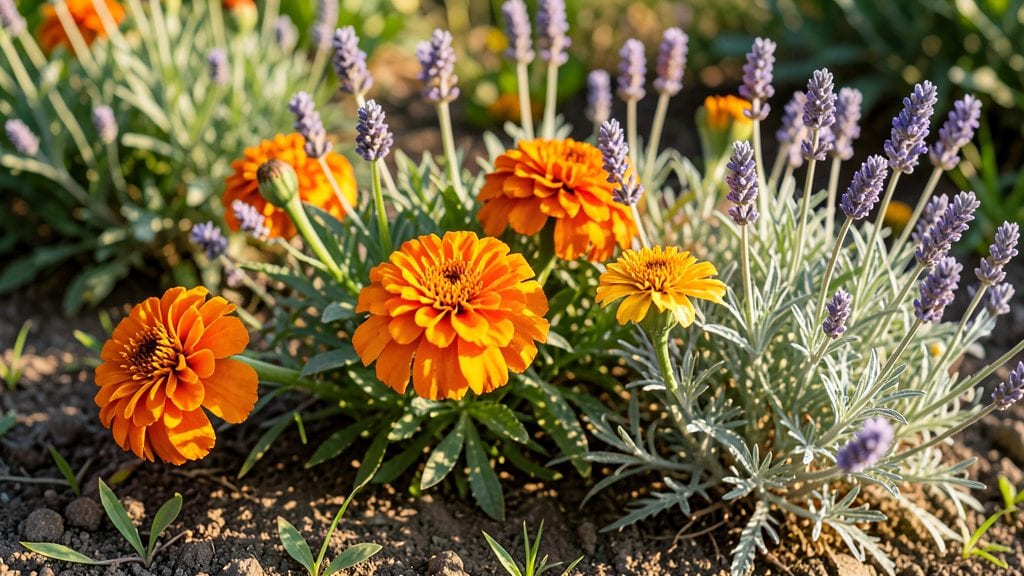
Want a natural pest fortress that keeps aphids, nematodes, and even rabbits at bay without chemicals? Pairing lavender with marigolds creates a dynamic defense system—marigolds’ pyrethrin compounds amplify lavender’s pest-repelling powers while adding bold color to your garden.
Plant French marigolds (for their strong scent) or African marigolds (for their towering height) around lavender bushes to create a physical and chemical barrier. The marigolds’ bright orange blooms also attract ladybugs and hoverflies, which prey on garden pests. Space them 12-18 inches apart for optimal coverage.
This combo is a game-changer for organic vegetable gardens or cut-flower arrangements, where both plants thrive in full sun and well-drained soil. 🌻
Lavender with Basil
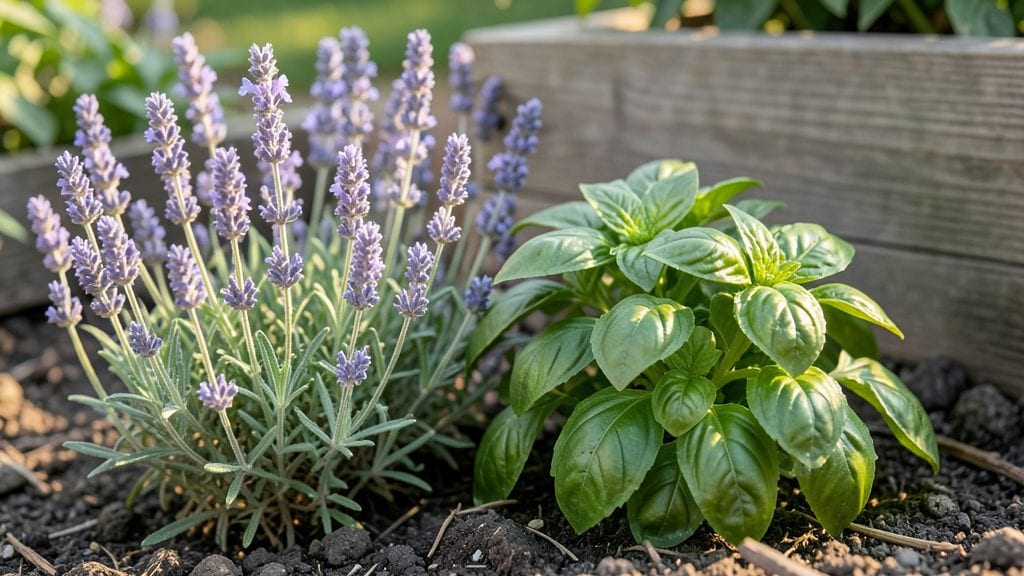
Tired of deer munching your lavender or mosquitoes buzzing around your patio? Pairing lavender with basil creates a double-duty herb combo that deters pests while keeping your garden productive. Basil’s anise-like scent overpowers lavender’s fragrance, making your plants less appealing to deer and rabbits while its essential oils repel mosquitoes and flies—naturally!
This dynamic duo thrives in containers, making it perfect for kitchen gardens or small patios. Plant purple lavender (like ‘Munstead’ or ‘Hidcote’) alongside Genovese or Thai basil in well-draining soil with 6 hours of sun. Water at the base to avoid wetting basil’s leaves, which can cause disease. Harvest basil regularly to encourage bushier growth and more flavor!
Urban gardeners and herb enthusiasts will love this low-maintenance pairing—it’s a culinary powerhouse for pesto, pestos, and teas while keeping your outdoor space bite-free. Just add a pinch of citronella basil for extra mosquito protection! 🌿
Lavender with Nasturtiums
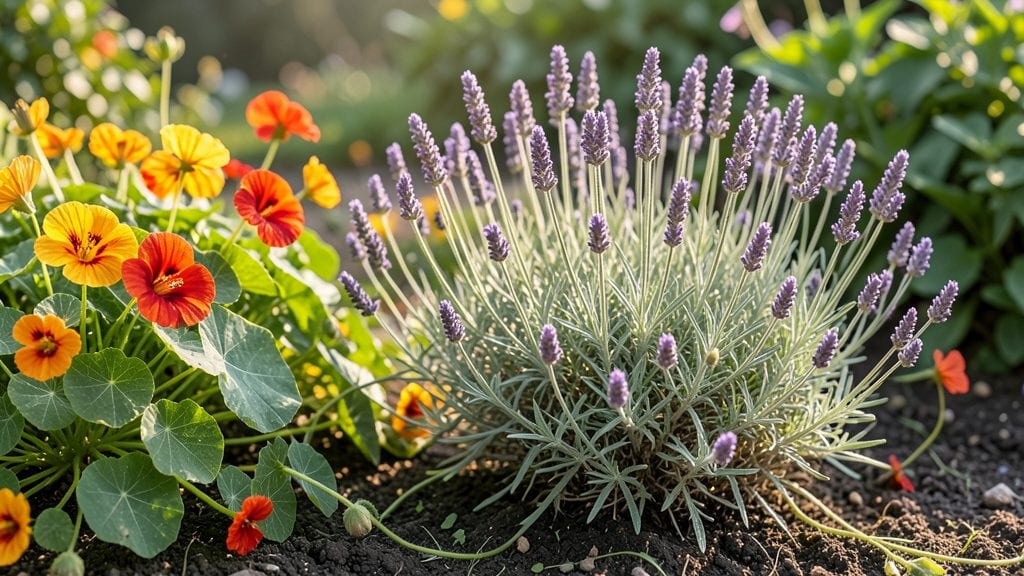
Want a garden that’s both beautiful and edible? Pairing lavender with nasturtiums gives you a double whammy: pest control and fresh flowers for your salad bowl. The peppery scent of nasturtiums confuses squash bugs and cucumber beetles, while lavender’s deep roots aerate the soil, improving drainage and structure over time.
Plant nasturtiums at the base of lavender bushes—their trailing vines will cascade down, creating a vibrant, low-maintenance border. Both thrive in full sun and well-draining soil, making them perfect for salad gardens or trellises where you can harvest the edible flowers. Plus, nasturtiums bloom prolifically, offering continuous color from spring to frost.
This combo is ideal for urban gardeners or small-space growers who want to maximize flavor and function. The edible flowers add a peppery kick to salads, while the lavender deters pests naturally—no chemicals needed! 🌻