
Blooming
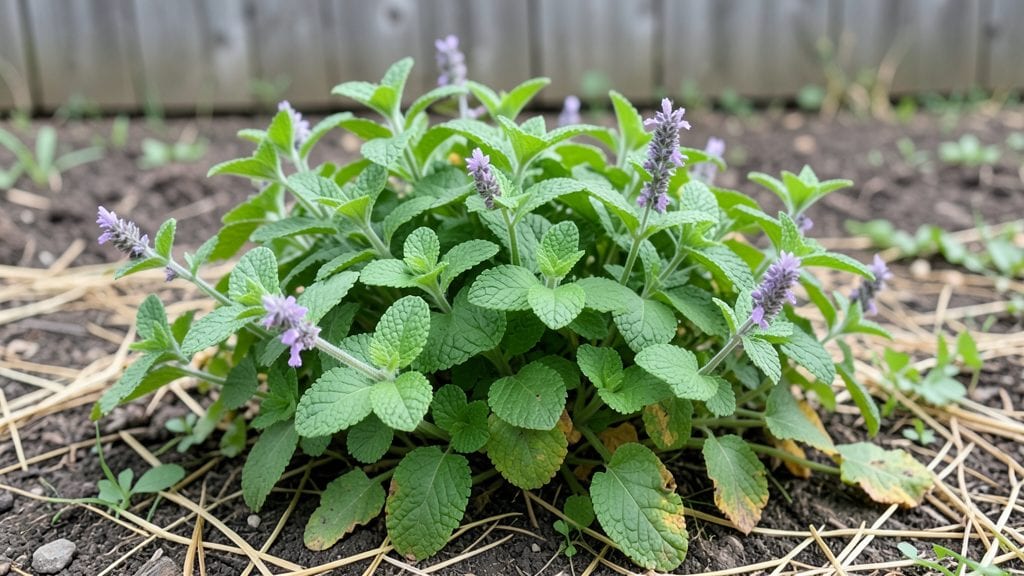
Mint plant blooms typically occur in late spring to early summer, producing small purple, pink, or white flowers that signal seed production. Pruning spent blooms encourages lush foliage growth and prevents the plant from going dormant prematurely.
These delicate flowers aren’t just pretty—they’re your mint’s way of telling you it’s ready to focus on reproduction instead of leaf growth. 🌸 When you see those tiny blossoms appear, it’s often a sign your plant has matured, especially if it’s been in ideal conditions with plenty of sunlight and consistent moisture.
The key is to act fast by snipping off those stems at the base, which redirects the plant’s energy back to producing more of the lush, aromatic leaves you love.
Interestingly, some gardeners intentionally let mint bloom once to ensure they’ve got healthy root systems before dividing the plant. But if you’re growing mint for its leaves—whether for teas, cocktails, or cooking—keeping those flowers pruned will give you a longer harvest season.
Just remember, mint is aggressive, so containment matters just as much as timing when it comes to managing those blooms.
💡 In This Article
- Natural Triggers for Mint Flowering Cycles
- Pruning and Care Tips to Prolong Mint Growth
Natural triggers for mint flowering cycles
Here's what's actually happening when your mint plant starts flowering: it's responding to a combination of biological signals and environmental cues. The primary trigger is day length (photoperiod), where mint plants detect increasing daylight hours in spring.
When days reach about 14-16 hours of light, it sends hormonal signals (primarily florigen) to the plant's meristem cells, telling them to shift from vegetative growth to reproductive mode.
This photoperiod response is especially strong in peppermint and spearmint varieties, which are native to temperate regions where spring daylight increases predictably.
The temperature threshold matters too—mint typically needs consistent soil temperatures above 55°F to begin flowering. Below this, the plant conserves energy for survival rather than reproduction. What most people don't realize is that mint also responds to stress signals like drought or root-bound conditions.
When roots become crowded or water becomes scarce, the plant perceives this as a survival challenge and may accelerate flowering as a reproductive strategy. This is why you sometimes see mint bloom earlier in containers than in garden beds—pot-bound roots create stress that triggers the flowering response. 🌱
Light quality plays a subtle but important role too. Mint prefers full sun to partial shade (6-8 hours of direct sunlight daily), but too much intense midday sun (especially in hot climates) can actually inhibit flowering by causing heat stress.
The ideal scenario is bright, indirect light combined with moderate temperatures (around 65-75°F). This balance allows the plant to photosynthesize efficiently while avoiding the metabolic stress that would divert energy away from flowering.
Think of it like Goldilocks—too little light and the plant won't have enough energy, but too much can be overwhelming.
Another fascinating factor is the plant's age. Younger mint plants (under 1 year old) often delay flowering until they've established stronger root systems and leaf canopies. This is why many gardeners recommend waiting until mint is well-established before expecting blooms.
The plant essentially "saves" its flowering energy until it feels secure enough to reproduce. Interestingly, some mint varieties like chocolate mint and apple mint are more prone to early flowering because they've been selectively bred for ornamental qualities rather than culinary use. 💫
What this all means for you as a grower is that you can actually influence flowering timing by controlling these variables. For example, moving potted mint to a shadier spot in late spring can delay blooms by reducing photoperiod signals.
Similarly, ensuring consistent moisture and well-draining soil prevents the stress responses that might trigger premature flowering. The key is understanding that mint's flowering isn't random—it's a precisely timed biological response to its environment that you can work with rather than against.
One practical application of this knowledge is using flowering as a natural indicator of plant health. If your mint blooms excessively early (before late spring), it might be signaling root-bound conditions or insufficient water.
Conversely, if it never flowers even in summer, it could indicate too much nitrogen fertilizer (which promotes leaf growth at the expense of reproduction) or insufficient daylight. This biological feedback loop gives you valuable insights into your plant's needs without needing soil tests or complex measurements. 🌿