
Watering
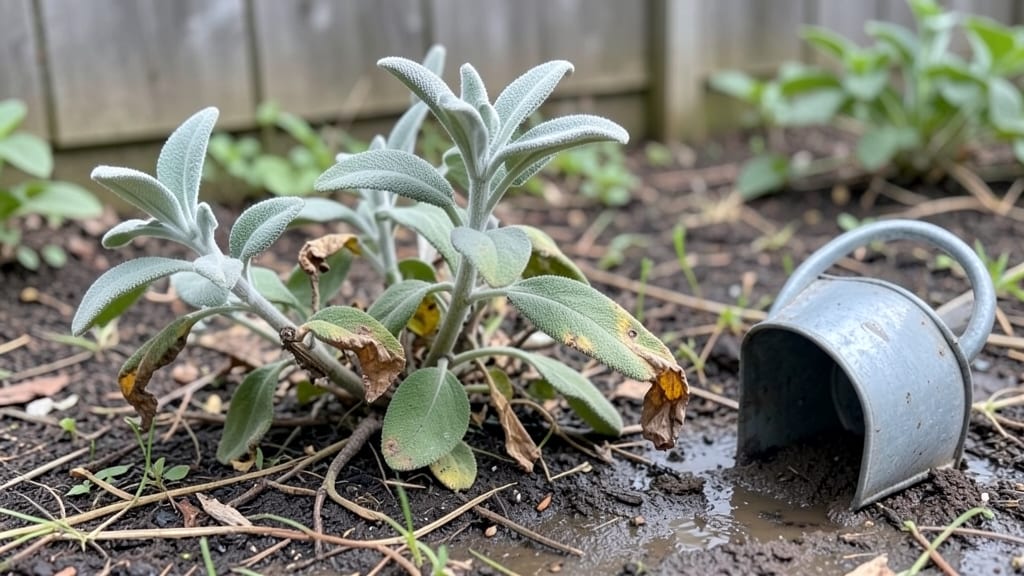
Overwatered sage plants look like drowned puppies—wilting, yellowing, and too heavy for their stems. 🌿 I’ve nursed more than my share back from the brink, and the first step is always cutting away the damage.
Sage hates soggy feet, but with the right pruning and drainage tweaks, you can revive even the most pitiful-looking plant.
The real culprit is usually a mix of too-frequent watering and soil that drains like molasses. Sage thrives in well-draining soil and needs water only when the top inch feels bone-dry.
I’ve learned to check with my finger before reaching for the hose—this simple habit saved my last batch of struggling plants. Once you adjust the routine, you’ll see fresh growth within weeks.
After pruning back the mushy stems and amending the soil with perlite or coarse sand, your sage will start to perk up. The leaves will turn a rich, velvety green, and the woody stems will firm up again.
Within a month, you’ll be harvesting fragrant sprigs for cooking or garnishes, just like the thriving plants you’ve always wanted.
This works just as well for potted sage as in-ground plants—just ensure your container has drainage holes. The key is consistency: sage forgives occasional mistakes but won’t tolerate soggy conditions long-term. Let’s turn that sad plant into a showstopper again.
Root Causes Of Excess Moisture
When your sage plant starts wilting despite damp soil or develops yellowing leaves that refuse to bounce back, the culprit is almost always overwatering. But why does this happen so easily? Sage (Salvia officinalis) is a drought-tolerant Mediterranean herb that thrives in well-draining soil and dry conditions.
When water isn’t managed properly, a cascade of physiological and environmental factors kick in—often silently—until damage is done. Let’s break down the real reasons your sage is drowning in its own pot.
Sage roots hate sitting in soggy soil for more than a few hours. If your pot lacks drainage holes or the potting mix retains too much moisture (like heavy clay or peat-based soils), water pools at the bottom instead of draining away.
This creates an anaerobic (oxygen-free) environment where roots suffocate.
- Science behind it: Roots need oxygen to respire and absorb nutrients. When soil stays waterlogged, microbes deplete oxygen faster than roots can replenish it, leading to hypoxia (oxygen starvation).
- Actionable sign: Check for water pooling in the saucer or soil that smells musty or like rot.
- Fix: Repot into a mix with 50% perlite or coarse sand and ensure the container has drainage holes.
Sage doesn’t follow a rigid watering calendar—it follows soil moisture cues. If you water on a set schedule (e.g., every Tuesday) without checking the top 1–2 inches of soil, you’re likely overdoing it.
Sage’s shallow roots dry out quickly, but frequent light waterings trick the plant into thinking it’s always wet.
- Science behind it: Overwatering disrupts the plant’s osmotic balance, forcing roots to work harder to expel excess water. This exhausts energy reserves meant for growth.
- Actionable sign: Soil feels damp more than 2–3 days after watering or leaves yellow between waterings.
- Fix: Use the finger test: Stick your index finger 1–2 inches into the soil. Water only when it’s dry.
Sage loves dry air—humidity above 50% (common in bathrooms or kitchens) slows evaporation, keeping soil moist longer than ideal. Even in dry climates, indoor heating or enclosed spaces can trap moisture around the plant.
- Science behind it: High humidity reduces the transpiration rate (water loss through leaves), so the plant doesn’t signal thirst as clearly. Roots stay hydrated longer, but the excess water stagnates.
- Actionable sign: Condensation on leaves or soil staying damp for over 48 hours after watering.
- Fix:
- Move the plant to a bright, dry spot (e.g., near a sunny window away from bathrooms).
- Use a small fan on low speed to improve airflow.
- Reduce humidity with a dehumidifier or silica gel packets in the pot.
Over time, potting soil compacts—especially if it’s heavy or lacks organic matter. Compacted soil doesn’t drain efficiently, creating pockets of stagnant water that roots can’t escape. Even "well-draining" mixes can fail if they’re not fluffed up regularly.
- Science behind it: Compacted soil has poor porosity, meaning water can’t percolate through. Roots in these zones experience flooding stress, leading to root rot (Pythium or Phytophthora fungi thrive here).
- Actionable sign: Soil feels hard when pressed or water runs off the surface instead of soaking in.
- Fix:
- Gently loosen the top 2 inches of soil with a chopstick or fork every few months.
- Add hydroponic clay pebbles to the mix for long-term aeration.
Pro Tip: 💡 Sage’s native habitat gets irregular but heavy rains followed by bone-dry spells. Mimic this by watering deeply only when the soil is bone dry, then letting it dry out completely before the next watering. This trains the roots to seek moisture efficiently!
Revive Your Overwatered Sage Plant
If your sage plant is looking sad due to overwatering, don’t panic—it’s often fixable with the right steps! Root rot and soggy soil are the main culprits, but with proper care, your sage can bounce back. Below, we’ll break down the solutions based on the root cause and provide actionable tips to prevent future issues.
The first and most critical move? Cut off the water. Overwatering is like drowning your plant—it suffocates the roots and encourages rot. Let the soil dry out completely before watering again. This gives the roots a chance to recover and prevents further damage.
Gently remove the plant from its pot and inspect the roots. Healthy roots are firm and white, while rotten roots are mushy, dark, and may smell foul. If you see significant rot:
- 🔪 Trim the damaged roots with clean, sharp pruners, cutting away any black or mushy sections.
- 🧼 Disinfect your tools with rubbing alcohol to prevent spreading disease.
- 🚫 Avoid replanting immediately—let the cut roots dry out for a day or two to reduce the risk of further infection.
Sage plants hate soggy soil. If your pot lacks drainage holes, it’s time to upgrade. Here’s how:
- 🛠️ Repot if needed: Choose a container with drainage holes at the bottom.
If your current pot is sturdy but lacks holes, consider drilling them (or opt for a cache pot with a decorative outer layer). - 🪴 Use well-draining soil: Mix potting soil with perlite, sand, or gravel (about 20-30%) to improve aeration.
Sage thrives in fast-draining, slightly alkaline soil. - 🪵 Elevate the pot: Place it on a saucer or tray to catch excess water, but always empty the saucer after watering to prevent root suffocation.
Sage is drought-tolerant, so it’s better to underwater than overwater. Follow these guidelines:
- ⏰ Water only when the top 1-2 inches of soil are dry—stick your finger in the soil to check.
- 💦 Water deeply but infrequently: Give your sage a thorough soak, then let it dry out completely before the next watering.
- 🌧️ Avoid misting or overhead watering, which can encourage fungal growth.
If your sage’s leaves are yellow, wilted, or mushy, it’s time to prune. This helps the plant redirect energy to healthy growth:
- 🌿 Trim dead or yellow leaves with clean scissors, cutting back to healthy green growth.
- 🌱 Shape the plant lightly to encourage bushier growth, but avoid heavy pruning unless necessary.
- 🌞 Place the plant in bright, indirect light (sage loves sun but can scorch if stressed). A south- or west-facing window is ideal.
Once your sage is on the mend, keep these tips in mind to avoid overwatering again:
- 💡 Use a moisture meter to track soil dryness accurately.
- 🌡️ Monitor humidity: Sage prefers drier air—consider a dehumidifier if your home is too moist.
- ✨ Choose the right pot: Terracotta pots dry out faster than plastic, making them ideal for sage.
- 🎯 Water in the morning to allow excess moisture to evaporate during the day.
With these steps, your sage should start recovering within a few weeks. Be patient—plants heal at their own pace, but with proper care, your overwatered sage can thrive again! 🌱💚
Frequently asked questions
Why does my sage plant look wilted even when the soil is damp?
Overwatered sage plants wilt because their roots can't breathe in soggy soil. The roots suffocate when they sit in waterlogged conditions for too long, causing them to stop absorbing nutrients. This leads to wilting despite damp soil—your plant is essentially drowning.
How can I tell if my sage plant has root rot?
Check for mushy, dark brown or black roots that smell foul—these are clear signs of root rot. Healthy roots should be firm and white. If you see these symptoms, trim the damaged roots immediately and repot in fresh, well-draining soil.
Can I save my sage plant if it's completely yellow and droopy?
Yes, but act fast! Prune all yellow leaves and let the soil dry out completely. Repot in fresh, fast-draining soil and avoid watering for at least 3-5 days. With proper care, new growth should appear within 2-3 weeks.
What's the best soil mix for preventing overwatering in sage?
Use a blend of 50% potting soil, 30% perlite, and 20% coarse sand. This creates excellent drainage while still holding enough moisture for sage's shallow roots. Terracotta pots also help by allowing moisture to evaporate faster.
How often should I water my sage plant after reviving it?
Water only when the top 1-2 inches of soil are completely dry. For potted sage, this typically means watering every 7-10 days in normal conditions. Always check with your finger before watering.