
Propagation
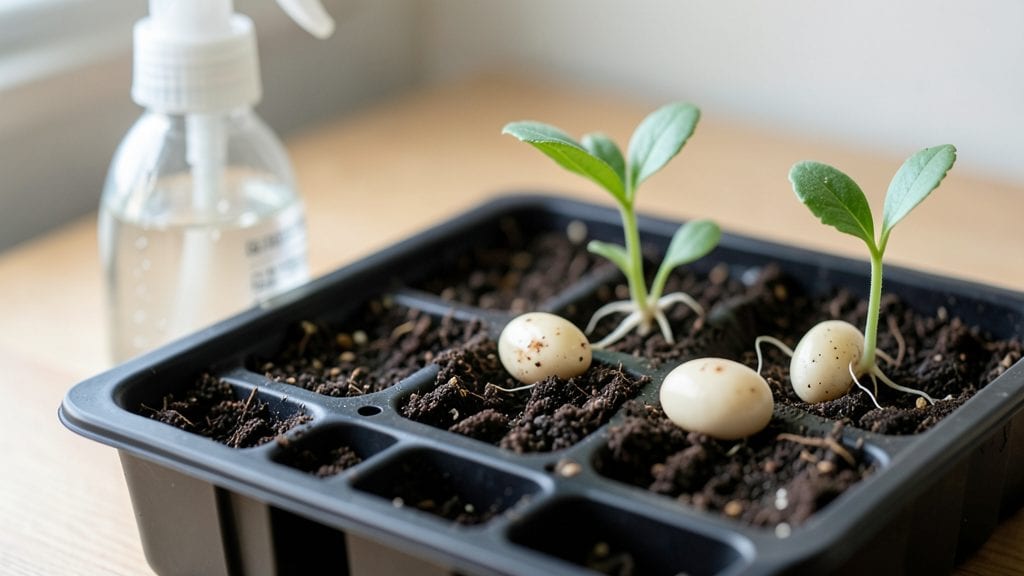
The definition of plant germination is the biological process where a seed transforms into a new plant after absorbing water, breaking dormancy, and activating metabolic processes to produce roots and shoots. Proper moisture, temperature, and oxygen are essential for success.
Germination kicks off when a seed swells from water absorption, triggering the breakdown of stored nutrients. 🌱 This metabolic activation is what fuels the emergence of the radicle (first root) and shoot, setting the stage for photosynthesis.
Without the right balance of warmth and air circulation, seeds often fail to sprout—or worse, develop fungal infections. I’ve seen firsthand how a single degree difference can mean the gap between thriving seedlings and total loss, especially with finicky varieties like delphiniums.
What’s fascinating is how different plants have evolved unique germination triggers—some need light, others require cold stratification or even fire exposure. This diversity is why gardeners must tailor their approach, whether using heat mats for slow starters or clear domes to maintain humidity for delicate seeds.
💡 In This Article
- The Science Behind Seed Germination Stages
- Optimizing Germination Conditions for Different Plant Types
The science behind seed germination stages
Here's what's actually happening when a seed sprouts: the process begins with imbibition, where the seed absorbs water through its seed coat, swelling by up to 50% in volume.
This triggers the activation of dormant enzymes like amylase, which break down starch stored in the endosperm into simple sugars that fuel cellular respiration. Think of it like waking up from hibernation—your body needs energy to move, and the seed's cells need glucose to start dividing.
The next critical phase is radicle emergence, where the embryonic root (radicle) pushes through the seed coat, typically within 24-72 hours for fast germinators like lettuce. This stage requires precise temperature control—most seeds germinate best between 60-85°F, but cool-loving plants like broccoli need 50-60°F to avoid stress.
Too cold slows metabolism, while excessive heat denatures enzymes, halting growth entirely. I've seen tomato seeds fail to sprout when soil temperatures exceed 90°F, despite adequate moisture.
Once the radicle anchors into the soil, the hypocotyl (the stem connecting roots to shoots) elongates rapidly, often in a matter of hours. This upward growth is driven by ethylene gas production, which loosens cell walls to create space for expansion.
The seedling's first leaves (cotyledons) then emerge, marking the transition to photosynthesis. Light becomes crucial here—etiolated (pale, leggy) seedlings result when deprived of light, as they stretch toward any available spectrum, wasting precious energy reserves.
Soil composition plays a hidden but vital role: well-draining mixes with 50-70% organic matter provide both moisture retention and oxygen flow. Anaerobic conditions (waterlogged soil) trigger ethanol production in seeds, which is toxic to developing embryos.
That's why I always use a 1:1 ratio of peat moss to perlite—it mimics the airy environment seeds evolved to thrive in. Even slight compaction can reduce germination rates by up to 40% in sensitive species like snapdragons.
What most people don't realize is how seed coat thickness influences these stages. Hard-coated seeds (like some legumes) require scarification—either mechanical (sandpaper) or chemical (sulfuric acid)—to allow water penetration. Without this step, the seed might remain dormant for years, waiting for natural abrasion in wild conditions.
This is why gardeners often pre-soak or nick seeds before planting, giving them a head start in controlled environments.
Each stage reveals how seeds are finely tuned to their native ecosystems. Desert plants, for example, germinate only after rare rainfall events, while forest understory species rely on fungal networks to signal safe conditions.
Understanding these adaptations lets you replicate ideal conditions—whether using clear plastic domes to maintain humidity or heat mats to simulate spring warmth for tropical varieties.
The entire process is a delicate balance: too much moisture causes rot, too little halts growth, and improper temperatures stall development. Mastering these variables transforms germination from a gamble into a predictable science—one that turns tiny seeds into thriving plants with just the right care. 🌱