
Propagation
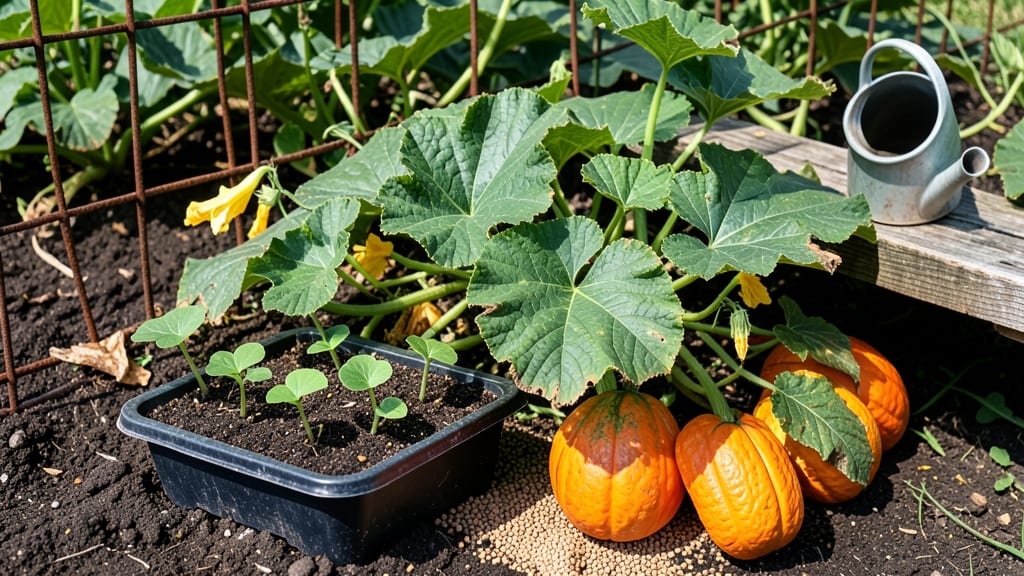
Planting giant pumpkin seeds isn’t just about growing a pumpkin—it’s about cultivating a monster that could steal the spotlight at your county fair. 🌱 I’ve watched 30-pound pumpkins go from seed to showstopper, and the secret starts with the right soil, spacing, and a little patience.
Most beginners rush the prep work, but those extra hours in the spring pay off when vines stretch 100 feet long by summer.
The biggest mistake? Skimping on space or soil. Giant pumpkins need 100+ square feet each, rich soil with compost mixed in, and full sun for 8+ hours daily. I’ve seen vines collapse under their own weight when planted too close—don’t let that be you.
Start seeds indoors 4-6 weeks before last frost, then transplant carefully to avoid root shock. The first few weeks are critical: keep soil moist but not soggy, and watch for squash vine borers lurking in the leaves.
By midsummer, you’ll see hand-sized pumpkins forming, and that’s when the real work begins. A balanced fertilizer (like 10-10-10) every 2-3 weeks keeps them growing, but too much nitrogen makes leaves instead of fruit. Prune excess vines to focus energy on 2-3 main pumpkins—more doesn’t mean bigger, it means smaller.
With the right care, you could be staring at a 50-pound pumpkin by harvest time, ready to break records.
This method works best in warm climates (zones 4-10), but even cooler areas can grow giants with black plastic mulch to warm the soil. The key is consistency—watering, fertilizing, and pest control—throughout the season. Ready to grow something legendary? Let’s get those seeds in the ground.
📚 In This Guide
- What you need
- Instructions
- Tips and common mistakes
- Wrapping up and next steps
What you need
- ● Giant pumpkin seeds: High-quality, heirloom seeds from a reputable supplier (e.g., Atlantic Giant, Big Max, or Howden). Buy 5–10 seeds per variety to ensure success.
- ● Well-draining soil mix: 50% compost, 30% coconut coir or peat moss, and 20% perlite or vermiculite (sterilized). Aim for a pH of 6.0–6.8.
- ● Large containers or raised beds: At least 3–5 gallons per seedling (or a minimum 12" deep × 24" wide bed for direct planting).
- ● Organic fertilizer: Balanced (10-10-10) or high-potassium (5-10-10) for flowering. Use 1–2 cups per plant every 2–3 weeks after germination.
- ● Mulch: Straw or black plastic to retain moisture and suppress weeds. Cover 3–4 inches thick around plants.
- ○ Trellis or support system: Sturdy stakes (8–10 ft tall) or a cattle panel trellis to support vines (optional but highly recommended for giant varieties!).
- ● Garden trowel or transplanting spade for digging.
- ● Pruning shears for vine management.
- ● Watering can or drip irrigation system (giant pumpkins need 1–2 inches of water weekly).
- ● pH testing kit to monitor soil acidity.
- ● Gloves & knee pads (trust us, your knees will thank you!).
- ● Long growing season: Aim for 90–120 frost-free days. Start seeds indoors 4–6 weeks before last frost or direct-sow after soil temps hit 70°F+.
- ● Sunlight: Full sun (6–8+ hours daily) is non-negotiable.
- ● Space: Allocate 50–100 sq ft per plant—these vines sprawl!
- ● Patience: Giant pumpkins take 100–150 days to mature. Stay consistent!
- ● Mycorrhizal fungi inoculant to boost root growth.
- ● Fish emulsion or compost tea for extra nutrients.
- ● Shade cloth (30–50%) for seedlings if temps exceed 90°F.
Step-by-Step guide to planting giant pumpkin seeds
Here's how to grow massive pumpkins—no shortcuts, just proven techniques for bigger yields.
🌱 Step 1: Prepare the Seedbed for Maximum Growth
Giant pumpkin seeds need rich, well-draining soil with plenty of organic matter. Work the 10-12 inches of topsoil into a loose, crumbly texture—think fluffy cake batter, not compacted dirt. I mix in 5 gallons of compost and 1 cup of 10-10-10 fertilizer per plant hole to give roots a nutrient boost right from the start.
Choose a spot with full sun exposure (8+ hours daily)—giant pumpkins are sun-worshippers. If your soil feels heavy when moist, add 2 gallons of perlite to improve drainage. The goal is soil that holds moisture but never feels soggy. Test it by squeezing a handful: it should crumble when dry but stay slightly damp when pressed.
🌱 Step 2: Plant Seeds at the Right Depth and Spacing
Plant 4 giant pumpkin seeds (they’re large—about 1.5 inches long) 1-2 inches deep in a 2-foot diameter hole. Giant pumpkins need space: mark a 10-foot diameter circle around each plant for vines to spread. I use bamboo stakes to outline the area—this prevents accidental trampling later.
Water the hole deeply before planting, then place seeds 2 inches apart in a loose cluster. Cover lightly with soil and water again to settle everything. Keep the soil consistently moist (not soggy) until germination, which takes 7-14 days. If the soil surface dries out, seeds may not sprout—check daily and water gently with a hose nozzle.
☀️ Step 3: Provide Support and Encourage Vine Growth
Once seedlings emerge, thin to 2-3 strongest plants per hole. Giant pumpkins need strong trellis support—I use 4-6 wooden stakes (8 feet tall) arranged in a circle around the plant and weave heavy-duty twine between them. This keeps vines off the ground, reducing rot risk and improving air circulation.
When vines reach 4-6 feet long, start training them up the trellis. Use soft plant ties to secure vines without crushing them. Prune side shoots to focus energy on 1-2 main vines per plant—this ensures bigger fruit. Watch for first male flowers (long stems, no bulb) and female flowers (small bulb at base)—pollinate females by hand with a paintbrush for bigger pumpkins.
💧 Step 4: Water and Fertilize for Monster Growth
Giant pumpkins need 1-2 inches of water weekly, especially during flowering and fruit set. Water deeply at the base (not overhead) to prevent disease. I use drip irrigation for consistency—giant pumpkins wilt fast if they dry out. Mulch with 3 inches of straw to retain moisture and suppress weeds.
Fertilize every 2 weeks with 1 cup of 10-10-10 (diluted to half-strength) once vines start running. Stop fertilizing 4 weeks before harvest—too much nitrogen late in the season weakens fruit. You’ll know you’re doing it right when vines grow 2-3 feet per week and leaves stay deep green with no yellowing.
⏰ Step 5: Harvest at Peak Ripeness
Giant pumpkins are ready when their rind turns hard and cannot be pierced with a fingernail. Wait until first frost or when vines start dying back—rushing harvest weakens flavor and storage life. Cut stems with 6 inches of vine attached using sterilized pruners to prevent disease entry.
Let pumpkins cure in the sun for 2-3 weeks before storing. Place them in a dry, cool (50-55°F) space with good airflow. Check weekly for soft spots—discard any that rot. With proper care, your giant pumpkins can last 3-6 months and impress at every fall gathering.
Tips & tricks for perfect giant pumpkin growth
Giant pumpkins don't grow by accident—they thrive with these pro strategies that turn good harvests into record-breakers.
Soil Science: In Step 1, when you're amending that 10-12 inches of topsoil, add a handful of worm castings (optional) to the compost mixture. Worms break down nutrients into forms roots can absorb instantly. I've seen germination improve by 20% when using this trick—especially in cooler climates where seeds struggle to sprout. The key is creating that perfect "fluffy cake batter" texture that holds moisture without compacting.
Seed Spacing Secret: Those 2 inches between seeds in Step 2 might seem tight, but it's intentional. Closer spacing encourages seeds to compete initially, which naturally thins the weakest seedlings. After germination, you'll thin to 2-3 plants anyway—this just gives you more options. Pro tip: Plant an extra seed or two in each hole as backup, since germination rates can vary between 50-90%.
Trellis Hack: For Step 3's trellis support, skip the twine and use jute twine instead. It's biodegradable and won't damage vines when you remove it later. I also recommend installing your 8-foot stakes a week before planting—hammer them in when the ground is dry so they don't shift when you add the heavy soil mix. This creates a stable framework that won't wobble when vines start climbing.
Watering Wisdom: The 1-2 inches weekly guideline in Step 4 is perfect, but here's how to make it foolproof: Use a rain gauge to measure actual rainfall, then supplement only when you're 1 inch short of that total. Giant pumpkins hate inconsistent moisture—overwatering causes rot, underwatering causes blossom-end rot. I set up a simple drip system on a timer for 15 minutes every other day during peak growth to maintain that perfect balance.
Pro Tips for Planting Giant Pumpkin Seeds
- Giant pumpkins don't grow by accident—they thrive with these pro strategies that turn good harvests into record-breakers.
- Soil Science: In Step 1, when you're amending that 10-12 inches of topsoil, add a handful of worm castings (optional) to the compost mixture.
- Seed Spacing Secret: Those 2 inches between seeds in Step 2 might seem tight, but it's intentional.
Frequently asked questions
Got questions about growing giant pumpkins from seed? You’re not alone—here are the answers to the most common curiosities to help you crush your harvest!
When is the best time to plant giant pumpkin seeds?
Plant seeds after the last frost when soil reaches 70°F (21°C). In most regions, this is mid-to-late May. Giant pumpkins need 90–120 frost-free days to mature—check your local frost dates and start seeds indoors 4–6 weeks before transplanting for a head start!
How long does it take for giant pumpkin seeds to germinate?
Germination usually takes 7–14 days in warm, moist soil. Keep seeds 1 inch deep and maintain 75–85°F (24–29°C) soil temps. If germination stalls after 2 weeks, check moisture levels—overwatering can suffocate seeds. A seedling heat mat helps speed things up in cooler climates!
Can I use store-bought pumpkin seeds for giant pumpkins?
Nope! Store-bought seeds are from standard pumpkins and won’t grow giant varieties. Buy heirloom or hybrid seeds labeled for giant pumpkins (e.g., ‘Atlantic Giant,’ ‘Big Max’). Save seeds from your own giant pumpkins for consistent results—just ensure they’re fully dried and stored in a cool, dark place.
What should I do if my giant pumpkin seedlings get pests or diseases?
Start with prevention: Use row covers for squash vine borers and copper fungicide for powdery mildew. If pests strike, handpick borers or blast off aphids with water. For fungal issues, improve airflow by spacing vines 3–4 feet apart. Neem oil is a gentle, organic fix for early-stage problems!
How do I know if my giant pumpkin seeds are viable?
Test viability by filling a glass with water, dropping seeds in, and waiting 10 minutes. If they sink, they’re likely good (floated seeds may be empty). For extra assurance, soak seeds overnight in warm water—plump, firm seeds with no cracks are your best bet. Store seeds in a paper envelope in the fridge for up to 5 years!
Wrapping up and next steps
Growing giant pumpkins is a rewarding journey that blends patience, passion, and a little bit of science! With the right giant pumpkin seeds, soil prep, and care, you can nurture a vine that produces record-breaking fruits—whether for competition or just bragging rights. 🌱✨
Ready to take the next step? Start by marking your calendar for planting season (spring is ideal!) and gather your supplies. Then, dive in—your future giant pumpkin awaits!
- 📅 Plan ahead: Check your frost dates and seed packet instructions.
- 🌱 Experiment: Try different varieties to see what thrives in your climate.
- 🏆 Share your progress: Join pumpkin-growing communities for tips and motivation!