
Planting
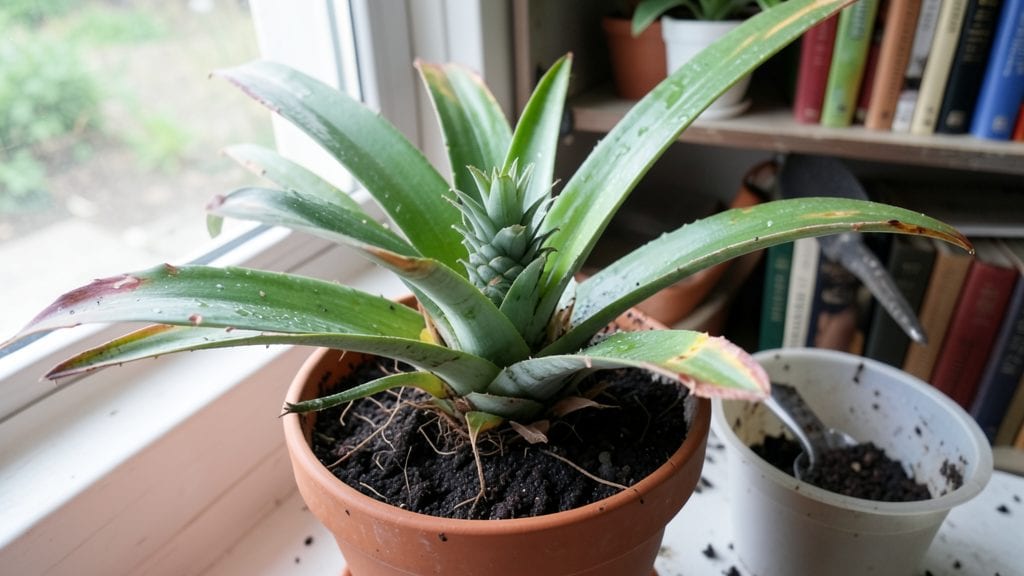
Repotting a pineapple plant is your fastest route to healthier roots and bigger harvests. 🌱 I’ve watched my pineapple’s roots circle the pot like a tangled mess—until I gave them room to breathe in fresh soil.
The key is timing: when roots peek through drainage holes or the plant feels top-heavy, it’s begging for a bigger home.
You’ll need a pot just 2-3 inches larger in diameter, well-draining soil mixed with perlite or sand, and a sharp knife for stubborn roots. Tropical plants like pineapples hate soggy feet, so skip the heavy garden soil—airy mixes keep roots happy.
My go-to combo is 60% cactus mix and 40% perlite, which mimics their natural rocky soil.
After repotting, your pineapple will reward you with new growth in as little as 2 weeks. Look for fresh leaves sprouting from the center and roots spreading into the fresh soil.
Keep it in bright, indirect light and water only when the top inch feels dry—overwatering is the #1 way to undo all the good work.
This method works for both houseplants and outdoor tropicals, but if you live in a cold climate, save repotting for spring when temperatures stay above 60°F. The secret? Patience—your pineapple’s next harvest could be just months away if you give it the right home now.
📚 In This Guide
- What you need
- Instructions
- Tips and common mistakes
- Wrapping up and next steps
What you need
- ● Pot: A container 1-2 inches wider than the current pot (e.g., 6–8 inches in diameter for a mature pineapple). Ensure it has drainage holes—no exceptions!
- ● Fresh potting mix: A well-draining blend like cactus/succulent mix or a custom mix of: 60% peat moss or coco coir
- ● 30% perlite or pumice
- ● 10% sand (coarse, not fine)
- ○ Gloves: Optional but helpful—pineapple leaves can be spiky! 🧤
- ● Trowel or small shovel: For gently loosening roots and transferring soil.
- ● Watering can or spray bottle: With a fine rose attachment for post-repotting hydration.
- ● Rooting hormone: Speeds up root recovery for cuttings (follow label instructions!).
- ● Slow-release fertilizer: A balanced 10-10-10 or succulent-specific pellet to nourish fresh soil.
- ● Mulch (gravel or bark): Adds a decorative touch and helps retain moisture.
- ● Newspaper or tray: To catch soil runoff during repotting.
Step-by-step instructions for repotting pineapple plant
Reviving your pineapple plant is faster than you think—just follow these simple steps.
🪴 Step 1: Gather Supplies and Prep Your Pineapple
Start by selecting a 6-8 inch pot with drainage holes—pineapples hate soggy roots. I like to use terra cotta because it breathes better than plastic. You'll also need fresh potting mix (not garden soil) and a small hand trowel. Before repotting, water your pineapple plant lightly so the roots are damp but not dripping.
Gently remove the plant from its current pot by squeezing the sides or tapping the bottom. If the roots are tightly bound, don’t force it—run a knife around the edges first. You’ll see a compact root ball, and that’s normal. The goal here is to loosen the roots slightly without tearing them. Here’s the thing—pineapple roots are tough, so handle them like you would a delicate succulent.
🌱 Step 2: Inspect and Trim Damaged Roots
Once the plant is out, inspect the roots for any that look mushy, black, or shriveled—these are dead and need to go. Use clean, sharp scissors to trim them back to healthy, firm white or tan roots. Healthy roots should feel firm and springy, not slimy or brittle. If you see any brown, slimy spots, that’s a sign of rot, and you’ll want to cut those areas out completely.
After trimming, give the roots a quick rinse with lukewarm water to remove any old soil clinging to them. This helps you spot any hidden damage and ensures the fresh potting mix makes good contact with healthy roots. Don’t soak the plant—just a quick rinse and a gentle shake to remove excess water. Real talk: this step saves your plant from future rot issues.
💧 Step 3: Repot with Fresh Soil and Support
Fill the bottom of your new pot with about 1 inch of fresh potting mix, then place the pineapple plant in the center. The base of the plant should sit just above the soil line—don’t bury the crown too deep. Pineapples are sensitive to overwatering, so keeping the crown slightly exposed prevents rot. Add more potting mix around the roots, pressing lightly to secure the plant but not compacting the soil too tightly.
Fill the pot almost to the top, leaving just ½ inch of space below the rim. This prevents soil from spilling out when you water. Tap the pot gently on the table to settle the soil, then add a final sprinkle of potting mix to fill any gaps. Here’s where it gets fun—gently press the soil around the base of the plant to eliminate air pockets. You’ll see the roots start to spread out naturally as they settle.
☀️ Step 4: Water Lightly and Place in Bright, Indirect Light
After repotting, water the plant lightly—just enough to moisten the soil without drowning it. Pineapples need well-draining soil, so you want the water to run through the drainage holes within 10-15 minutes. Let the plant sit in its new pot for 3-5 days before watering again. This gives the roots time to adjust without the risk of rot.
Place your repotted pineapple in a spot with bright, indirect light for the first week. Direct sunlight can stress the plant right after repotting, so a east-facing window or a shaded area under a grow light is ideal. You’ll notice new growth within 2-3 weeks if everything is going well. Watch for the leaves to perk up and regain their vibrant green color—that’s your signal the plant is recovering.
⏰ Step 5: Resume Normal Care After Recovery
After the initial 3-5 day adjustment period, resume your normal watering schedule. Water when the top inch of soil feels dry to the touch, but avoid letting the soil stay soggy. Pineapples are drought-tolerant, so it’s better to underwater slightly than to overwater. Fertilize lightly with a balanced, diluted houseplant fertilizer every 4-6 weeks during the growing season to encourage new growth.
In about 6-8 weeks, your pineapple should look refreshed and ready to thrive. You’ll see stronger leaves, and the plant may even produce a new pup (baby pineapple) at its base. Don’t skip the repotting—it’s the fastest way to revive a struggling pineapple. With these steps, your plant will be back to its happy, healthy self in no time.
Tips & tricks for perfect repotting of pineapple plants
These simple tricks will help you revive your pineapple plant faster and keep it thriving for years to come.
Pot Selection Matters: The 6-8 inch pot size is ideal for pineapples because it provides enough room for root growth without overwhelming the plant. Terra cotta pots are my go-to because they wick away moisture, preventing soggy roots that pineapples despise. If you don't have terra cotta, any pot with drainage holes will work—just avoid plastic containers that trap moisture.
Root Handling Technique: In Step 1, when you're removing your pineapple from its current pot, don't be afraid to use a knife to loosen tightly bound roots. I learned this the hard way—trying to force the plant out often tears delicate roots. The goal is to gently separate the root ball while keeping as many roots intact as possible. Think of it like unwrapping a delicate package: patience prevents damage.
Watering Wisdom: The 10-15 minute drainage window after repotting is crucial—this ensures your pineapple isn't sitting in waterlogged soil. After repotting, place your pot in a shallow tray to catch excess water, then empty the tray after those 10-15 minutes. This simple step prevents root rot during the critical adjustment period. Remember, pineapples are tropical plants that prefer their roots to dry out slightly between waterings.
Light Positioning: For that first week after repotting, bright indirect light is your best friend. East-facing windows provide perfect morning light without the harsh afternoon sun. If you don't have an east window, place your pineapple about 3 feet from a south-facing window. You'll notice within 2-3 weeks when the leaves perk up and regain their vibrant green color—that's your plant telling you it's happy with its new home.
Pro Tips for Repotting Pineapple Plant
- These simple tricks will help you revive your pineapple plant faster and keep it thriving for years to come.
- Pot Selection Matters: The 6-8 inch pot size is ideal for pineapples because it provides enough room for root growth without overwhelming the plant.
- Root Handling Technique: In Step 1, when you're removing your pineapple from its current pot, don't be afraid to use a knife to loosen tightly bound roots.
Frequently asked questions
Got questions about repotting your pineapple plant? You're not alone! Here are some of the most common concerns—and their simple solutions—to help you keep your spiky friend thriving.
When is the best time to repot a pineapple plant?
Repot your pineapple every 2–3 years or when you notice roots circling the pot or growing out of drainage holes. Spring or early summer is ideal—this gives your plant plenty of time to establish before cooler months. If repotting in winter, avoid extreme temperatures to prevent stress.
What if my pineapple plant looks unhealthy after repotting?
Don’t panic! Yellowing leaves or wilting are normal for 1–2 weeks as your plant adjusts. Ensure it’s in bright, indirect light and water only when the top 1–2 inches of soil are dry. Overwatering is the #1 killer—stick to the finger test! If issues persist after 3–4 weeks, check for root rot or pests.
Can I use any pot for repotting, or does it matter?
Size and material matter! Choose a pot 1–2 inches larger in diameter than the current one (too big = soggy roots). Terracotta pots are great for drainage, but plastic works too—just add a layer of pebbles or perlite at the bottom. Avoid glazed pots; they trap moisture and can cause root rot.
Do pineapple plants need special soil for repotting?
Yes! Use a well-draining mix like cactus/succulent soil (50%) blended with perlite or coarse sand (30%) and a bit of orchid bark (20%) for aeration. Avoid garden soil—it stays too wet and suffocates roots. A slightly acidic to neutral pH (5.5–7.0) keeps your pineapple happy.
What if my pineapple plant doesn’t produce fruit after repotting?
Pineapples are slow to fruit (often 2–3 years) and need consistent care to produce. Ensure it gets 6+ hours of sunlight daily, balanced fertilizer (diluted 10-10-10) every 2 months in growing season, and patience! Stress from repotting might delay fruiting, but healthy roots = better chances for a sweet harvest.
Wrapping up and next steps
Repotting your pineapple plant is a simple yet rewarding way to ensure its health and vitality! 🌱 By choosing the right pot, soil, and timing, you’re giving your plant the fresh start it deserves. With just a few steps, you’ll help it thrive and even encourage those delicious, sweet fruits.
Now that you’re armed with the knowledge, why not give it a try? Grab your supplies, follow the steps, and watch your pineapple plant flourish. Happy repotting—and here’s to a bountiful harvest ahead! 🍍✨