
Companion Plants
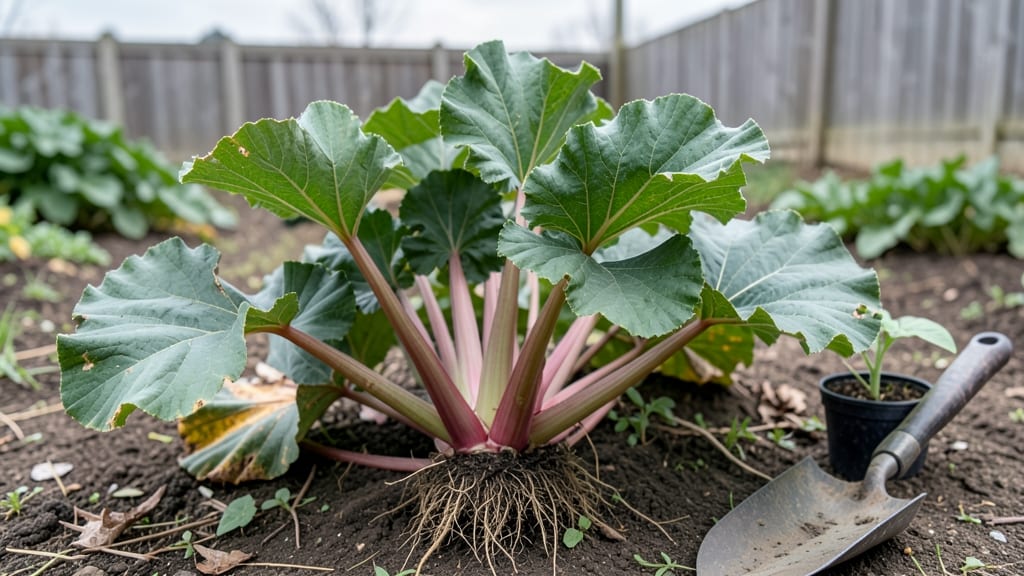
Planting rhubarb in the right conditions turns a clump of dormant roots into a perennial powerhouse that produces for decades—if you get the soil, sun, and timing right. I’ve watched rhubarb crowns rot in soggy ground and thrive in loose, well-amended beds, and the difference isn’t subtle.
That first bright pink stalk in spring makes the prep work worth every minute.
The secret starts with 6+ hours of sunlight daily and soil that drains like a sponge—not mud. Rhubarb hates sitting wet, so raise beds slightly if your yard pools after rain.
Mix in 3-4 inches of compost before planting, and space crowns 3-4 feet apart to give roots room to spread. Plant in early spring when soil warms to 50°F, but avoid frost—cold soil stunts growth.
After planting, keep the soil evenly moist (not soggy) for the first month while roots establish. A 2-3 inch layer of straw mulch locks in moisture and keeps weeds down.
By summer, you’ll see those signature spears pushing through, and with proper care, one plant feeds a family for years. The payoff? Zero replanting, zero fuss—just harvest after harvest.
This works in zones 3-8, though southern gardeners plant in fall for cooler roots. Container growing is possible too—just use a 12-inch-deep pot with drainage holes. The key? Don’t rush the soil prep. Skimp here, and you’ll spend years playing catch-up with weak stalks and disease.
Trust the process, and your rhubarb will outlast you.
📚 In This Guide
- What you need
- Instructions
- Tips and common mistakes
- Wrapping up and next steps
What you need
- ● Rhubarb crowns: 1–3 healthy, dormant crowns (choose cold-hardy varieties like ‘Victoria’ or ‘Strawberry’ for best results).
- ● Well-draining soil: A mix of native soil + 2–3 inches of compost or aged manure (aim for a pH of 6.0–6.8).
- ● Sunlight: A full-sun spot (6+ hours of direct light daily) or light shade in hot climates.
- ● Watering can or hose: For consistent moisture (rhubarb loves consistently damp soil but hates soggy roots!).
- ● Organic mulch: 2–3 inches of straw or shredded leaves to retain moisture and suppress weeds.
- ● Garden trowel or spade: For digging planting holes (6–8 inches deep).
- ● Garden gloves: To protect your hands while handling soil and roots.
- ● Measuring tape or ruler: To space crowns 3–4 feet apart (they’ll spread over time!).
- ○ Pruners (optional but handy): For trimming dead leaves or adjusting plant shape.
- ● Soil test kit: To check pH and nutrient levels before planting.
- ● Drip irrigation system: For automated watering (rhubarb hates drought stress!).
- ● Fertilizer (balanced 10-10-10 or compost tea): Apply lightly in early spring for a boost.
- ● Row covers or frost cloth: For young plants in cold climates.
Step-by-Step guide to ideal rhubarb planting conditions
Rhubarb thrives when you nail these three factors: sunlight, soil, and spacing. Skip one, and you’ll fight weak growth or disease for years.
Choose a Sunny, Sheltered Location
Rhubarb demands full sun—at least 6 hours of direct sunlight daily—but it also hates harsh afternoon winds. I always scout the yard for the spot with morning sun exposure and afternoon shade from trees or a fence. A south-facing area gets the most consistent light, but east-facing works too if afternoon shade is available.
Here’s the thing—rhubarb’s thick stalks can get sunburned if exposed to intense afternoon heat. Look for a place where the sun fades by mid-afternoon. If your yard has no natural shade, a lightweight shade cloth (30-50%) stretched over young plants during peak summer hours prevents scalding without stunting growth.
Test and Amend the Soil for Optimal Drainage
Rhubarb roots rot in soggy soil but struggle in rocky, compacted ground. Before planting, dig a 12-inch-deep hole and check the drainage: Fill it with water, then wait. If it drains in under 2 hours, the soil is good. If water pools after 4+ hours, you need to amend it.
For heavy clay soil, mix in 2-3 inches of compost and 1 inch of coarse sand per square foot. Sandy soil? Add 3 inches of peat moss or coconut coir to retain moisture. I swear by a soil test kit—it tells you exactly what’s missing, whether it’s organic matter, phosphorus, or potassium. Rhubarb loves slightly acidic to neutral soil (pH 6.0-7.0).
Plant Crowns at the Right Depth and Spacing
Rhubarb grows from bare-root crowns, not seeds, and depth matters. Set the crown so the buds (eyes) sit just below the soil surface—no deeper. Burying them too far delays growth; leaving them exposed invites rot. Space 4 plants 3 feet apart in a 4-foot-wide row, with 5 feet between rows. This gives stalks room to thicken without crowding.
I dig a trench 6 inches deep, place the crown in the center, and fan out the roots. Backfill with soil, pressing lightly to remove air pockets. Water deeply until moisture reaches 6 inches down. Mulch with 3 inches of straw or wood chips to suppress weeds and keep roots cool—rhubarb hates heat stress.
Adjust Watering for Consistent Moisture
Rhubarb’s first year is all about root establishment, so keep the soil evenly moist but never waterlogged. Water 1-2 times per week, aiming for 1 inch of moisture each time. You’ll know it’s right when the top 2 inches of soil feel damp but not soggy. Overwatering in summer causes crown rot; underwatering in spring stunts stalks.
Here’s a trick: Install a soaker hose along the row. Run it for 20-30 minutes every 4-5 days during dry spells. This delivers water slowly at the roots while keeping leaves dry—critical for preventing fungal diseases like rust. Avoid wetting foliage, especially in the evening, when humidity lingers.
Protect Young Plants from Pests and Disease
Rhubarb’s first year is vulnerable to slugs, aphids, and crown borers. I start with diatomaceous earth around the base to deter slugs, then set out copper tape barriers if snails become a problem. For aphids, a strong spray of water from the hose usually knocks them off—no chemicals needed yet.
Watch for yellowing leaves or stunted growth—these are red flags for crown rot or nutrient deficiency. If leaves curl, it’s often aphids or too much nitrogen. Pull back on fertilizer if you see all-leaf, no-stalk growth. A balanced 10-10-10 fertilizer applied lightly in early spring is enough for the first year.
Tips & tricks for perfect rhubarb planting conditions
These essential insights will help you avoid the most common mistakes that sabotage rhubarb growth from the very beginning.
Sunlight Strategy: In Step 1, when selecting your sunny spot, prioritize areas where morning sunlight dominates—this is when rhubarb performs best. I've found that east-facing locations with afternoon shade actually produce thicker, more vibrant stalks than full southern exposure. For containers, place them where they'll receive morning sun and afternoon shade, rotating them weekly to ensure even light exposure all around.
Soil Preparation Secret: The drainage test in Step 2 is non-negotiable. I've seen too many gardeners assume their soil is fine only to watch their rhubarb crowns rot within weeks. For clay-heavy soils, work in the compost and sand mixture thoroughly—don't just sprinkle it on top. Use a garden fork to aerate the soil down to 12 inches before planting, creating channels for roots to penetrate easily. This single step can mean the difference between healthy plants and perpetual struggle.
Planting Depth Precision: When placing your bare-root crowns in Step 3, think of the buds as your guide—they should peek just above the soil line, like the tip of an iceberg showing above water. Too deep and you'll delay harvest by years; too shallow and you risk exposure to temperature swings. I like to create a small mound of amended soil first, then place the crown on top before backfilling. This ensures consistent depth even if your soil settles slightly after watering.
Watering Wisdom: The 1-2 times per week guideline in Step 4 is perfect for most climates, but timing matters just as much as quantity. Water in the early morning so leaves have all day to dry—this prevents fungal spores from taking hold. During the first year, I've found that checking soil moisture at 2 inches down (as mentioned) is more reliable than sticking to a rigid schedule. If your finger comes out clean at that depth, hold off on watering.
Pro Tips for Rhubarb Planting Conditions
- These essential insights will help you avoid the most common mistakes that sabotage rhubarb growth from the very beginning.
- Sunlight Strategy: In Step 1, when selecting your sunny spot, prioritize areas where morning sunlight dominates—this is when rhubarb performs best.
- Soil Preparation Secret: The drainage test in Step 2 is non-negotiable.
Frequently asked questions
Got questions about planting rhubarb? You’re not alone! Here are some of the most common queries—plus straightforward answers to help you grow thriving rhubarb with confidence.
When is the best time to plant rhubarb?
Plant rhubarb crowns in early spring (as soon as the soil is workable) or in early fall (4-6 weeks before the first frost). Avoid planting in summer heat, which can stress young roots. For cooler climates (zones 3-5), spring planting is ideal—just be patient for harvests the following year!
How much water does rhubarb need?
Rhubarb thrives with consistent moisture but hates soggy soil. Water deeply 1-2 times per week (more in extreme heat or drought). Mulch around the base to retain moisture and suppress weeds. Yellowing leaves? Often a sign of overwatering—let the soil dry slightly between waterings.
Can I grow rhubarb in containers?
Yes! Rhubarb adapts well to large containers (at least 18" deep and wide) with drainage holes. Use a well-draining potting mix and fertilize lightly in spring. Just know: container-grown rhubarb may produce smaller stalks and need repotting every 3-4 years as roots expand.
Why isn’t my rhubarb growing?
Slow growth often stems from poor soil (rhubarb loves rich, slightly acidic soil) or overcrowding. Divide mature plants every 4-5 years to refresh growth. Also check for pests like slugs or diseases like crown rot—remove affected leaves promptly and improve airflow.
What’s the best companion plant for rhubarb?
Rhubarb pairs well with strawberries, lettuce, and herbs like thyme or sage (they deter pests). Avoid planting near beans or potatoes, as they compete for nutrients. A living mulch of clover or comfrey can also boost soil health while keeping weeds at bay!
Wrapping up and next steps
Growing rhubarb is all about finding the perfect balance—sunny spots, well-draining soil, and a little patience. Whether you’re a seasoned gardener or a beginner, these rhubarb planting conditions set you up for a bountiful harvest in just a few short years. 🌱
Now that you’re armed with the know-how, it’s time to grab your gloves and get planting! Start by marking your sunny patch, prepping the soil, and watch your rhubarb thrive. Happy gardening!