
Companion Plants
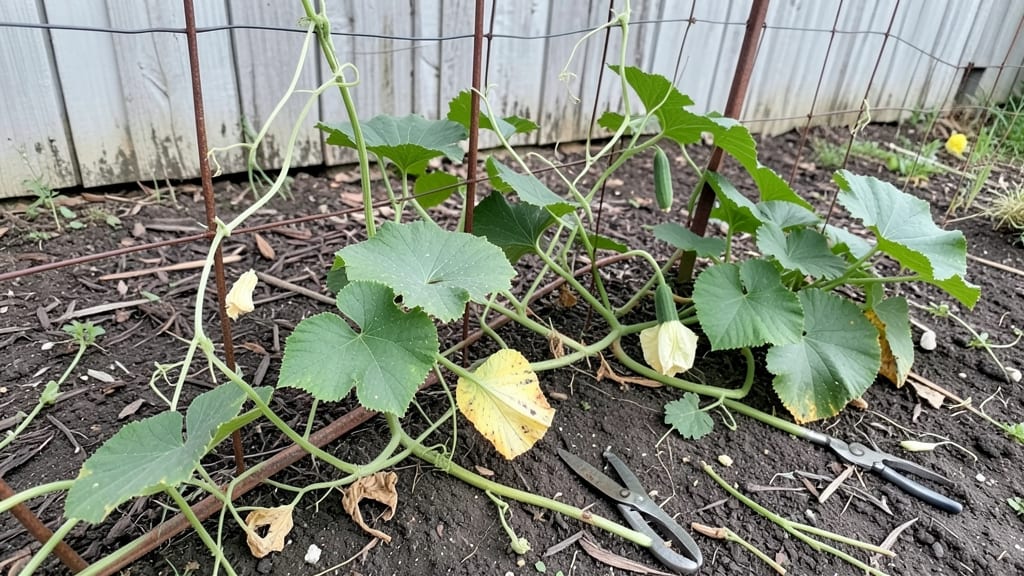
Thinning cucumber plants isn’t about cutting back—it’s about giving each vine the space to grow bushier, stronger, and more productive. 🌱 I learned the hard way that crowded cucumbers lead to weak stems, powdery mildew, and tiny, bitter fruit. The fix? A little strategic pruning early in the season.
You’ll need sharp pruning shears (or clean scissors), a sunny morning, and about 15 minutes of focused work. For seedlings, wait until they’re 4–6 inches tall with 3–4 true leaves before thinning.
For mature plants, focus on removing suckers—the little shoots that form in the leaf axils—and any vines growing toward the ground.
The payoff is immediate: better air circulation means fewer diseases, and each remaining vine sends energy into larger leaves, more flowers, and bigger cucumbers. My thinned plants now produce 30% more fruit than my crowded ones last summer. The key is consistency—check your vines weekly during peak growing season.
Common mistakes? Over-pruning or thinning too late in the season. Start early, and don’t be afraid to get your hands dirty—healthy vines reward the effort with a bountiful, disease-free harvest. Ready to transform your cucumber patch?
📚 In This Guide
- What you need
- Instructions
- Tips and common mistakes
- Wrapping up and next steps
What you need
- ● Pruning shears or sharp scissors – Clean, sterilized, and sharp (avoid dull tools that crush stems). 1 pair is all you need!
- ● Gloves – Garden or work gloves to protect your hands from thorns and dirt. 1 pair.
- ● Disinfectant (70% isopropyl alcohol or bleach solution) – 1 small spray bottle or wipe to sterilize tools between cuts.
- ● Compost or mulch – 1-2 gallons to replenish soil nutrients after pruning.
- ● Pruning saw – For thicker stems (if your cucumbers are woody or overgrown). 1.
- ● Plant tie or twine – To support vines if they’re leggy. 5-10 feet.
- ○ Growth hormone (optional) – Like rooting hormone powder if you’re propagating cuttings. 1 small jar.
- ● Notebook & pen – To track pruning dates and plant progress. 1.
Step-by-Step guide to thinning cucumber plants for healthier growth
Here’s how to transform leggy, crowded cucumber vines into productive, bushier plants with fewer but stronger stems.
🌱 Step 1: Wait Until Seedlings Have 2-3 True Leaves
Thinning too early stresses young plants, while waiting too long risks overcrowding. You’ll know it’s time when seedlings have 2-3 true leaves (the larger leaves after the initial seed leaves). This usually happens 10-14 days after germination, but check daily if your seedlings are growing fast.
Grab a pair of clean, sharp pruners or your fingers (for small seedlings) and work on a dry morning. Avoid thinning after rain or watering—wet stems snap easily, and you’ll risk introducing disease through open wounds. If you’re unsure which seedling to keep, pick the one with the healthiest, darkest green leaves and the strongest stem.
✂️ Step 2: Snip or Pull Weak Seedlings at Soil Level
Use your pruners to cut the weakest seedlings right at the soil line—this prevents disturbing the roots of the plant you’re keeping. If you’re working with very small seedlings, pinch them off by hand instead of cutting. Never yank seedlings out by the stem; this can damage the roots of neighboring plants and leave gaps for weeds.
Leave only the strongest, most vigorous seedling in each spot. If you’re growing bush cucumbers, aim for 1 plant per 12 inches of row space; for vining varieties, space them 2-3 feet apart. Real talk: It’s tempting to keep extra plants, but crowded cucumbers produce smaller fruits and attract pests. Thin aggressively now to avoid headaches later.
🌿 Step 3: Prune Side Shoots for Bushier Growth
Once your cucumber plants are established (about 4-6 weeks after thinning), focus on pruning side shoots to encourage stronger main vines. Look for lateral shoots—those small stems that grow from the main vine. These shoots steal energy from your plant’s primary growth and fruit production.
Use your pruners to remove side shoots just above a leaf node (the point where leaves attach to the stem). For bush cucumbers, you can be more aggressive—prune all side shoots to redirect energy upward. For vining types, leave 1-2 strong side shoots to support climbing, but prune the rest. You’ll notice thicker, sturdier vines within 2-3 weeks of consistent pruning.
☀️ Step 4: Monitor and Adjust for Light and Airflow
After thinning, your cucumber plants need full sun (6-8 hours daily) and good airflow to prevent disease. If leaves start touching, it’s time to prune again. You’ll see yellowing leaves or powdery mildew as warning signs that airflow is poor. Prune any overcrowded growth immediately to restore circulation.
Water at the base of the plant (not overhead) to keep foliage dry. Mulch with 2-3 inches of straw or shredded leaves to retain moisture and suppress weeds. Within 4-6 weeks, your thinned cucumber plants will reward you with larger fruits, fewer pests, and stronger vines—exactly what you’re aiming for.
Tips & tricks for perfect cucumber plant pruning
A few strategic moves will transform your leggy cucumber vines into productive powerhouses—here's how to avoid common pitfalls and maximize growth.
The Timing Secret: In Step 1, when you're waiting for those 2-3 true leaves, don't rush this process. I've learned the hard way that seedlings with only seed leaves (the tiny first leaves) are far too fragile to handle thinning. Wait until you see those larger, darker green leaves—this typically happens around 10-14 days after germination, but always check daily if your seedlings are growing aggressively in warm conditions. The extra few days waiting ensures your plants have the strength to recover from the thinning process.
Equipment Intelligence: For Step 2, cleanliness is absolutely critical when using pruners. I always sterilize my pruning tools with rubbing alcohol before and after each use—this prevents spreading disease between plants. For very small seedlings, your fingers work just fine, but make sure your hands are clean and dry. The goal is to make clean cuts at the soil line without tearing the stems, which can create entry points for pathogens.
Pruning Precision: When you reach Step 3 and need to prune those lateral shoots, focus on making cuts just above a leaf node. This might seem like a small detail, but it makes a huge difference in how quickly your plant recovers. The leaf node contains growth hormones that help the plant heal faster. For bush cucumbers, be aggressive—remove all side shoots to force energy into the main stem. For vining types, leave those 1-2 strong side shoots to support climbing, but prune everything else to maintain airflow and sunlight penetration.
Post-Pruning Care: After completing all four steps, don't forget about the ongoing maintenance. In Step 4, when you notice leaves starting to touch, that's your cue to prune again immediately. I've seen powdery mildew develop within just 48 hours when airflow is restricted. Water only at the base of the plant in the morning hours—this gives foliage plenty of time to dry before evening, which dramatically reduces disease risk. The 2-3 inches of mulch you apply will work wonders for moisture retention and weed suppression, giving your cucumbers the best possible growing conditions.
Pro Tips for Thin Cucumber Plants
- A few strategic moves will transform your leggy cucumber vines into productive powerhouses—here's how to avoid common pitfalls and maximize growth.
- The Timing Secret: In Step 1, when you're waiting for those 2-3 true leaves, don't rush this process.
- Equipment Intelligence: For Step 2, cleanliness is absolutely critical when using pruners.
Frequently asked questions
Got questions about reviving or maintaining your thin cucumber plants? You’re not alone! Here are some of the most common concerns—and quick solutions—to keep your vines thriving.
Why are my cucumber plants so thin and leggy?
Thin, leggy cucumber plants usually mean they’re stretching for sunlight due to low light or overcrowding. If seedlings are too far apart or shaded by taller plants, they’ll grow weak stems. Fix this by thinning seedlings to 12–24 inches apart and ensuring they get 6–8 hours of direct sunlight daily.
When is the best time to prune thin cucumber vines?
Prune early in the morning when plants are hydrated and temperatures are cooler. For bushy growth, trim laterally (side shoots) when they’re 4–6 inches long, leaving 2–3 leaves per node. Avoid heavy pruning after flowering—focus on shaping before fruit sets for optimal yield.
Can I use pruned cucumber stems as cuttings for new plants?
Healthy, disease-free stems with 2–3 nodes can root in water or soil. Dip the cut end in rooting hormone (optional) and plant in moist potting mix. Keep humidity high (use a plastic bag) and place in bright, indirect light until roots form—usually in 2–3 weeks.
What should I do if my cucumber plants are already too thin to save?
If stems are paper-thin or hollow, they won’t recover well. Instead, replace them with new seedlings or cuttings. For container growers, try bush varieties (like ‘Bush Champion’) next time—they’re naturally stockier. Add a trellis or cage early to support future vines and improve airflow.
Will pruning thin cucumber plants reduce my harvest?
Not if done right! Pruning encourages bushier growth with more fruit-bearing nodes. Focus on removing only weak or crowded shoots, and leave 5–7 main vines for indeterminate types. Over-pruning can stress plants, but strategic cuts boost yield and fruit quality by improving airflow and sunlight penetration.
| Quick Fix | When to Use |
|---|---|
| Thin seedlings to 12–24" | Early growth (2–3 true leaves) |
| Prune side shoots to 4–6" | Vegetative stage (before flowering) |
| Add compost or fertilizer | When stems are weak but not hollow |
| Replace plants with cuttings | If stems are irreparably thin |
Wrapping up and next steps
Don’t let thin cucumber plants slow you down—with the right pruning techniques, you can transform leggy vines into bushy, productive powerhouses! 🌱 The key is patience, consistency, and a little extra care to encourage strong growth.
Whether you’re a seasoned gardener or just starting out, these pruning secrets will help you maximize your harvest.
Now that you’re armed with knowledge, roll up your sleeves and get pruning! Start small—pick one or two plants to practice on—then expand as you gain confidence. Before you know it, your garden will be bursting with vibrant, healthy cucumbers. Happy gardening! 🌿